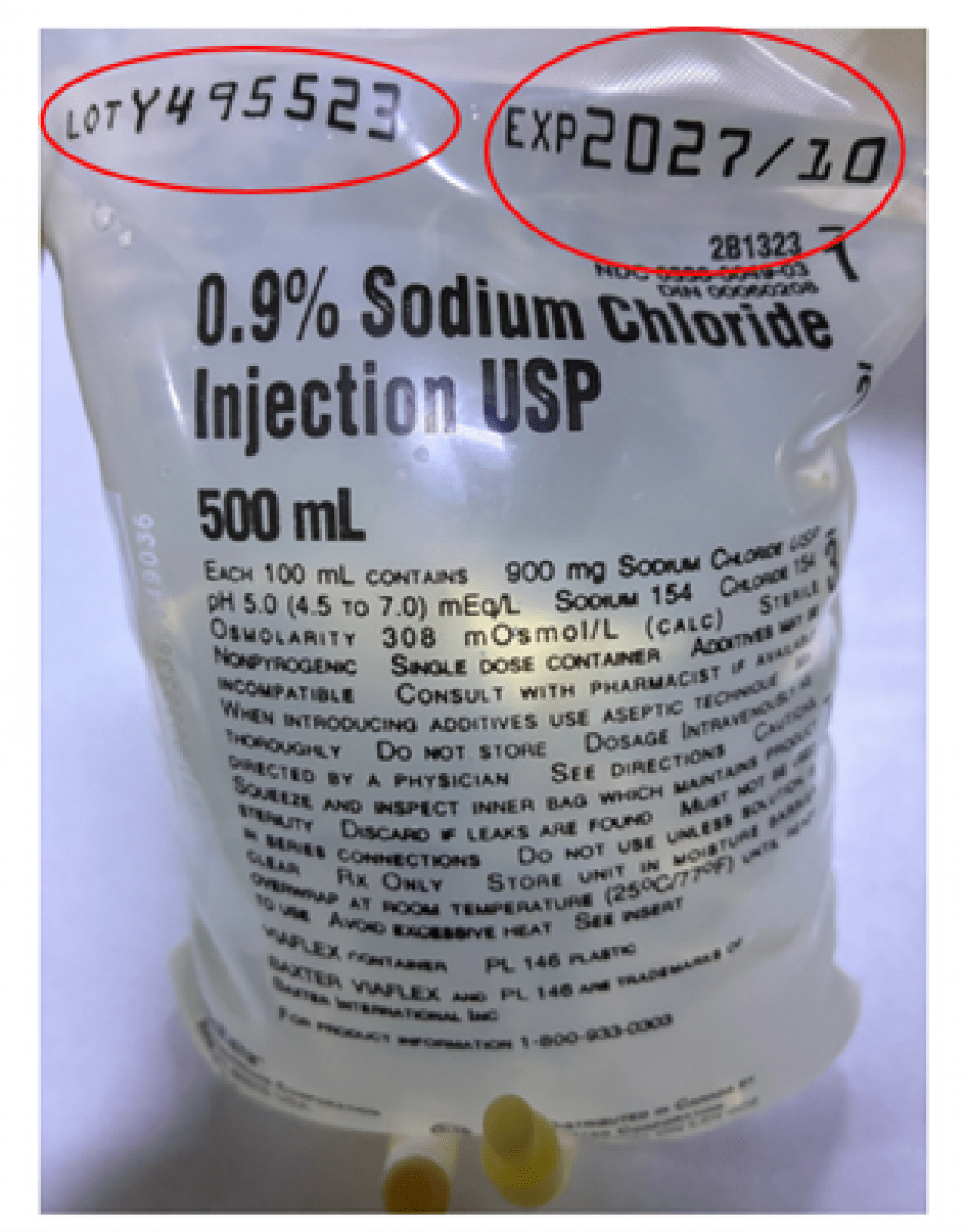

Who is affected? The available evidence identifies a voluntary Baxter recall involving two lots of 0.9% Sodium Chloride Injection, USP, in 500 mL VIAFLEX plastic containers. The reported identifiers are lot numbers Y495523 and Y495523A, with an expiration date of October 31, 2027. The evidence does not provide the full list of states, facilities or distributors, so it cannot confirm that a particular bag – or any bag in Texas – is included without checking the official notice.
The safest way to evaluate an item is by its exact label information, not by the product category, flavor, appearance or hospital location. A bag that is also labeled saline is not automatically part of this recall. The available evidence supports affected status only when the product and identifiers match the recalled description.
What Baxter and the FDA confirmed
Baxter announced the recall on August 25, 2026, and the FDA published the company announcement on August 26, 2026. The reason given was the potential presence of particulate matter identified as fiberglass in the solution. The product is used as a source of water and electrolytes and as a priming solution in hemodialysis procedures, according to the FDA notice.
The FDA describes intravenous administration of saline containing fiberglass particulate matter as capable of causing serious health consequences. Its listed concerns include blockage and clotting in blood vessels, reduced blood flow to vital organs, pulmonary embolism, permanent organ damage or death. The notice also identifies possible local vein irritation, inflammatory reactions, aggravation of preexisting infections and allergic reactions.
As of August 25, 2026, Baxter had not received reports of adverse events related to the issue, according to the FDA material supplied for this article. That statement describes reports received by the company at that time; it does not establish that every affected product was found or that the product is safe when its identifiers match the recall.
How to check whether a bag matches
Healthcare facilities, pharmacies and distributors should compare their inventory records and container labels with the complete FDA or Baxter notice. The relevant checks are the manufacturer, product description, container size, lot or batch number and expiration date. The available evidence identifies Baxter, 0.9% Sodium Chloride Injection, USP, 500 mL VIAFLEX containers, lots Y495523 and Y495523A, and the October 31, 2027, expiration date.
Do not treat a matching ingredient name alone as proof of inclusion. Conversely, do not rule out a product because its packaging looks normal. The supplied sources do not provide a visual inspection rule, and contamination status cannot be determined from appearance.
For readers who encountered saline during care, the supplied evidence does not establish whether a specific patient received a recalled lot or what individual medical action is appropriate. Questions about an infusion should go through the treating healthcare facility and the official recall information. Urgent symptoms after medical treatment require prompt medical attention, but the evidence pack does not specify a symptom-screening protocol or patient treatment guidance.
What the distribution report does – and does not – show
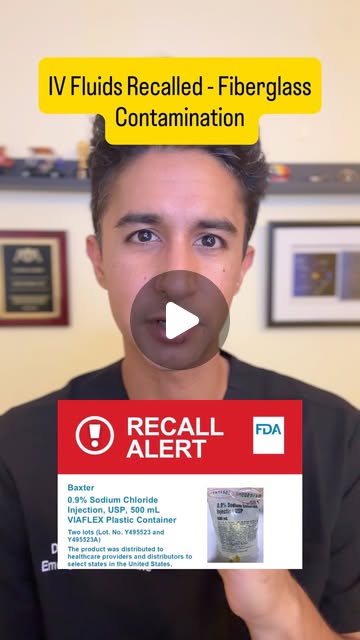
An independent Forbes report says the two lots were distributed to healthcare providers and distributors in 14 states between July 31 and August 3, 2026. That report does not list the states in the supplied text. The Instagram post’s headline mentions Texas, but its visible text does not provide an official distribution list or an exact product identifier. It therefore cannot independently confirm Texas eligibility.
This distinction matters because recall coverage depends on the exact product and distribution records. A facility in a named state may not have received the recalled lot, while a distributor outside that state could have handled product for a facility elsewhere. Location alone is not enough to decide whether a specific container is affected.
The next decision depends on the complete notice
The central unresolved point in the supplied evidence is the official disposition instruction for confirmed products. The excerpted FDA material identifies the recall and its risks, but it does not include the company’s complete instructions on whether facilities should quarantine, return, destroy or otherwise handle matching inventory. Those instructions should be taken from the full FDA or Baxter announcement rather than inferred.
Until the complete notice is checked, readers should avoid making an eligibility decision based on an ingredient list, a store or hospital location, or a social-media summary. The useful record to have available is the bag’s product name, lot number, expiration date and container size. Those details allow a healthcare organization or distributor to compare the item against the primary recall document.
The evidence supports a narrow conclusion: Baxter recalled two specified lots of 500 mL saline because of possible fiberglass particulate matter, and the FDA described potentially severe risks if contaminated product is administered intravenously. It does not support identifying every affected state, confirming a particular patient’s exposure or giving a final handling instruction without the complete official notice.
The evidence supports a product-identifier story, not a broad claim about every saline bag or every Texas facility. Baxter's 2026 recall concerns two reported lots of 500 mL 0.9% Sodium Chloride Injection, USP, after possible fiberglass particulate matter was identified. The FDA describes severe potential consequences if contaminated product is administered intravenously, while reporting no adverse-event reports received by Baxter as of August 25, 2026. An independent Forbes account says distribution reached healthcare providers and distributors in 14 states, but the supplied material does not name those states. Readers therefore need the exact lot and expiration details plus the complete official disposition instructions.
Sources and methodology
- Fiberglass in IV saline? Texas among states included in recall - https://www.instagram.com/reel/DcltetaumhE
- Baxter Issues Voluntary Nationwide Recall for Two Lots of ... - https://www.fda.gov/safety/recalls-market-withdrawals-safety-alerts/baxter-issues-voluntary-nationwide-recall-two-lots-09-sodium-chloride-injection-due-potential
- Medical Saline Recalled Over Potential Fiberglass ... - https://www.forbes.com/sites/victoriaforster/2026/08/28/medical-saline-recalled-over-potential-fiberglass-contamination