
Consumers in Arkansas, Louisiana, Mississippi, New Mexico, Oklahoma and Texas may be affected if they bought certain Midwest Poultry Services white shell eggs or brown cage-free eggs. The safety consequence is possible Salmonella infection, and the FDA says the recall is tied to an ongoing outbreak investigation. Check the side of the carton now: eggs with code P-1950 or 0840962 and a Julian date from 157 through 184 should not be eaten. The FDA lists no consumer return deadline in the supplied notice; throw qualifying eggs away or return them to the place of purchase for a refund.
The carton code is the key check
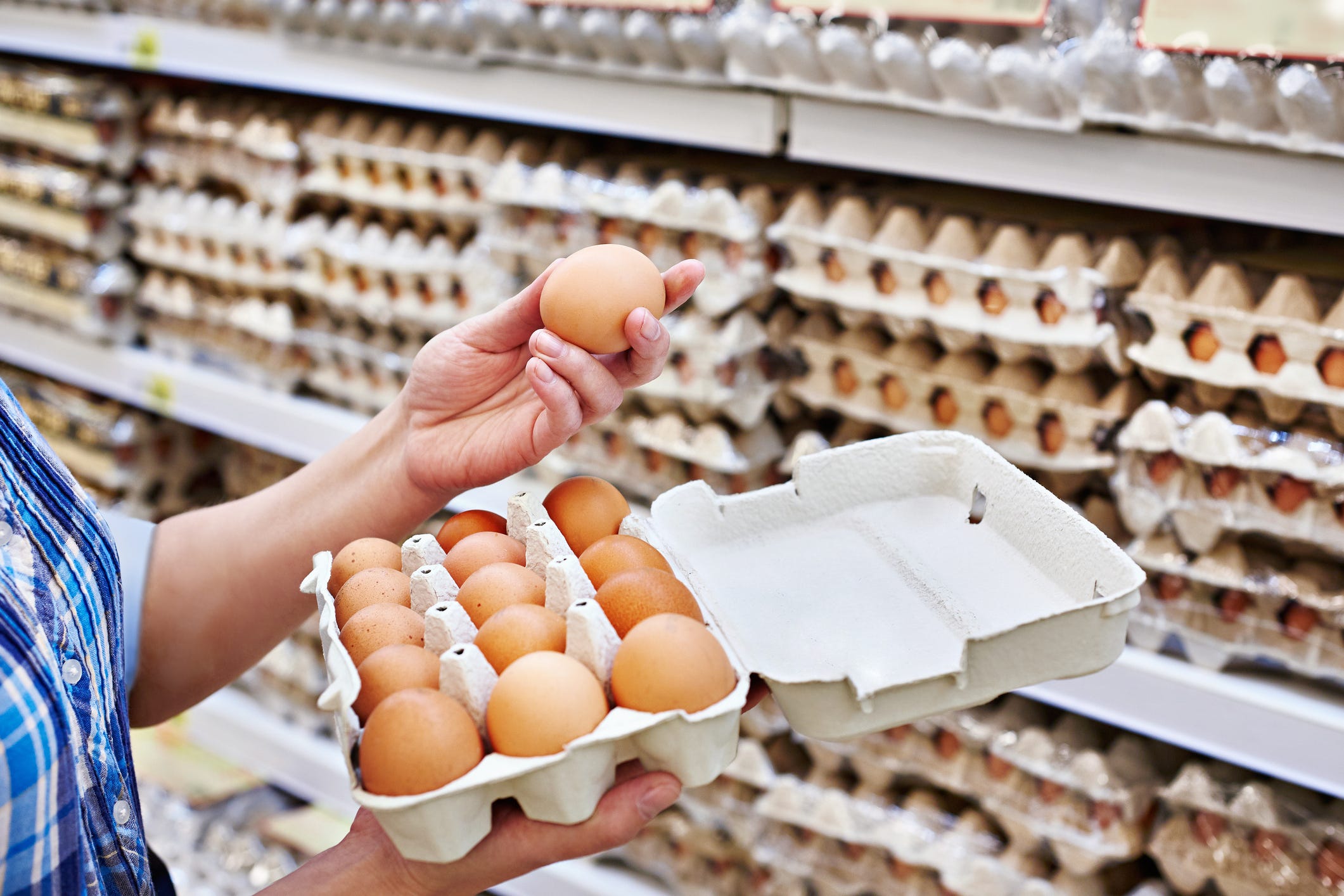
This is not a recall of every carton sold under every egg brand named in the notice. The FDA identifies recalled white shell eggs and brown cage-free shell eggs from Midwest Poultry Services, L.P. by a combination of markings printed in date-coding ink on the left or right side of the carton.
- Identifying code: P-1950 or 0840962
- Julian date: 157, 158, 159, 160, 161, 162, 163, 164, 165, 166, 167, 168, 169, 170, 171, 172, 173, 174, 175, 176, 177, 178, 179, 180, 181, 182, 183 or 184
- Sell-by or best-by dates: July 20, 2026, through August 17, 2026
- Brands named by FDA: Country Morning, Cal-Maine Sunups, Brookshire’s, Simple Truth and Kroger
- Package sizes named by FDA: 6, 12, 18, 24, 30, 36 and 60 eggs, as well as bulk eggs
The combination matters. A carton bearing one of the named brands is not, on that fact alone, confirmed as recalled. Conversely, egg color is not a safe shortcut: the FDA notice covers both white shell eggs and brown cage-free shell eggs if their codes and Julian dates match.
Where the recalled eggs were distributed
The FDA says recalled eggs were shipped to foodservice and retail customers in Texas, Oklahoma and Louisiana. It says consumers could have encountered them at Kroger stores in Texas and Louisiana and Brookshire Grocery stores in Texas, Oklahoma, Arkansas and Louisiana. Other smaller retail and foodservice outlets in Arkansas, Louisiana, Mississippi, New Mexico, Oklahoma and Texas also may have received them.
That distribution description explains why a shopper should inspect a carton rather than rely only on where it was purchased. It also does not establish that every store in those states received recalled eggs. The FDA’s direction for restaurants and retailers in the six listed states is not to sell or serve recalled shell eggs.
Florida is not among the states listed in the supplied FDA distribution notice. A Florida consumer therefore should not assume an egg carton is included merely because it is a cage-free product or shares a recalled brand name. The reliable test remains the printed code and Julian date. The available evidence also does not verify distribution to states beyond those the FDA named.
Why the Class I classification matters
FDA Class I is the agency’s highest recall classification. It means there is a reasonable probability that use of, or exposure to, a violative product could cause serious adverse health consequences or death. That classification is a risk assessment, not a finding that every recalled carton is contaminated or that every person who ate an egg will become ill.
The FDA’s July 2026 outbreak page identifies the matter as an ongoing Salmonella investigation. Independent reports published in August 2026 said at least 98 people in 17 states had been reported ill and 26 had been hospitalized, with no deaths reported in the supplied coverage. Those figures describe reported outbreak cases, not a prediction of a particular shopper’s risk.
Salmonella illness usually begins 12 to 72 hours after contaminated food is eaten and commonly lasts four to seven days, according to FDA guidance in the supplied material. Diarrhea, fever and abdominal cramps are listed symptoms. The FDA says children younger than 5, older adults and people with weakened immune systems are more likely to develop severe infections.
Refund and disposal steps
If the carton matches both the code and Julian-date range, the FDA says consumers should not eat it. Put the carton aside so the markings can be checked, then either discard the eggs or return them to the original place of purchase for a refund. A report citing the recall notice says the return route is a full refund, but the FDA text supplied here simply says “a refund”; shoppers should not treat a refund as automatic if a retailer requests proof of purchase or follows its own return process.
If eggs were moved into another container and the original carton is gone, the FDA’s recommendation is to throw them away when you cannot determine whether they are part of the recall. That precaution avoids treating an unknown carton as cleared based on appearance, freshness or the absence of symptoms.
For questions about the recalled eggs, the supplied reporting lists Midwest Poultry Services at 574-405-9531 from 8 a.m. to 4:30 p.m. Eastern time, Monday through Friday. The FDA’s outbreak notice remains the strongest source for checking whether the identifiers, affected locations or recommendations change.
Known facts, limits and the next decision
The evidence supports a specific consumer action: match the carton’s two identifiers and date range, then do not consume matching eggs. It supports disposal or a return to the original retailer, but it does not provide a final deadline for seeking a refund. It also does not establish that eggs outside the listed code-and-date combination are recalled.
For a household that still has a carton, the decision is immediate and narrow: read the side-panel ink before cooking, sharing or serving the eggs. For restaurants and retailers in the listed distribution states, the decision is operational: keep matching products out of sale and service while FDA’s investigation remains ongoing.
This recall is best understood as an identifier problem, not a brand-only or state-only warning. The FDA’s product criteria require a match between the carton code and Julian date, while the named brands and distribution states help consumers narrow where affected eggs may have appeared. The Class I designation signals the potential severity behind the agency’s caution, but it does not prove contamination in an individual carton. The practical trade-off is simple: keeping an unverified loose egg has little value compared with the avoidable risk when its packaging is missing. The next verifiable change would be an FDA update to the ongoing outbreak investigation or its recalled-product table.
Sources and methodology
- FDA elevates egg recall to highest salmonella risk. Is Florida impacted? - AOL.ca - https://www.aol.ca/articles/fda-elevates-egg-recall-highest-140724000.html
- Outbreak Investigation of Salmonella: Eggs (July 2026) - https://www.fda.gov/food/outbreaks-foodborne-illness/outbreak-investigation-salmonella-eggs-july-2026
- Salmonella Egg Recall Is Now Class I, the FDA's Highest ... - https://time.com/article/2026/08/15/eggs-recalled-for-salmonella-upgraded-to-highest-fda-risk-level
- FDA upgrades egg recall linked to salmonella to highest ... - https://www.cbsnews.com/news/fda-class-1-egg-recall-salmonella