
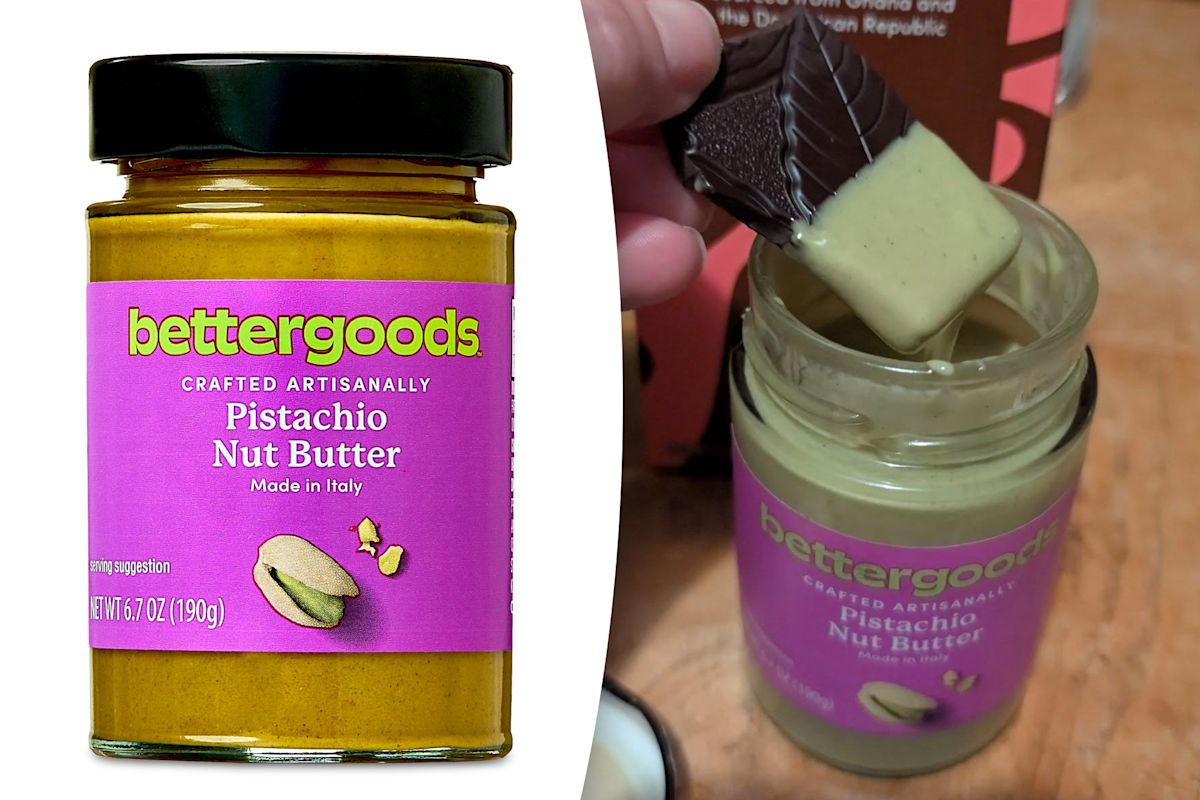
If you have Bettergoods Pistachio Nut Butter from Walmart, the supplied evidence cannot confirm whether your particular jar is part of the reported 2026 recall. The available reports identify the product and a potential Salmonella concern, but they do not include the UPC, lot or batch code, package size, best-by date, affected locations or the official consumer notice. Do not treat a matching flavor, brand or Walmart purchase alone as proof that an item is affected.
A Yahoo report published August 28, 2026, said a voluntary recall involving Bettergoods Pistachio Nut Butter had been linked to possible Salmonella contamination and was assigned an FDA Class I classification on August 26. A Medical Daily report headline published August 4, 2026, also identified Bettergoods Pistachio Nut Butter as a Walmart product sold in 19 states. Those reports establish a reason to verify a jar carefully; they do not provide enough information to match a jar to the recall.
Who may be affected, and who cannot be identified yet
The potentially affected group is limited to people with a Bettergoods Pistachio Nut Butter product that matches the exact identifiers in the official recall. In a food recall, that match can depend on a product name, package size, UPC, lot or batch code, best-by or use-by date, establishment number, and the places or dates where the item was sold.
None of those product-level identifiers appears in the supplied evidence. As a result, this reporting cannot establish that a jar is recalled just because it says Bettergoods, pistachio, nut butter or Walmart. It also cannot establish that a jar is unaffected because its label appears similar to a product described in a news report. The answer depends on the official item list.
This distinction matters because broad product descriptions are not recall identifiers. Retailers can sell similar products in different package sizes, distribution areas and production runs. A recall may apply only to a defined group of lots, while other products using similar ingredients or branding are outside the notice.
What the reported Class I status means
According to the Yahoo report, the FDA classified the reported Bettergoods recall as Class I. The report describes Class I as the agency’s highest-risk recall category, used when there is a reasonable probability that use of, or exposure to, a violative product could cause serious adverse health consequences or death.
That classification is a regulatory risk designation, not evidence that every purchaser became ill or that every jar contains Salmonella. The supplied material does not include a case count, laboratory findings, illnesses, hospitalization data, distribution records or the underlying FDA notice. Those gaps are important: a reader can understand the reported risk category without assuming an outcome for a particular product or person.
The evidence pack also includes an FDA notice for a separate 2019 recall involving Thrive Market-branded nut butters and possible Listeria monocytogenes contamination. That notice is not about Bettergoods, Walmart, pistachio butter or the reported 2026 Salmonella event. It should not be used to identify a Walmart product. Its relevance is narrower: it shows why recall notices normally identify a company, product description, reason for recall and specific scope rather than relying on a broad food category.
What to check before drawing a conclusion
Start with the product label and preserve the information that would allow a match against an official notice. The useful details are the complete product name, net weight, UPC, lot or batch code, and any best-by or use-by date. A purchase record can also help establish store location and purchase timing if an official notice later defines a distribution window.
Then compare those details with the relevant official FDA recall listing, Walmart notice or manufacturer announcement once one provides the identifiers. The evidence supplied here does not include a direct official page for this reported recall, so it cannot reproduce the official action or tell a reader whether to return, discard or otherwise handle a product. The Yahoo report says consumers with the codes cited in the recall were urged to return the item for a refund, but those codes are not present in the supplied material.
That is the central decision boundary: a consumer should not apply an instruction meant for identified codes to an unidentified jar. Conversely, a consumer should not dismiss a concern solely because a jar looks different from a photo or a headline description. The official match criteria are what resolve both questions.
Costs, refund information and deadlines remain unverified
The reporting indicates that a refund may have been available for products matching the recall codes, but it does not state the amount, whether proof of purchase was required, where returns were accepted, or whether there was a deadline. No eligibility determination can be made from the evidence pack.
Similarly, the Medical Daily headline says the product was sold in 19 states, but the supplied extract does not name those states. That figure should not be read as a complete list of affected retail areas or as proof that every Walmart in a state carried the product. Distribution scope is another detail that requires the underlying recall record.
What would make the recall status clear
A usable primary notice would name the recalling company, identify Bettergoods Pistachio Nut Butter precisely, list its package size and codes, explain where it was sold, and set out the official consumer action. It could also state whether any illnesses were reported and provide contact or refund instructions. Until that document is available, the most accurate answer is limited: the reports support concern about a specific recalled product, but not confirmation of any individual container.
For health questions connected to a possible exposure, the supplied reporting alone is not a substitute for individualized medical guidance. It reports that Salmonella can cause illness and attributes symptom information to public-health agencies, but it does not supply an official recall notice tied to a specific jar. Verification of the product comes first; any next steps should follow the official notice applicable to the matched identifiers.
The useful consumer question is not whether Walmart sells a pistachio nut butter that was reportedly recalled; two reports say it did. The question is whether a specific jar matches the recall. That answer cannot be responsibly supplied from a headline or a broad product description. The available evidence lacks the UPC, lot code, date and official notice needed to connect an individual product to the reported 2026 event. The reported Class I status raises the importance of checking, but it does not expand the recall beyond the identifiers in the official record. A future FDA, Walmart or manufacturer notice with those identifiers would turn this from a developing alert into a verifiable consumer action item.
Sources and methodology
- Walmart’s nut butter could kill you as it just received the FDA’s most serious classification - https://www.yahoo.com/news/us/articles/walmart-nut-butter-could-kill-160704727.html
- FDA Posts Salmonella Recall for Walmart Bettergoods ... - https://www.medicaldaily.com/bettergoods-pistachio-nut-butter-recall-salmonella-walmart-476837
- SL: Recall of Thrive Market Nut Butters Due to Potential ... - https://www.fda.gov/safety/recalls-market-withdrawals-safety-alerts/sl-recall-thrive-market-nut-butters-due-potential-health-risk