

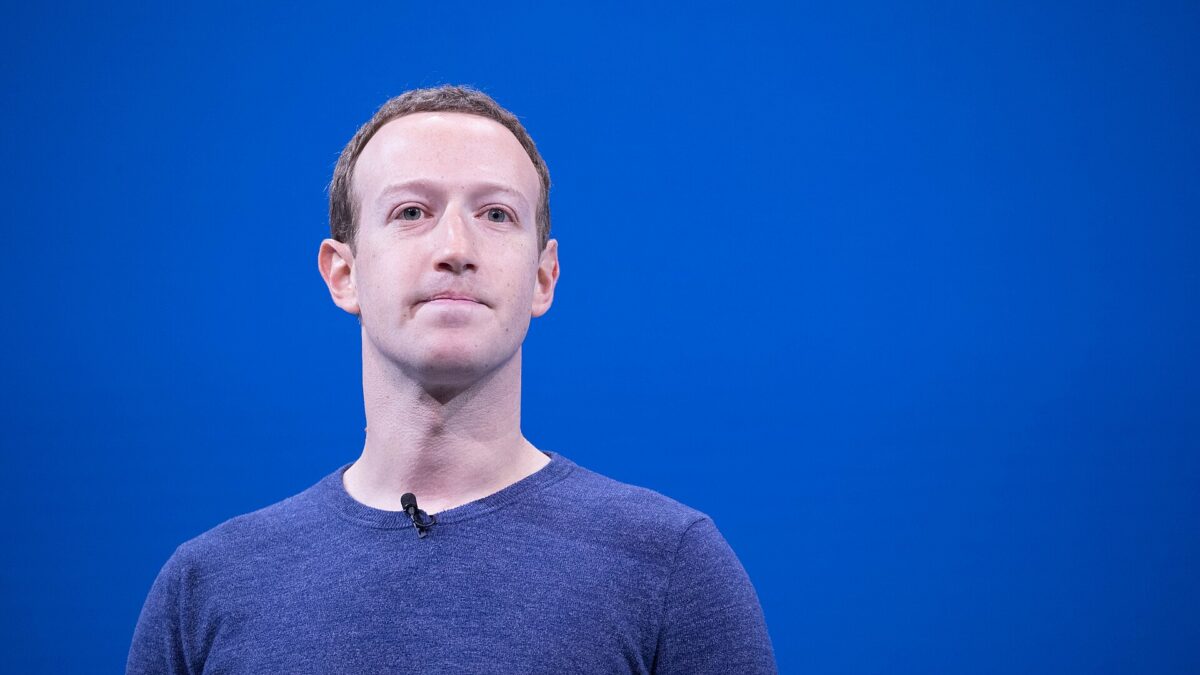
Mark Zuckerberg is the co-founder, chairman and chief executive officer of Meta Platforms, the technology company that grew out of Facebook. He helped launch Facebook at Harvard University in 2004, left college to build the company, and remains its controlling shareholder and top executive. Meta now operates a family of widely used social and messaging products, including Facebook, Instagram, WhatsApp and Threads.
This profile separates established biographical facts from attributed estimates and areas where the public record is less certain. Financial figures, in particular, change with market prices and should not be treated as fixed personal income.
Mark Zuckerberg at a glance
- Full name
- Mark Elliot Zuckerberg
- Born
- May 14, 1984, in White Plains, New York
- Age
- 42 as of August 22, 2026
- Known for
- Co-founding Facebook and leading Meta Platforms
- Current role
- Chairman and chief executive officer of Meta Platforms
- Education
- Harvard University; he left before graduating
- Philanthropy
- Co-founder and co-CEO of the Chan Zuckerberg Initiative
Why Mark Zuckerberg is important
Zuckerberg is one of the central figures in the development of modern social media. Facebook began as a service for Harvard students to create profiles and connect with classmates. It expanded to other colleges, schools and users internationally, becoming one of the largest social platforms in the world.
His significance is not limited to the size of the company he helped create. Facebook changed how people communicate, publish information, organize communities and encounter advertising. It also made Zuckerberg a recurring subject of debates about privacy, content moderation, political influence, competition and the responsibilities of technology companies. The public conversation around Meta often focuses on decisions made under his leadership because he combines executive authority with substantial voting control.
How he started Facebook
Zuckerberg was born in White Plains, New York, and was raised in Dobbs Ferry with three sisters. He developed an interest in programming during childhood. Public biographies describe early projects including a messaging program for use by his family and his father’s dental office, as well as software that attempted to learn a user’s musical preferences.
At Phillips Exeter Academy, he continued building software and served as captain of the fencing team, according to biographical accounts. He enrolled at Harvard University in 2002 and worked on several campus-oriented programs. Among them were CourseMatch, which helped students compare course selections, and Facemash, a short-lived program that compared student photographs. Harvard shut down Facemash after determining that it violated university rules.
In February 2004, Zuckerberg and fellow Harvard students Dustin Moskovitz, Chris Hughes and Eduardo Saverin launched TheFacebook. The original service allowed users to create profiles, upload photographs and communicate with other users. Zuckerberg left Harvard and moved the company to Palo Alto, California, as the service grew. The company later shortened its name to Facebook.
The early expansion also produced legal disputes. The founders of a proposed Harvard networking project, later known as ConnectU, accused Zuckerberg of violating an agreement and using their idea or source code. Those allegations became part of the lawsuits and public controversy surrounding Facebook’s creation. The existence of those disputes is documented; simplified claims that one person alone either invented or stole the entire service do not capture the complexity of the record.
From Facebook to Meta
Facebook became a public company in May 2012. Zuckerberg retained significant voting power after the offering, helping preserve his influence over the company’s direction. In October 2021, Facebook changed its corporate name to Meta Platforms. The rebrand signaled a strategic emphasis on a broader collection of products and on immersive computing, including virtual and augmented reality.
Meta’s official leadership biography describes Zuckerberg as responsible for the company’s overall strategic direction and business strategy. His role therefore extends beyond the original Facebook application. He oversees a corporate portfolio built around social networking, messaging, digital advertising, artificial intelligence and hardware associated with immersive experiences.
The rebrand did not make Facebook disappear. Facebook remains one of Meta’s products, while Instagram and WhatsApp are also part of the company’s family of applications. Meta’s expansion has made Zuckerberg a more consequential executive than a conventional social-network founder: choices made by the company can affect communication and information flows for billions of users.
What is Mark Zuckerberg’s net worth?
Net worth estimates are not official balance sheets. They are typically calculated from publicly known holdings, company valuations and market prices, and can change substantially from one day to the next.
Forbes listed Zuckerberg’s real-time estimated net worth at $189 billion as of August 21, 2026, ranking him seventh in the world at that snapshot. Forbes also reported that he owned about 13% of Meta’s stock. These are attributed estimates, not a verified statement of cash holdings or annual earnings. The value of a large public-company stake can rise or fall with Meta’s share price, and the percentage can change through sales, grants, dilution or other transactions.
It is more precise to say that Zuckerberg’s wealth is closely tied to his ownership and control of Meta than to describe the estimate as a fixed amount. Public sources do not provide a complete picture of every private asset, liability or tax obligation.
Philanthropy and the Chan Zuckerberg Initiative
Zuckerberg and his wife, Priscilla Chan, co-founded the Chan Zuckerberg Initiative in 2015. Meta describes the organization’s work as addressing major challenges in areas including disease research, education and local communities through collaboration, resources and technology.
The couple has publicly pledged to give away 99% of their Meta stake over their lifetimes. That pledge is a stated philanthropic commitment, not the same thing as saying that 99% has already been donated. The initiative’s structure and grants have generated both support and debate, especially over the influence that large private donors can exert in science, education and public policy.
What remains uncertain or disputed
Zuckerberg’s public career is unusually well documented, but not every popular claim is equally reliable. His age, birthplace, education, leadership positions and role in Facebook’s founding are supported by the cited biographical and company sources. His exact current wealth is inherently variable because it is an estimate based partly on market data.
Claims about his personal motivations, private decisions or future plans should be treated cautiously unless he or a reliable source has stated them directly. The same standard applies to predictions about Meta’s next strategy. The company’s stated interest in artificial intelligence and immersive technology describes direction, not a guaranteed business outcome.
The short answer
Mark Zuckerberg is an American programmer and business executive who co-founded Facebook and built it into the foundation of Meta Platforms. He remains Meta’s chairman, CEO and controlling shareholder. His influence comes from three overlapping roles: technology founder, corporate decision-maker and major philanthropist. His legacy is still being shaped by Meta’s performance, the social consequences of its platforms, regulatory and legal scrutiny, and the results of the company’s continuing investments in artificial intelligence and immersive computing.
For a durable understanding of Zuckerberg, the clearest distinction is between what he formally controls, what Meta publicly says it is pursuing, and what outside observers estimate. That distinction helps explain both his extraordinary reach and the limits of what can be known from public records.
Related coverage about Mark Zuckerberg
Related coverage about Mark Zuckerberg
Mark Zuckerberg is best understood not only as Facebook’s founder, but as the executive who still controls the company’s parent, Meta Platforms. His public record combines verified milestones with estimates that can change, particularly his wealth and the value of his Meta stake.
Sources and methodology
- Wikipedia: Mark Zuckerberg: https://en.wikipedia.org/wiki/Mark_Zuckerberg
- Meta: Mark Zuckerberg, Founder, Chairman and Chief Executive Officer: https://www.meta.com/fr-fr/about/leadership/mark-zuckerberg/
- Forbes: Mark Zuckerberg Profile: https://www.forbes.com/profile/mark-zuckerberg/
- Biography.com: Mark Zuckerberg Biography: https://www.biography.com/business-leaders/mark-zuckerberg