
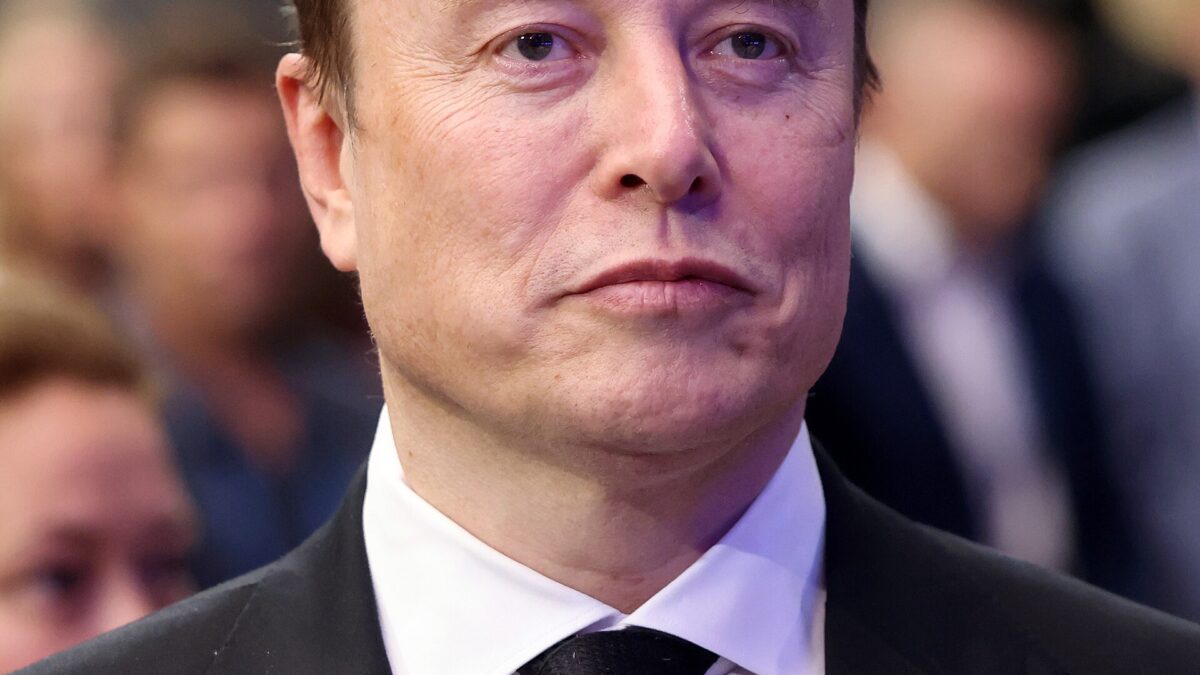
Elon Musk is a South African-born American businessman whose companies span electric vehicles, commercial spaceflight, social media, artificial intelligence, brain-computer interfaces and tunneling. He is the CEO and product architect of Tesla and the founder, CEO and chief engineer of SpaceX. He also founded or co-founded companies including X.com, PayPal, Neuralink and The Boring Company, and acquired Twitter in 2022 before renaming it X.
As of August 21, 2026, Forbes estimates Musk’s net worth at $834 billion, making him the wealthiest person in the world on its real-time ranking. Forbes says the figure is primarily tied to his holdings in SpaceX and Tesla, rather than to cash income. Net-worth estimates can change substantially with private-company valuations and public-market prices, so the number is an estimate rather than a fixed fact.
Elon Musk at a glance
- Full name
- Elon Reeve Musk
- Born
- June 28, 1971
- Birthplace
- Pretoria, South Africa
- Citizenship
- South Africa, Canada and the United States
- Education
- University of Pennsylvania, with bachelor’s degrees in economics and physics
- Current business roles
- CEO and product architect of Tesla; founder, CEO and chief engineer of SpaceX; founder and CEO of xAI; founder and chief technology officer of X Corp.
- Estimated net worth
- $834 billion, according to Forbes’ real-time estimate on August 21, 2026
Where is Elon Musk from?
Musk was born in Pretoria, South Africa, in 1971. His mother, Maye Musk, is Canadian, and his father, Errol Musk, is South African. Musk spent his early years in South Africa and later moved to Canada in 1988. He became a United States citizen in 2002.
Accounts of his childhood consistently identify an early interest in computers and programming. Biography.com reports that Musk created and sold a simple computer game called Blastar as a child. That episode is often cited as an early example of his interest in software, although it does not by itself explain his later business success.
He attended Queen’s University in Ontario before transferring to the University of Pennsylvania. There, he earned separate bachelor’s degrees in economics and physics. He later entered a graduate program at Stanford University but left after a short period to pursue internet businesses during the technology boom of the 1990s.
How did Musk make his first fortune?
Musk’s first major company was Zip2, which he co-founded with his brother Kimbal Musk in 1995. Zip2 developed online publishing tools and city-guide content for newspapers and other media organizations. Compaq acquired the company in 1999 in a deal reported at roughly $300 million in cash and stock.
After Zip2, Musk co-founded X.com, an online financial-services company focused in part on email payments. X.com later merged with Confinity, the company behind PayPal. PayPal became one of the best-known internet payment businesses of the early 2000s, and eBay acquired it in 2002. Musk used proceeds from those ventures to finance later projects.
EBSCO’s biography describes Zip2 and PayPal as the foundations of Musk’s later capital and influence. The important distinction is that Musk did not create every part of PayPal alone: he was an early co-founder and executive in the company’s predecessor businesses, while other founders and executives also played central roles.
What companies does Elon Musk lead?
SpaceX
Musk founded Space Exploration Technologies, known as SpaceX, in 2002. The company develops and launches rockets and spacecraft. Its Falcon 9 rocket and Dragon spacecraft helped expand commercial participation in orbital launches and cargo and crew missions. SpaceX also operates Starlink, a satellite internet service.
Forbes reported in 2026 that SpaceX became a public company and that its first-day valuation approached $2 trillion. Because the company’s valuation and Musk’s ownership can change, those figures should be read as market-based estimates rather than permanent measures of the business.
Tesla
Musk joined Tesla as an early investor and became its CEO in 2008. Tesla makes electric vehicles, energy-storage products and solar-energy systems. Musk is widely associated with the company’s growth from a niche electric-car manufacturer into a major global automaker, but Tesla was founded before he became its chief executive, and its development involved many engineers, executives and investors.
Forbes says Musk owns nearly 11% of Tesla, excluding certain unvested awards that could increase his stake if they vest. Tesla is a public company, so its market value and the value of Musk’s holdings fluctuate with its share price.
X and xAI
Musk bought Twitter in 2022 and renamed the platform X in 2023. The acquisition gave him control of a large social-media service and made his public statements, product decisions and political activity more closely connected to the platform.
He also founded xAI, an artificial-intelligence company. According to Forbes, SpaceX acquired xAI in February 2026 in a transaction that valued the combined companies at $1.25 trillion. The same report says Twitter had been merged into xAI before that deal. Those are attributed corporate and valuation claims, not independent measures of xAI’s financial performance.
Neuralink and The Boring Company
Musk co-founded Neuralink, which develops brain-computer-interface technology, and The Boring Company, which works on tunneling and transportation infrastructure. Both businesses are private, and publicly available information about their financial performance and operations is more limited than for Tesla.
Why is Elon Musk politically significant?
Musk became increasingly involved in American politics during the 2020s. In 2025, he served as a senior adviser to President Donald Trump and was associated with the Department of Government Efficiency, or DOGE, a temporary initiative focused on reducing federal spending and changing government operations. Biography.com reported that Musk left the administration in May 2025 as his scheduled period as a special government employee ended.
His government role was brief, but it extended his influence beyond business. Musk’s political views, endorsements and posts on X have made him a prominent participant in public debates. Reporting about his political activity should distinguish between his own statements, the formal authority of a government position and the actions of the companies he leads.
What is known about Musk’s personal life?
Musk has been married and divorced twice, first to Justine Wilson and later to Talulah Riley. Public reference sources report that he has 14 publicly known children, although details about family life should be handled carefully. This profile does not identify private residences, contact information or other nonessential personal details, and it does not speculate about family members who are minors.
Musk’s public image is shaped by his companies, his online activity and his highly visible management style. Supporters credit him with accelerating electric-vehicle adoption, lowering the cost of some space-launch services and building companies around ambitious technical goals. Critics have challenged his claims, corporate governance decisions, labor practices and public statements. Those arguments are part of his public record, but they should not be confused with verified evidence that every product or prediction will succeed.
How should Musk’s wealth be understood?
Musk’s wealth is mostly connected to ownership stakes and stock or option awards in companies rather than a conventional salary. Tesla’s public share price affects one portion of the estimate. SpaceX’s private valuation affects another, and private-company valuations can be revised during financing rounds or public listings. Forbes’ August 21, 2026 estimate of $834 billion therefore describes an estimated net worth at a specific point in time.
The clearest way to understand Musk is as a business leader with unusually concentrated influence across several technology sectors. His biography includes verifiable milestones—Zip2, PayPal, SpaceX, Tesla, X and xAI—but also many forward-looking claims about artificial intelligence, autonomous vehicles, human expansion into space and brain-computer interfaces. The first group can be documented as past events; the second remains subject to engineering, regulatory, financial and political uncertainty.
Sources and verification
This profile uses Wikipedia’s current biographical orientation for basic identity and career facts, Biography.com for background and the 2025 government role, EBSCO for an independently written career overview, and Forbes for the August 21, 2026 wealth estimate and corporate ownership details. Estimates and company valuations are labeled as such because they can change.
Related coverage about Elon Musk
Elon Musk’s public record combines verified business milestones with company valuations and future-facing claims that require careful attribution. The durable facts are his roles at Tesla and SpaceX, his early involvement with Zip2 and PayPal, his acquisition of Twitter and his founding of xAI, Neuralink and The Boring Company. His net worth and private-company valuations are estimates, while the long-term results of his technology projects remain uncertain.
Sources and methodology
- Elon Musk - Wikipedia: https://en.wikipedia.org/wiki/Elon_Musk
- Elon Musk: Biography, Entrepreneur, SpaceX and Tesla Founder - Biography.com: https://www.biography.com/business-leaders/elon-musk
- Elon Musk - Forbes: https://www.forbes.com/profile/elon-musk/
- Elon Musk | Biography | Research Starters - EBSCO: https://www.ebsco.com/research-starters/biography/elon-musk