
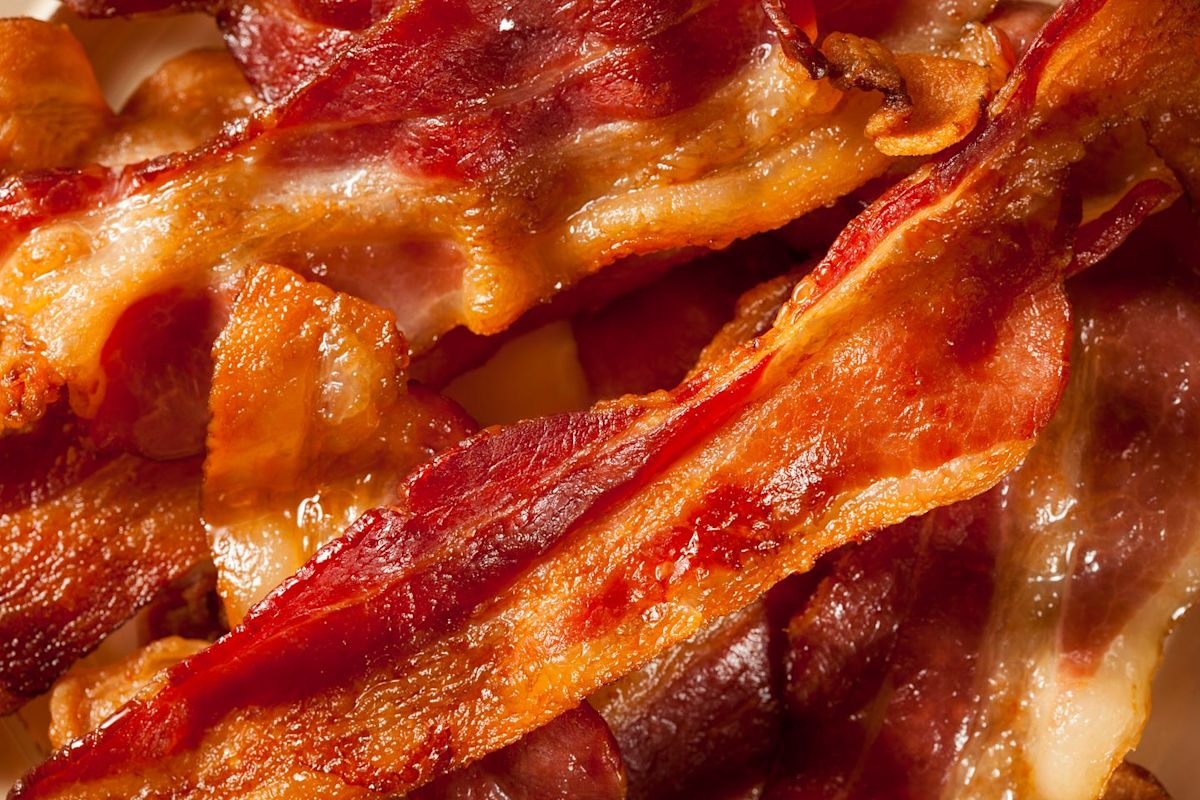
People who bought certain Maple Leaf Foods bacon products in Idaho, Oregon or Washington should check them before eating. The recall covers about 12,036 pounds of imported smoked bacon in 12-ounce packages. The money consequence is a possible lost purchase unless the product is returned to the retailer for a refund; the safety step is not to eat a matching package. The supplied reports identify no claim deadline, so consumers should act promptly rather than wait for a stated expiration date.
The products were reportedly recalled after entering the United States without the required federal import reinspection. That is the verified reason given in the available coverage, not a finding that the bacon was contaminated. One report says the Food Safety and Inspection Service, or FSIS, found no pathogens or other issues in the product, while the reports also say no illnesses have been linked to it.
Which bacon packages are included
Look for these two 12-ounce products:
- Royale Natural Applewood Smoked All Natural Uncured Bacon, labeled “Product of Canada,” with sell-by dates of September 1 or September 7, 2026.
- TOP VALU Uncured Hardwood Smoked Bacon, labeled “Product of Canada,” with sell-by dates of September 1, 2, 4, 5 or 7, 2026.
The reports identify the Canadian establishment number EST. 1 on the package. Master case boxes are reported to carry health certificate 2026-S732971612. The products were distributed to Grocery Outlet distributors and retailers in Idaho, Oregon and Washington.
Package size, brand, product description, sell-by date and establishment marking should be checked together. A product that shares only one detail, such as being Canadian bacon or carrying a similar brand name, is not enough to establish that it is part of this recall.
Why an import violation can trigger a recall
Imported meat products must go through the U.S. inspection process required before they can be sold in the country. The available reports say this bacon bypassed the required import reinspection. That creates an evidence gap: the recall addresses the product’s regulatory inspection status, while the reports do not identify a confirmed pathogen or contamination event.
FSIS classified the action as a Class I recall, described in the coverage as the agency’s most serious recall category. That classification signals the agency’s risk framework for a situation in which use could cause serious adverse health consequences or death. It does not, by itself, prove that every package is contaminated or that anyone who ate the bacon will become ill. The available evidence instead supports a narrower conclusion: matching products should not be consumed because they entered the country without the required inspection.
What consumers should do now
- Stop and check. Do not cook or taste the bacon while checking the label. Compare the product name, 12-ounce size, sell-by date, “Product of Canada” wording and “EST. 1” marking with the recalled identifiers.
- Do not eat a matching package. Place it aside so it is not accidentally prepared or served.
- Discard it or return it. The reported FSIS guidance is to throw the product away or return it to the place of purchase for a refund. If returning it, keep the package and purchase documentation if available, but the supplied evidence does not state that a receipt is required.
- Ask the retailer about its refund process. The reports do not provide a universal refund amount or a separate Maple Leaf Foods claim form. Retailer instructions may determine whether the product is returned in person, documented first or handled through a store-specific process.
- Contact a healthcare provider if concerned about illness. The available reporting says no illnesses have been reported in connection with the recall, but it also directs people concerned about illness after eating the bacon to contact a healthcare provider.
Do not rely on smell, appearance or cooking to decide whether a matching package is safe. The reason for the recall is the missing U.S. reinspection, and sensory checks cannot verify whether that regulatory requirement was met.
What is confirmed—and what is not
The product identities, production dates of June 9, 10, 12, 13 and 15, 2026, affected Western states and return-or-discard instruction are consistent across the supplied reports. The reports also agree that Maple Leaf Foods is recalling the bacon and that no illnesses have been reported.
What remains unverified from the supplied evidence is the direct FSIS notice URL, the full retailer list, the exact date each store stopped selling the product and any company-specific customer-service instructions. No refund amount beyond a return to the retailer was provided, and no deadline for requesting a refund was identified. Consumers should therefore preserve identifying information until the retailer confirms how it will process the return.
This recall is best understood as a product-identification and handling decision, not evidence of a confirmed outbreak. If the package matches the listed identifiers, the practical choice is clear: do not eat it, and use the retailer return route or discard it according to the reported guidance.
The available evidence supports a targeted consumer action rather than a confirmed contamination outbreak. Maple Leaf Foods bacon sold in Idaho, Oregon and Washington was recalled because reports say it entered the United States without required import reinspection. The affected products can be identified by brand, 12-ounce package size, listed September 2026 sell-by dates and the EST. 1 establishment marking. Consumers should not eat matching packages and can return them to the retailer for a refund or discard them. The direct FSIS notice, a universal refund deadline and complete retailer instructions were not included in the supplied evidence, so those details remain open for verification.
Sources and methodology
- Bacon Recall Alert: Over 12,000 Pounds Pulled Across Multiple States - https://www.goodhousekeeping.com/food-products/a73392920/bacon-recall
- More than 12,000 pounds of bacon recalled after skipping ... - FOX Reno - https://wpde.com/news/nation-world/more-than-12000-pounds-of-bacon-recalled-after-skipping-required-us-inspection-department-of-agriculture-food-safety-inspections-maple-leaf-foods-not-ready-to-eat-smoked-bacon-canada-import-high-risk
- than 12000 lbs. of bacon recalled. Here's what you need to know - https://www.kcrg.com/2026/07/28/more-than-12000-lbs-bacon-recalled-heres-what-you-need-know
- 12,000+ lbs of bacon just got recalled from Grocery Outlet in ID, OR, and ... - https://www.instagram.com/reel/DbtDrkDuX0u