

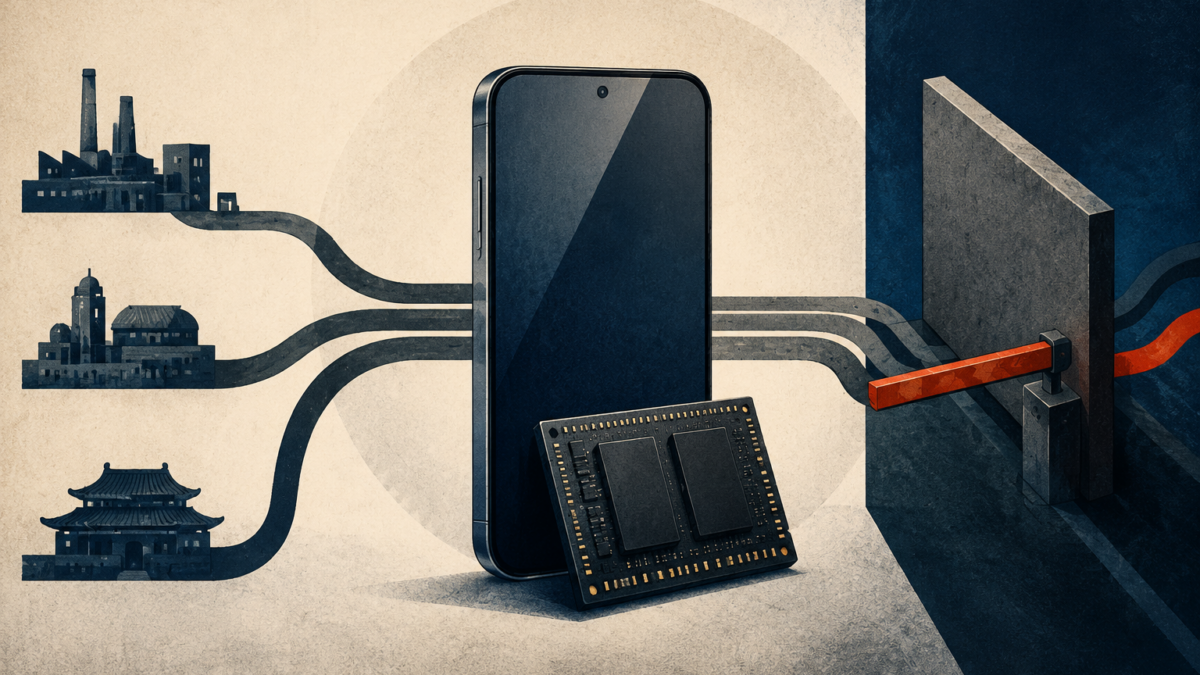
Apple’s possible use of Chinese memory chips has become more than a procurement question. In 2026, Commerce Secretary Howard Lutnick warned the company against using Chinese-made memory, while Apple has been weighing additional suppliers as shortages and higher prices put pressure on its hardware supply chain. The immediate stakes are practical: Apple may have fewer sourcing options, while its choice could affect product costs, manufacturing flexibility and U.S.-China technology policy.
A shortage has turned memory sourcing into a policy test
The companies at the center of the dispute are ChangXin Memory Technologies, or CXMT, and Yangtze Memory Technologies, or YMTC. Apple has reportedly considered them as potential sources while demand from artificial-intelligence data-center construction has tightened memory supply and pushed prices higher.
The supplied reporting does not establish that Apple has signed a purchase agreement with either company. It describes an evaluation of possible suppliers and says any Chinese memory could initially be used in products sold in China. That distinction matters: reviewing a source is not the same as approving it for mass production or putting it into a particular device.
Apple Chief Operating Officer Sabih Khan has said the company must consider all options because of the scale of the shortage. He also said memory components do not require a great deal of customization, a point that suggests the technical barrier to trying an alternative supplier may be lower than it is for more specialized parts. The evidence does not show, however, that Apple has qualified either supplier for a specific product.
Why the suppliers create different compliance questions
The political objection is not limited to where the chips are manufactured. The MacRumors report says senators led by Chuck Schumer asked Apple to promise that it would not buy memory from CXMT or YMTC for any Apple product sold anywhere in the world.
That report also says the two companies face different U.S. scrutiny. It identifies both as being on a Defense Department list of Chinese companies suspected of ties to the People’s Liberation Army, while YMTC is also described as being on the Commerce Department’s Entity List. According to the report, working with YMTC would require an export license. These are material differences from a simple supplier-quality review, but the supplied evidence does not show that Apple has received, sought or been denied such a license.
Lutnick’s warning adds executive-branch pressure without, in the supplied material, documenting a new formal ban aimed specifically at Apple. The Commerce secretary argued that an American company should not use Chinese memory and said another answer to the shortage must be found. The distinction between a public warning and an enforceable restriction will determine how much immediate room Apple has to negotiate with suppliers.
The trade-off is resilience versus access to supply
For Apple, avoiding CXMT and YMTC could reduce regulatory and political exposure, but it would also remove two potential sources during a period of constrained supply. The reports say Apple has already raised prices for Macs and iPads as memory shortages have worsened. They do not provide a quantified share of the cost increase attributable to memory, so the financial effect of any sourcing decision cannot be measured from this evidence alone.
The alternative is not automatically risk-free. Depending on existing suppliers and available capacity could preserve alignment with Washington’s position, yet it may leave Apple more exposed to tight inventories and price volatility. The supplied report names Micron among those opposing Apple’s potential adoption of Chinese memory, but it does not provide enough detail to calculate how much capacity or pricing leverage any alternative supplier could offer.
What Apple has not confirmed
Several important questions remain open. The evidence does not confirm whether Apple has completed technical testing, whether it has placed orders, which products would use the memory, or whether any Chinese-sourced component would be limited to the Chinese market. It also does not establish whether the Trump administration plans a formal action beyond the warning reported by the sources.
The next useful signals will be concrete rather than rhetorical: an Apple disclosure about suppliers or product sourcing, a Commerce Department licensing decision, or a change to the relevant U.S. company lists. Until one of those occurs, Apple’s China-memory question is best understood as a constrained supply-chain review under political pressure—not a confirmed product change.
The central issue is not simply whether Apple can technically use memory from China. It is whether the company can trade away two potential sources of supply without worsening exposure to shortages and higher prices, while also avoiding U.S. political and regulatory risk. The supplied evidence supports a reported supplier review, congressional pressure and a direct warning from the Commerce secretary. It does not support treating a deal, product deployment or formal prohibition as settled. The next phase will be defined by a sourcing disclosure or an actual government licensing or listing decision.
Sources and methodology
- U.S. Commerce Secretary warns Apple against buying Chinese memory - AppleInsider - https://finance.biggo.com/news/9b837182-fc38-4d2f-bfec-87700fc04bde
- Senators Demand Apple Commit to Not Buying Chinese ... - https://www.macrumors.com/2026/07/30/apple-chinese-chips-senator-letter