

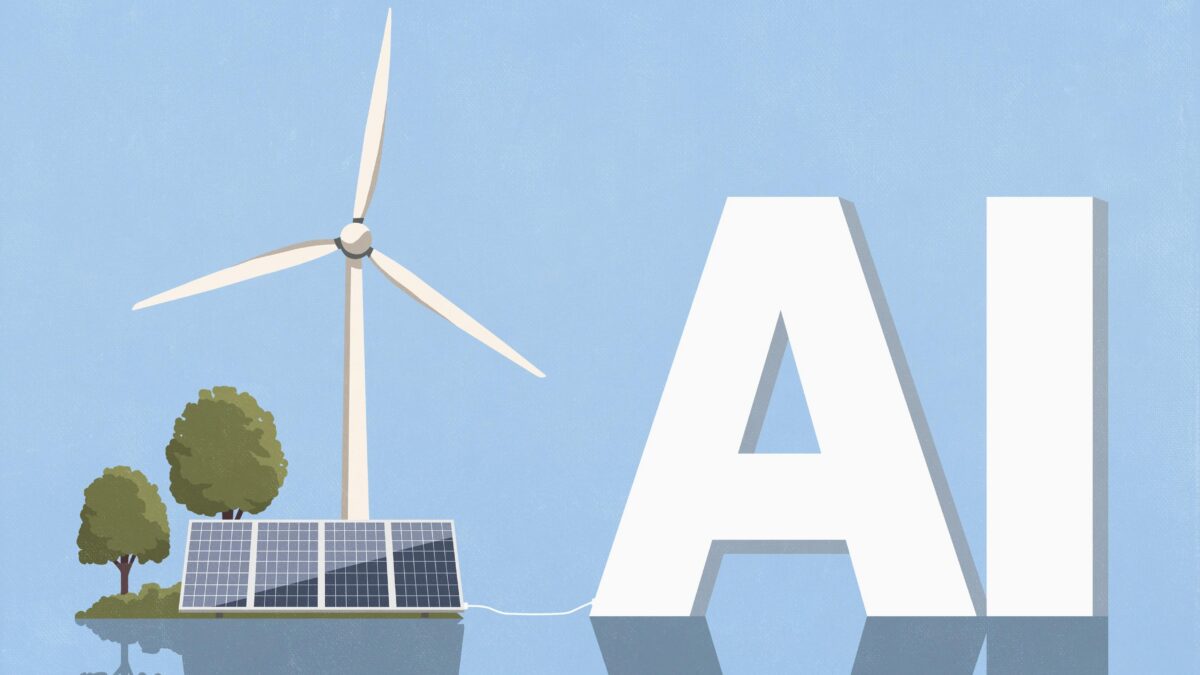
The direct answer: AI data centers can make electricity providers and grid infrastructure more relevant to the AI buildout, but that does not automatically make every energy stock an AI investment. What can be verified now is narrower: analysts and policy participants are increasingly treating power availability, water use and grid planning as material constraints on data center expansion.
That shifts the conversation from chips and model performance to the physical systems needed to keep computing facilities running. The practical stakes extend beyond investors: AI developers need viable sites, utilities need to plan for concentrated demand, and communities may face questions about reliability, water and who pays for upgrades.
Why is electricity becoming an AI infrastructure question?
Data centers have always used substantial power, but AI workloads are pushing demand for high-density computing facilities. In an April 10, 2026 publication, Brookings summarized a discussion on how AI-driven data center growth is affecting electricity and water consumption around the world. Participants also considered measurement, standards, reporting tools and energy-policy approaches as hyperscalers expand.
The key distinction is between demonstrated need and projected scale. The need for power at operating data centers is straightforward. But forecasts about future capacity, total spending and workload shares remain forecasts, not completed construction or guaranteed demand. Avid Solutions’ January 2026 roundup presents several aggressive industry projections, yet those estimates should not be read as independently verified outcomes.
How does this create an energy-market connection?
The connection is a mechanism, not a promise of returns. A large data center needs an interconnection, dependable electricity and, in some cases, new generation or transmission. That can place utilities, grid-equipment suppliers, power developers and operators of reliable generation closer to the AI capital-spending cycle.
For a company in those fields, potential upside would depend on whether new demand becomes contracted revenue, whether regulators allow cost recovery, and whether the company can build on time. Those are separate questions. The supplied evidence names no public company, provides no earnings data and does not establish that a particular energy stock has benefited from AI demand.
That restraint matters. “AI exposure” can be a useful way to describe a business linkage, but it is not a valuation conclusion. A power supplier may also face higher capital needs, delayed interconnections, fuel-price exposure, regulatory constraints or local opposition. Grid upgrades can be costly before they produce returns.
What is the bottleneck: power price, power access or reliability?
All three can matter, but access appears to be the immediate issue raised by the materials. Enkiai’s February 2026 market analysis argues that the availability of grid-scale power has become a leading commercial constraint for AI data center growth. It describes site selection as increasingly centered on where power can be obtained, rather than only on network connectivity and latency.
That claim is directionally consistent with the Brookings discussion, but it should be treated as analysis rather than an official grid finding. The evidence pack does not include utility interconnection queues, regional reliability assessments or government advisories that would show where constraints are most severe.
Reliability is the practical layer often missed in broad AI narratives. A facility can have a favorable energy price and still be a difficult site if it cannot obtain a dependable connection or if supporting transmission takes too long to build. For cloud customers, the consequence could be constrained capacity or higher service costs; the supplied sources do not document either outcome at a specific provider.
Who could bear the cost of the buildout?
AI companies and data center developers may pay for portions of new infrastructure, but cost allocation is often shaped by utility rules and regulators. Utilities may need to decide how to plan for unusually large new loads. Existing customers and local governments may scrutinize whether upgrades are paid by the requesting facilities, spread more broadly, or supported through another arrangement.
Water is another local consideration. Brookings specifically identified rising electricity and water consumption as part of the policy discussion. The supplied sources do not provide facility-level water figures, compare cooling systems or document a particular community impact, so broad claims about water use would go beyond the evidence.
Does more power capacity solve the wider AI problem?
No. Electricity can enable compute, but it does not settle questions about model reliability, training-data rights, security or privacy. More data center capacity may allow more AI services to run, yet it does not demonstrate that those services are accurate, safe or permitted to use particular data.
Privacy is especially separate from the energy question. The materials supplied here do not show that power agreements alter customer-data handling. Readers should avoid treating physical expansion as evidence that an AI provider has solved governance obligations.
What should readers watch before treating this as an investment thesis?
Look for measurable evidence: utility interconnection approvals, generation and transmission plans, regulatory decisions on cost recovery, and disclosures showing that a project has secured power rather than merely announced an ambition. Those milestones would provide a firmer basis for assessing exposure than generalized AI enthusiasm.
For now, the most supportable conclusion is that energy infrastructure is becoming a more consequential dependency for AI data centers. The stronger claim—that it reliably turns energy equities into AI winners—remains unverified by the evidence provided.
The meaningful AI-data-center story is not a blanket stock-market call. It is a shift in what limits deployment. The supplied evidence indicates that electricity and water needs are moving into the center of AI infrastructure planning, with power access potentially shaping project timing and location. That could create opportunities for some utilities and infrastructure suppliers, but the economics depend on contracts, regulation, construction and reliability—not on an AI label alone. Readers should distinguish operational demand for power, which is clear, from unproven claims about which companies or securities will capture the resulting value.
Sources and methodology
- 13 Data Center Growth Projections That Will Shape 2026- ... - https://avidsolutionsinc.com/13-data-center-growth-projections-that-will-shape-2026-2030
- Global energy demands within the AI regulatory landscape - https://www.brookings.edu/articles/global-energy-demands-within-the-ai-regulatory-landscape
- AI Data Center Grid Strain: Power Halts Growth in 2026 - https://enkiai.com/data-center/ai-data-center-grid-strain-power-halts-growth-in-2026