

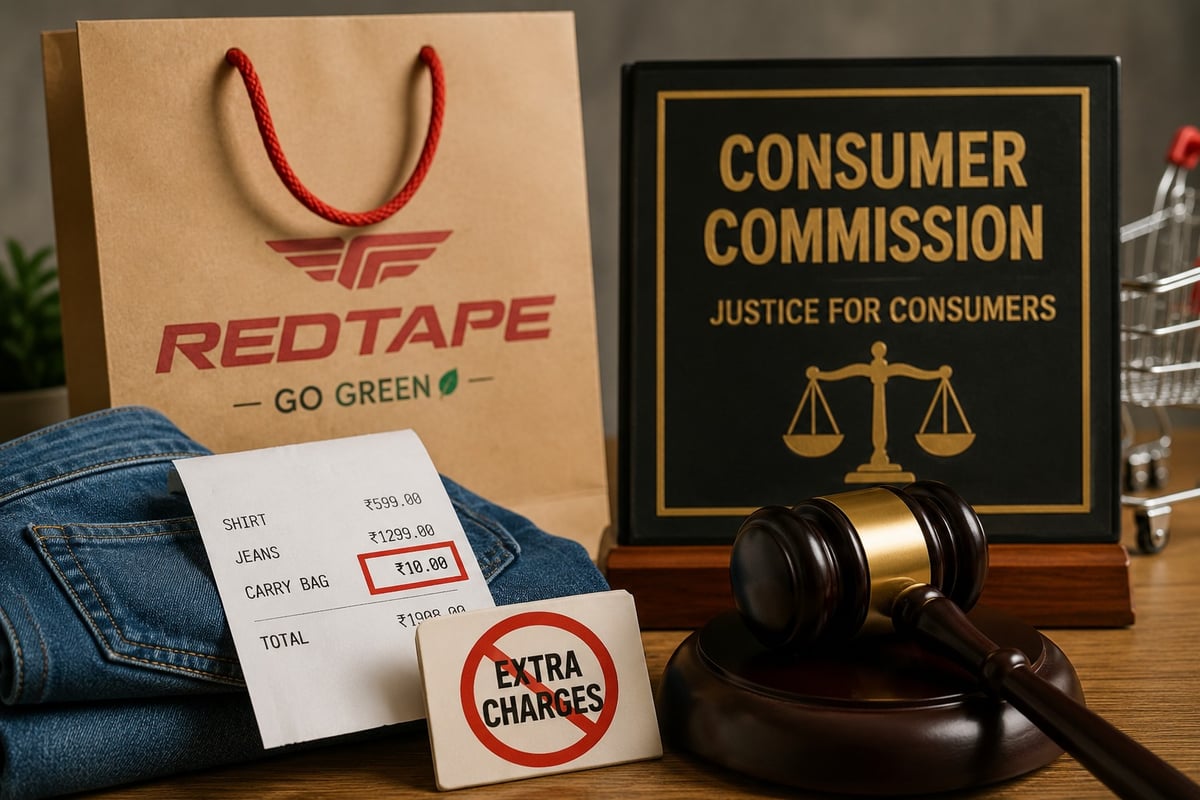
Red Tape shoppers named in two Indian consumer commission cases are the people directly covered by the reported awards, not all customers worldwide. In the Shimla case, three complainants were awarded refunds of a ₹10 carry-bag charge and a combined ₹24,000 in compensation, with the outlet reportedly given 45 days to comply. In a separate Gurugram case, a customer was awarded a refund of ₹30 plus interest and a total ₹26,000 for compensation and litigation costs. The next step for anyone with a similar complaint is to preserve the bill and bag-charge evidence and seek a written resolution; no general Red Tape claim route or U.S. eligibility has been verified.
What the reported rulings actually cover
The Shimla report concerns Red Tape’s Mall Road showroom and three named consumers: Subhash Chandra of Mandi and Shimla residents Anil Thakur and Gaurav Kumar. The report says they bought Red Tape products, including trunks, shirts and jeans, from the outlet in 2025. Each was reportedly charged ₹10 for a branded carry bag after staff allegedly refused a refund.
The District Consumer Disputes Redressal Commission in Shimla reportedly directed the company to refund the ₹10 charge and pay a total ₹24,000 in compensation across the three complaints. It also reportedly ordered compliance within 45 days. Because the supplied report does not state the commission’s order date, readers should not assume that the deadline runs from the article’s publication date of Aug. 25, 2026.
The Gurugram matter is separate. The Economic Times reported that a customer visited a Red Tape outlet on Aug. 31, 2025, bought goods worth ₹4,713 and was charged ₹30 for three bags. The commission’s reported Aug. 4 order directed Red Tape to refund the ₹30 with interest and pay ₹26,000 in compensation and litigation costs. The report does not establish that this amount applies to other shoppers or that the Shimla and Gurugram awards are part of one coordinated proceeding.
Why the bag charge was challenged
The central issue was not simply that a bag cost money. According to the Shimla report, the commission treated bags carrying Red Tape’s name and “Go Green” logo as promotional material. It rejected the showroom’s explanation that the charge encouraged environmental protection and reduced paper and plastic use.
The reported reasoning separates a retailer’s environmental explanation from the commercial benefit of a branded bag. The commission cited National Consumer Commission guidance and stated that businesses cannot charge for bags displaying their brand name, logo or advertisements. It also referred to the seller’s responsibility to deliver purchased goods properly. These points are reported descriptions of the commission’s reasoning, not a verified nationwide legal opinion covering every retailer or jurisdiction.
Who can seek money—and who cannot assume eligibility
The reported compensation is tied to named complaints and specific outlets, transactions and evidence. A customer who was charged for a Red Tape bag is not automatically entitled to ₹8,000, ₹24,000 or ₹26,000 based on these reports. The awards differ because the cases, complainants and requested relief differ.
There is also no evidence in the supplied material of a settlement administrator, online form, nationwide refund notice, product recall or company announcement. This is therefore not a settlement with a verified class-wide claim process. U.S. shoppers should be especially cautious: the reported cases were brought before district consumer commissions in India, and the evidence does not show that purchases made in the United States or elsewhere qualify.
What to do if you had a similar charge
Start with documentation rather than relying on the reported awards. Keep the itemized receipt, payment record, date and location of purchase, and a photograph of the bag showing any Red Tape branding or logo. Record the amount charged and any written response from the store. Those details would help establish whether a complaint resembles the reported cases, although they do not guarantee compensation.
Ask the retailer for a written explanation and refund request outcome. If the response is refused, an affected shopper in India could consider the appropriate local consumer-dispute process, but the supplied evidence does not identify a specific filing portal, fee, deadline or guaranteed remedy. Consumers should verify those details directly with the relevant Indian consumer authority before filing. Do not send personal information or payment to an unofficial page claiming to process Red Tape refunds.
The practical bottom line
The strongest verified takeaway is narrow: two reported Indian consumer commission rulings found against Red Tape in disputes over carry-bag charges and ordered case-specific monetary relief. The reports support documenting similar transactions and asking for a written refund decision. They do not support claiming that every Red Tape customer can collect money, that a U.S. consumer is eligible, or that the company has launched a general refund program.
The next meaningful verification point is compliance in the Shimla case. A copy of the commission order or a later enforcement record would clarify the exact 45-day calculation, the allocation of the ₹24,000 award and whether the company complied. Until that evidence is available, shoppers should treat the reported amounts as case-specific awards, not promised payments.
The reported Red Tape decisions are best understood as two transaction-specific consumer cases, not a nationwide refund announcement. The key evidence boundary is the difference between an individual commission award and a general claim program: the reports identify complainants, outlets and bag charges, but provide no administrator, application form or company notice extending payment to other shoppers. The branded-bag reasoning may help consumers frame a complaint, yet eligibility, filing deadlines and enforcement still depend on the relevant Indian proceeding. U.S. shoppers should not infer coverage from these India-based rulings. Documentation—especially an itemized bill and proof that the bag carried Red Tape branding—is the most practical next step.
Sources and methodology
- Red Tape ordered to refund carry bag charges, pay ₹24,000 compensation to consumers - Punjab Newsline - https://www.punjabnewsline.com/news/red-tape-ordered-to-refund-carry-bag-charges-pay-24000-compensation-to-consumers
- 10 Carry Bag Ends Up Costing Shoe Brand ₹8000 After Consumer ... - https://www.instagram.com/reel/DaJlT_dTnba
- Red Tape ordered to pay Rs 26,000 compensation after Gurgaon man ... - https://m.economictimes.com/news/new-updates/red-tape-ordered-to-pay-rs-26000-compensation-after-gurgaon-man-asked-to-pay-extra-rs-30-for-carry-bags/articleshow/133215384.cms
- Charged Rs 30 for carry bags, Red Tape told to ... - The Times of India - https://timesofindia.indiatimes.com/legal/news/charged-rs-30-for-carry-bags-red-tape-told-to-pay-rs-26000-compensation/articleshow/133179144.cms