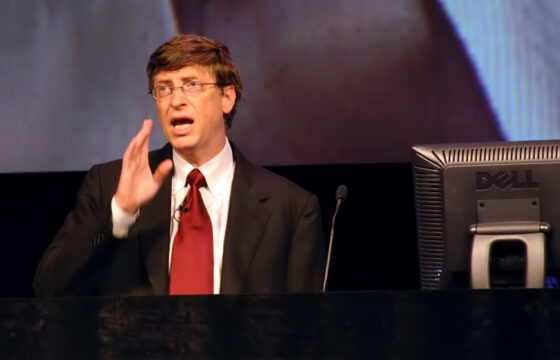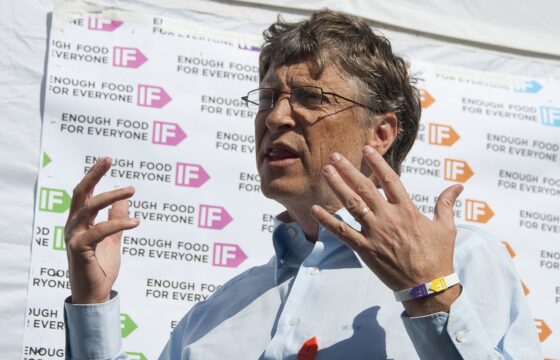
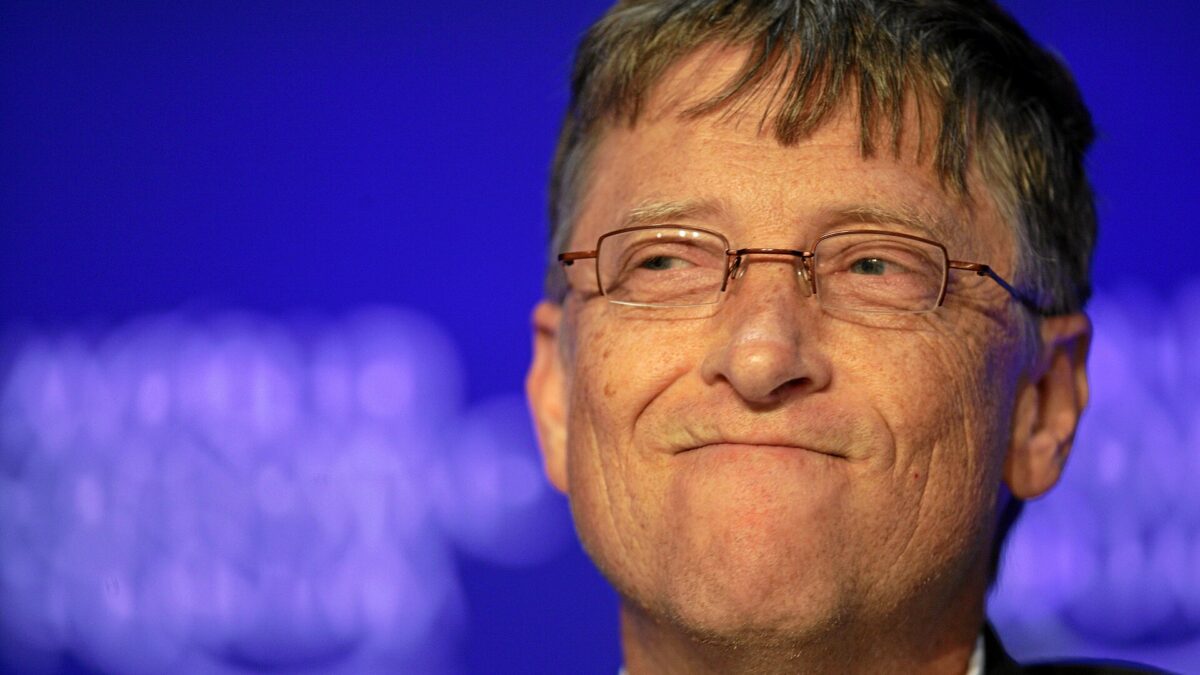
Bill Gates is an American businessman, computer programmer, writer and philanthropist best known for co-founding Microsoft with Paul Allen in 1975. He helped turn personal-computer software into a mainstream industry, led Microsoft through its most consequential growth years and later shifted much of his attention to global health, education, climate change and scientific research.
As of August 24, 2026, Gates is 70 years old. He was born William Henry Gates III on October 28, 1955, in Seattle, Washington. His public career spans the rise of the personal computer, the expansion of software licensing, large-scale philanthropy and efforts to accelerate innovation in health and clean energy.
Bill Gates at a glance
- Full name
- William Henry Gates III
- Born
- October 28, 1955, in Seattle, Washington
- Age as of August 24, 2026
- 70
- Known for
- Co-founding Microsoft and leading major philanthropic and technology initiatives
- Education
- Harvard University; left before graduating
- Current public roles
- Chair and board member of the Gates Foundation; founder of Breakthrough Energy
- Children
- Three
How Bill Gates became interested in computers
Gates grew up in Seattle with two sisters. His father, William H. Gates Sr., was an attorney and civic leader, while his mother, Mary Maxwell Gates, was a schoolteacher, University of Washington regent and United Way International chair. Gates attended Lakeside School, a private school where he first gained access to a computer through a teletype machine connected to a remote mainframe.
At Lakeside, Gates met Paul Allen, who was two years older and shared his interest in computing. Gates wrote his first software program at age 13, according to the EBSCO biography. The two students and other classmates formed a programming group that worked on software projects, an experience that helped establish the partnership behind Microsoft.
Gates entered Harvard University in 1973. He studied subjects including mathematics and computer science but remained focused on the emerging software business. He left Harvard in 1975 to pursue a company with Allen.
Why Microsoft changed the personal-computer business
The immediate opportunity came from the Altair 8800, an early microcomputer made by Micro Instrumentation and Telemetry Systems, or MITS. Gates and Allen developed a version of the BASIC programming language for the machine and demonstrated it to MITS. The resulting software arrangement helped launch the company first known as Micro-Soft.
Microsoft’s most important early breakthrough came through its work for IBM. In 1980, Microsoft supplied the operating system for IBM’s new personal computer. The system, known as MS-DOS, was licensed in a way that also allowed Microsoft to sell it to other computer makers. That model helped make Microsoft software an industry standard and gave the company a foundation for rapid growth.
Microsoft went public in 1986. The increase in the company’s stock price made Gates a billionaire and, in 1987, the world’s then-youngest billionaire at age 31. Microsoft later built its dominant consumer-software position around Windows and other products. Gates served as chief executive for about 25 years. He became chairman and president when Microsoft was incorporated in 1981, succeeded as CEO by Steve Ballmer in 2000, and later moved into the role of chief software architect.
His business record also includes controversy. Microsoft faced antitrust litigation over its business practices and the company’s position in personal-computer software. Those disputes are an important part of the historical record alongside Microsoft’s technological and commercial success.
When Gates left Microsoft’s daily leadership
Gates transitioned to full-time foundation work in 2008, according to the Gates Foundation. He stepped down as Microsoft’s board chair in 2014 and became a technology adviser to the company. This change did not end his connection to Microsoft, but it marked a clear shift from operating a software company to directing philanthropic and research priorities.
Gates’s career is therefore best understood in two broad phases: first, as a central figure in the personal-computer revolution and Microsoft’s expansion; second, as a major private funder and advocate in public health, education, climate and scientific innovation.
What the Gates Foundation does
Gates is chair and a board member of the Bill & Melinda Gates Foundation. In that role, he helps shape and approve the foundation’s strategy, advocates for its priorities and works with grantees and partners. The foundation says its work is aimed at improving equity in the United States and around the world, with major areas including global health, global development and education.
The foundation has focused on issues such as infectious disease, vaccines, malaria, tuberculosis, HIV, polio and maternal and child health. Its work reflects Gates’s long-running argument that research, public institutions and private investment must work together when markets alone do not adequately address a problem.
In 2010, Gates, Melinda French Gates and Warren Buffett founded the Giving Pledge. The effort encourages wealthy individuals and families to publicly commit to giving more than half of their wealth to charitable causes during their lifetimes or in their wills. A pledge is a public commitment, not a claim that a donor has already transferred a specific amount.
Gates’s climate and technology priorities
Through Gates Ventures, his private office, Gates pursues work involving climate change and clean-energy innovation, Alzheimer’s research, other health issues, interdisciplinary education and technology. He also founded Breakthrough Energy, an organization focused on supporting entrepreneurs, research and clean technologies intended to address climate change.
These efforts extend his technology background into areas where progress depends on more than a single product. Gates has emphasized the need for innovation in systems as well as technology, a view that connects energy research with policy, infrastructure, manufacturing and access.
His recent public writing and professional activity have continued to address global health, malaria, polio, Alzheimer’s research, artificial intelligence and zero-emission energy. Those subjects show the direction of his public work, but they should not be confused with proof that every proposed technology or intervention has succeeded.
How wealthy is Bill Gates?
Wealth figures for billionaires are estimates, not fixed account balances. The supplied biographical record, citing Forbes, puts Gates’s estimated net worth at $106.5 billion as of July 2026 and ranks him 19th among the world’s wealthiest people at that time. That figure can change with public-market prices, private-company valuations, investment activity, taxes and charitable giving.
Gates was ranked by Forbes as the world’s wealthiest person for 18 of 24 years between 1995 and 2017, including 13 consecutive years from 1995 through 2007. The same record says he became the first centibillionaire in 1999, when his net worth briefly exceeded $100 billion. Historical rankings and current estimates measure different moments; they should not be treated as a permanent position or a precise statement of cash holdings.
What is certain—and what remains limited
The established record is clear on Gates’s public career: he was born in Seattle, co-founded Microsoft with Paul Allen, left Harvard before graduating, led Microsoft during its defining expansion and became a major philanthropist. The Gates Foundation and Gates Ventures publicly describe his current institutional roles and areas of focus.
Other subjects require more caution. Public biographies may discuss family relationships, residences, personal habits or private activities, but those details are not necessary to understand his public significance. This profile does not publish private contact information, private addresses or details about minors. It also does not treat estimates, predictions or advocacy positions as verified outcomes.
For US readers searching “Who is Bill Gates?”, the shortest accurate answer is this: he is the Seattle-born co-founder of Microsoft who helped define modern personal computing and now directs a substantial part of his public life toward philanthropy, global health, climate innovation and scientific research.
Related coverage about Bill Gates
Bill Gates’s public identity is defined by a transition: from leading Microsoft during the personal-computer revolution to using private wealth, institutional philanthropy and technology advocacy to address global health, education, climate change and scientific research. His business achievements, charitable commitments and wealth estimates are related but distinct parts of the record.
Sources and methodology
- Bill Gates - Wikipedia: https://en.wikipedia.org/wiki/Bill_Gates
- Bill Gates: Chair & Board Member of the Gates Foundation: https://www.gatesfoundation.org/about/leadership/bill-gates
- Bill Gates | Biography | Research Starters - EBSCO: https://www.ebsco.com/research-starters/biography/bill-gates