
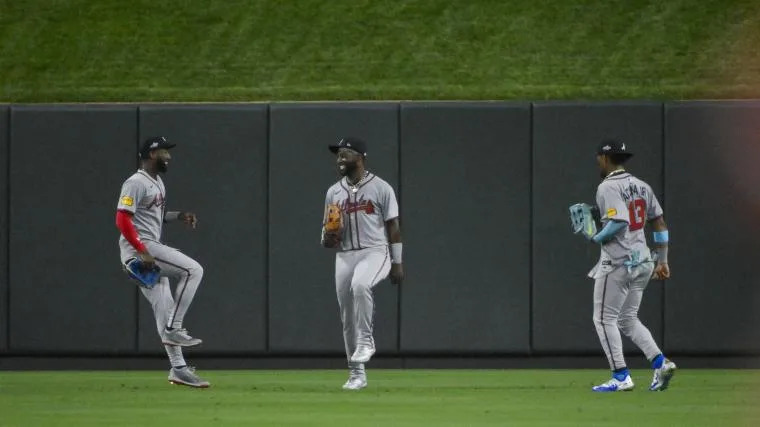
The Atlanta Braves stayed mostly quiet at the 2026 MLB trade deadline despite entering the period with a 67-45 record, the third-best mark in baseball, and an eight-game lead in the National League East. The available evidence points to a deliberate choice: Atlanta believed its current roster, offseason additions and potential returns from injured players could be enough, rather than forcing a blockbuster trade for an impact starter.
That conclusion is supported by the Braves’ roster situation and the way the decision was described after the deadline. Atlanta made modest upgrades instead of the major rotation move many observers expected. The evidence does not show which specific deals were available or what they would have cost, so it would be premature to say the team rejected one particular trade for one particular reason.

The deadline decision was about trust versus insurance
Atlanta’s position created a familiar deadline calculation. A team with a substantial division lead can buy additional pitching as insurance, but a major acquisition can also require giving up prospects, young players or roster flexibility. The Braves’ choice suggests the front office judged the likely benefit of a major addition against the cost of making one without certainty that it would materially improve the postseason outlook.
That was a riskier calculation because the rotation had obvious questions. The Braves had dealt with injuries to the pitching staff throughout the season, and the front office had openly acknowledged it was looking for an impact starter. In that context, standing pat was not the same as having no need. It was a decision to address the need through internal recovery and existing depth rather than an external acquisition.
Why the roster gave Atlanta a reason to wait
The Braves had entered the season with a group of offseason additions that included Ha-Seong Kim, Mike Yastrzemski, Robert Suarez, Mauricio Dubón, Dominic Smith and Jorge Mateo. The first source also identified Ronald Acuña Jr. and Drake Baldwin as key contributors who had spent time on the injured list.
Those details help explain the team’s logic, but they do not prove that every injured player would return at full strength or that the offseason additions would solve the deadline weaknesses. They show why Atlanta could view improvement from within as a realistic path. The same evidence also shows the downside: injuries had already affected the roster, and relying on recoveries increased the number of conditions that had to go right.
In practical terms, Atlanta was betting on its position in the standings and on the possibility that a healthier roster would look stronger later. That is different from proving the roster was complete. The distinction matters because a division lead can reduce the need for immediate change without removing the need to be ready for October.
Why the quiet deadline drew criticism
Frustration was predictable because the Braves’ record created expectations for an aggressive move. The team was positioned among baseball’s best, had a significant lead in its division and had a visible question in the rotation. Coverage after the deadline described disappointment from fans, media and the national baseball conversation.
A later report also framed the lack of pitching help as a consequence of the deadline decision, but the supplied material does not establish a specific performance decline caused by that choice. That causal claim remains open. The stronger, supportable point is that Atlanta accepted more rotation risk than a team adding an impact starter would have accepted.
What will determine whether the plan worked
The deadline itself cannot settle the argument. The next test is whether Atlanta receives enough from its rotation, its existing depth and players returning from injury to maintain its advantage and enter the postseason in a strong position.
If the staff stabilizes and the injured contributors return effectively, the quiet approach will look disciplined rather than passive. If the rotation remains a weakness, the criticism will gain force because the need was recognized before the deadline and no major insurance policy was added. The available evidence supports the decision’s logic, but not yet its outcome.
Atlanta's quiet 2026 trade deadline was less a declaration that the roster had no weaknesses than a decision to manage those weaknesses internally. The Braves held a 67-45 record and an eight-game division lead, but their pitching staff had faced injuries and the front office had acknowledged a search for an impact starter. By making only modest upgrades, Atlanta preserved its existing structure while accepting the risk that internal recoveries and depth would not be enough in October. The evidence confirms the choice and its surrounding pressures, but not the specific trade offers or valuations behind it. The plan will be judged by rotation stability and the effectiveness of returning contributors.
Sources and methodology
- Atlanta Braves Didn't Fail at the Deadline, They Stayed ... - https://www.justbaseball.com/mlb/atlanta-braves-didnt-fail-trade-deadline-they-stayed-disciplined
- Braves release $12M nine-year veteran, 2025 trade ... - https://www.sportingnews.com/us/mlb/atlanta-braves/news/braves-release-12m-nine-year-veteran-2025-trade-deadline-gem-surprising-move/c08d9e14994b0959b4858e4f
- Three things to know about the baseball trade deadline - https://www.ajc.com/sports/atlanta-braves/three-things-to-know-about-the-baseball-trade-deadline/6EIBHOMPENAGZAYA2JBJ4OUWPY