

Short answer: Iran’s economy has not been shown to have collapsed, but that does not mean it is healthy or that households are protected from the damage. Reporting published in July and August 2026 describes an economy absorbing war, sanctions, inflation, currency depreciation and possible shipping restrictions through domestic production, informal trade and alternative oil networks. The same mechanisms shift much of the cost onto consumers.
Claim: sanctions and war are pushing Iran toward collapse
The pressure is real. CNBC reported on Aug. 23, 2026, that the United States planned to announce what Treasury Secretary Scott Bessent called “the single greatest financial offensive ever” against Iran. The measures were described as an addition to an existing sanctions regime targeting Iran’s oil, shipping and financial sectors.

That report also said Tehran had threatened to seize vessels that violate its transit rules in the Strait of Hormuz. The escalation followed the failure of a 60-day ceasefire window, according to CNBC, which described the conflict as being in its sixth month. These developments create a direct risk for trade and energy flows, but the supplied evidence does not establish how many vessels would be affected or whether the threats would become sustained disruption.
Evidence: resilience is not the same as recovery
Al Jazeera’s July 28, 2026, report provides the clearest explanation for why economic collapse has not been verified. It describes Iran as having a relatively diversified domestic economy, with agriculture, manufacturing and services reducing its reliance on oil. The report also identifies cross-border trade, informal labor, maritime networks and shadow oil transfers as channels that help the country keep operating despite sanctions and war.
Those channels can preserve basic economic activity without restoring living standards. Al Jazeera reported inflation of about 90 percent, food prices that had more than tripled for some staples over the prior year, and wages that were failing to keep pace. Imported goods were becoming more expensive as the currency weakened against the U.S. dollar.
The distinction matters because “the economy has not collapsed” is a much narrower finding than “the economy is functioning normally.” Welfare economist Hadi Kahalzadeh, quoted by Al Jazeera, defined collapse as conditions such as famine or the state losing the ability to pay employees and provide basic services. On that definition, the report said Iran had not reached collapse. It did not say that households were avoiding severe hardship.
Why the distinction matters to household budgets
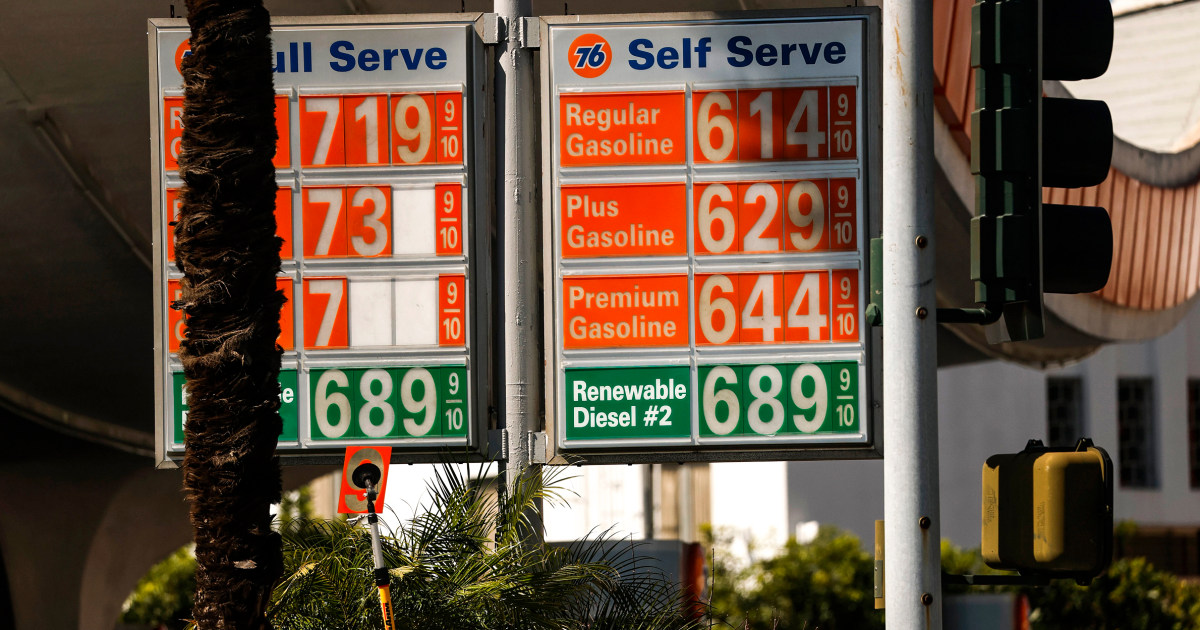
The effects can extend beyond Iran through energy prices, transportation and consumer spending. NBC News reported in March 2026 that the conflict had coincided with higher oil and gasoline prices in the United States. Its report said the average federal tax refund had reached $3,742 as of Feb. 27, 2026, while the average U.S. gasoline price cited from GasBuddy was $3.64 per gallon on March 13, about 72 cents higher than the prior month’s average.
NBC’s cited analysts argued that higher fuel and diesel costs can leave households with less money for restaurants, travel, clothing, home goods and other discretionary purchases. That is an economic mechanism, not proof that every price increase is caused by Iran-related events. For a household deciding how to use a tax refund or manage monthly spending, the practical implication is to treat fuel and food costs as competing demands rather than assume a larger one-time payment will translate into lasting financial relief.
What the evidence does not establish
The available reports do not provide a complete measure of Iran’s gross domestic product, government revenues, employment, reserves or ability to maintain public services. They also do not document the final text or enforcement scope of the sanctions package planned for Aug. 24, 2026. Without those details, it would be premature to assign a precise economic loss or claim that collapse is imminent.
There is also a difference between national resilience and individual welfare. Informal trade and currency depreciation may help goods move and businesses continue operating, but they can also make prices less predictable and reduce the purchasing power of wages. A system can therefore avoid a formal breakdown while becoming increasingly unaffordable for the people living inside it.
The next test is measurable, not rhetorical
The most useful next evidence is what happens after the planned U.S. sanctions announcement: whether oil exports, shipping access, currency values, food prices or public-sector payments change. Reports of vessel seizures or prolonged restrictions in the Strait of Hormuz would also provide a stronger basis for assessing whether the conflict is moving from financial pressure toward a broader trade shock.
For now, the responsible conclusion is narrower: Iran’s economy is under extraordinary stress, but the supplied evidence supports resilience under pressure rather than verified collapse. Readers should separate official predictions and threats from measurable changes in prices, trade and basic state capacity.
The evidence supports a more precise reading of Iran’s economic position in 2026: resilience is functioning as a survival mechanism, not as evidence of recovery. Domestic production, informal labor, cross-border trade and oil-shipping networks can keep activity moving while inflation and currency depreciation transfer the burden to households. The immediate uncertainty is whether the U.S. sanctions package planned for Aug. 24 will materially reduce those channels, and whether shipping threats in the Strait of Hormuz become sustained disruptions. Until measurable changes appear in prices, oil flows, trade or public payments, claims of imminent collapse remain unverified.
Sources and methodology
- iran economy - https://www.cnbc.com/2026/08/24/us-iran-war-trump-hormuz-bessent-economic-sanctions-.html
- Iran war threatens to erase economic boost of bigger tax ... - https://www.nbcnews.com/business/personal-finance/iran-war-tax-refunds-inflation-gas-rcna263337
- How has Iran's economy survived despite US war pressure - https://www.aljazeera.com/economy/2026/7/28/why-has-irans-economy-not-collapsed-under-us-war-pressure
- Iran bears biggest economic cost of Hormuz closure - https://www.iranintl.com/en/202607245216