
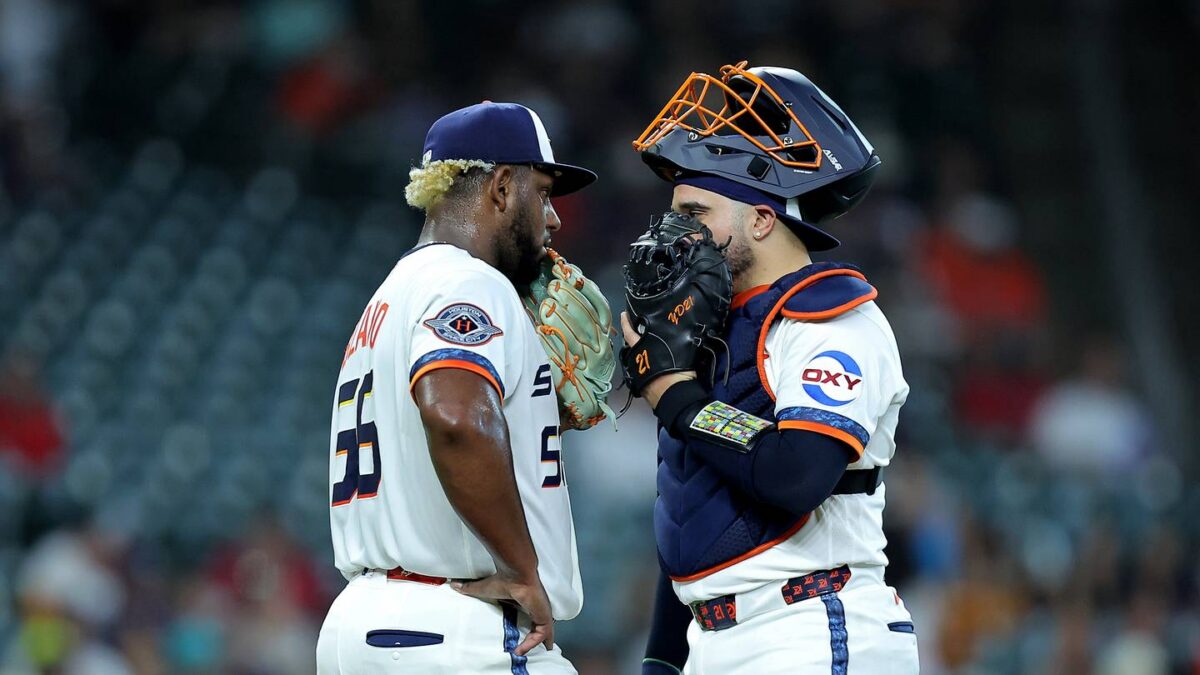
The Houston Astros did not add a pitcher at the 2026 trade deadline because the front office judged the available deals too expensive in player value, even though it viewed pitching as a real need. General manager Dana Brown said Houston came close in multiple discussions but ultimately could not accept the prospect cost attached to the pitchers it considered.
That makes the deadline outcome more specific than a simple decision to buy or sell. The Astros addressed the outfield by acquiring Daulton Varsho from the Toronto Blue Jays for pitcher Spencer Arrighetti, but left the pitching staff largely dependent on internal improvement and recent returns.

The confirmed reason: Houston stopped at the asking price
Brown said the Astros had “multiple conversations” about acquiring pitching and felt they came close several times. He also described the decision as a balance between the upside of adding a pitcher and the effect that trade would have on the organization’s prospect capital and future.
That explanation establishes the central fact: Houston pursued pitching but did not believe the final cost was acceptable. It does not establish which players were discussed, what prospects were requested or whether one particular deal reached a final stage. Those details remain unverified in the supplied evidence.
The financial picture gave Houston some room to make another move, but room under the competitive-balance-tax threshold did not eliminate the baseball cost of a trade. Entering Monday, the Astros were reported to be about $11 million below the first threshold. Cash received in the Varsho deal also helped offset part of his $10.75 million salary. The available evidence therefore points to prospect valuation, rather than a purely financial veto, as the main barrier.
The evidence behind the pitching concern
Houston’s decision came with clear reasons to explore the market. The Astros entered the deadline with the majors’ third-highest rotation ERA, according to the Houston Chronicle’s report, and their bullpen had worked the eighth-most innings in baseball. Those figures describe both performance and workload problems: the rotation had not consistently prevented runs, while the relief corps had been asked to cover a heavy share of the season.
The independent case for concern was also visible in Sports Illustrated’s assessment before the deadline. That report described Houston as a team close enough to the playoff race to justify a move but uncertain enough that a marginal addition might not materially improve its postseason outlook. It cited a 55-55 record, a negative run differential and postseason odds of about 30% at that point. Those estimates are not the same as a confirmed outcome; they explain why the value of a costly pitching trade was difficult to judge.
Houston also had an offensive need. The Chronicle reported that the outfield entered Monday with the fourth-lowest OPS in baseball, which helps explain why Varsho became the completed deal. The trade improved an area the club had identified as a priority, but it did not resolve the more consequential question of whether the pitching staff can hold up against stronger opponents.
What the choice saves—and what it risks
By declining a pitching trade, the Astros retained prospects that could support future moves or the organization’s next competitive cycle. That matters if the available pitchers were short-term upgrades or if sellers demanded premium young talent for limited control. Brown’s comments indicate the front office was unwilling to surrender that capital unless the player’s expected impact justified it.
The cost is operational rather than immediately financial. Houston must now find enough innings from its existing starters, recently returned players and bullpen. If the rotation improves, the decision can look disciplined: the team would have avoided paying a premium for help it did not ultimately need. If the rotation remains unstable, the deadline becomes a missed opportunity because the same weakness will be harder to repair once the postseason race tightens.
The evidence does not support declaring either outcome in advance. The Astros were close enough to remain in contention, but their underlying warning signs made the margin for error narrow. The completed Varsho trade may improve the outfield without changing that calculation.
The next test is performance, not deadline rhetoric
The most useful measure now is whether Houston’s pitching staff can reduce the burden on its bullpen and produce steadier starts. The supplied reports do not provide a guaranteed timetable for that improvement or identify a specific pitcher whose return will solve the issue.
For the Astros, the next verifiable milestone is the team’s performance through the rest of the 2026 regular season: rotation effectiveness, bullpen workload and the club’s position in the American League West and playoff race. Until those results arrive, the deadline decision is best understood as a calculated refusal to overpay—not proof that Houston solved its pitching problem by standing still.
Houston’s deadline decision was a trade-off between present roster risk and future flexibility. The evidence confirms that the Astros explored pitching and stopped when the requested player return became too costly, while their completed deal addressed an outfield weakness instead. That leaves a measurable question rather than a settled verdict: can recent pitching returns and the existing staff stabilize the rotation and reduce bullpen exposure? The supplied reports do not reveal the specific offers Houston declined, so claims about one failed deal or a single missed target would go beyond the evidence.
Sources and methodology
- Astros trade deadline: Why Houston didn't get pitching help - https://www.houstonchronicle.com/sports/astros/article/houston-trade-deadline-pitching-22372609.php
- The Mistake the Astros Cannot Afford to Make at the Trade ... - https://www.si.com/mlb/astros/onsi/mistake-astros-cannot-afford-make-trade-deadline
- Astros earn weak 'C-' grade for trade deadline after failing ... - https://www.sportingnews.com/us/mlb/houston-astros/news/astros-c-grade-trade-deadline-failing-address-one-key-need/db75c192a12e9166719f7513
- Houston Astros Sign-Stealing Class Says Covid-19 ... - https://news.bloomberglaw.com/product-liability-and-toxics-law/houston-astros-sign-stealing-class-says-covid-19-requires-refund