
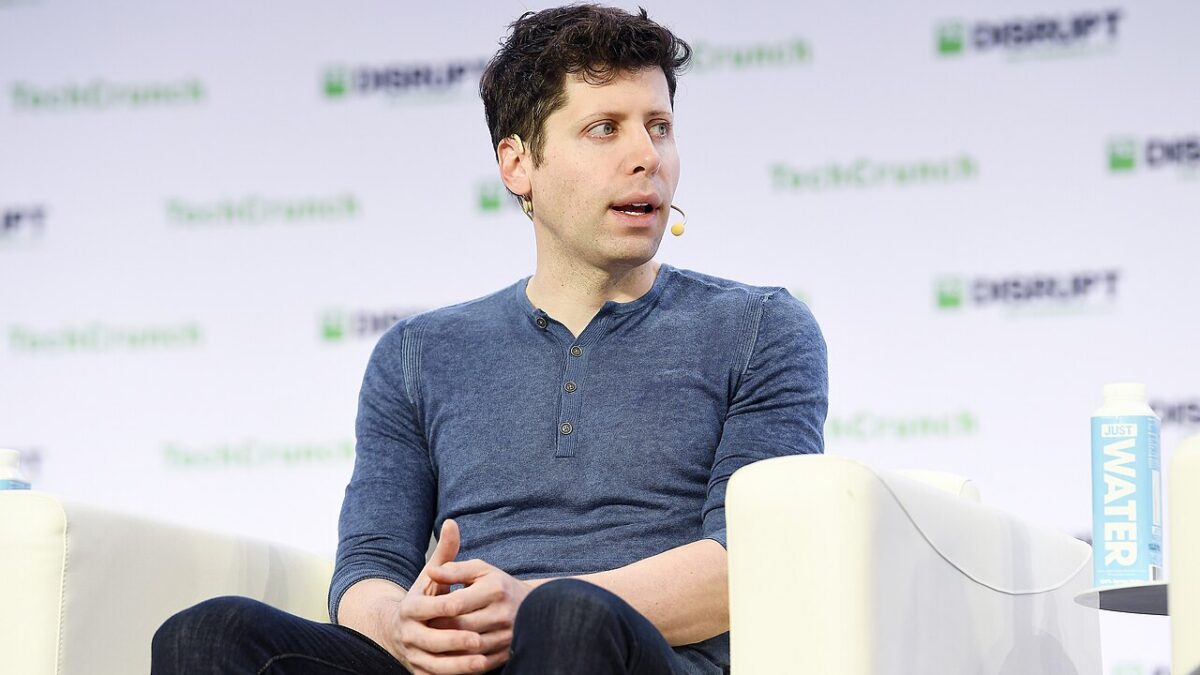
Sam Altman is an American entrepreneur and investor who serves as chief executive officer of OpenAI, the artificial intelligence company behind ChatGPT. He first became known in Silicon Valley as the co-founder of Loopt, a location-sharing startup, and later led Y Combinator, one of the technology industry’s most influential startup accelerators.
Altman’s public profile grew sharply after OpenAI released ChatGPT in November 2022. He became one of the most recognizable executives in artificial intelligence, while also attracting scrutiny over OpenAI’s governance, his investment portfolio and the company’s long-term plans for advanced AI.
Sam Altman at a glance
- Full name
- Samuel Harris Altman
- Born
- April 22, 1985, in Chicago, Illinois
- Current role
- Chief executive officer of OpenAI
- Education
- Studied computer science at Stanford University; left without completing a degree
- Early company
- Co-founder and former chief executive of Loopt
- Former leadership role
- President of Y Combinator from 2014 to 2019
- Known for
- Leading OpenAI during the launch and expansion of ChatGPT
- Family status
- Married to Oliver Mulherin since 2024; they have one child
Early life and education
Altman was born in Chicago and grew up primarily in the St. Louis area after his family moved there during his childhood. He attended John Burroughs School, a college-preparatory school in St. Louis. Biographical accounts describe him as becoming interested in computers at an early age; he received an Apple Macintosh when he was 8 and learned to program and examine its hardware.
He enrolled at Stanford University to study computer science but left after two years in 2005. Altman was 19 when he turned his attention to building a company. His decision to leave college became an early example of the risk-taking path that later shaped his career, although it is more precise to say that he attended Stanford rather than graduated from it. Biography.com’s account and Wikipedia’s biographical summary both identify Stanford as part of his educational background and note that he did not complete a degree.
Loopt gave him his first major exit
In 2005, Altman co-founded Loopt, a mobile application built around location sharing and social networking. The service was designed to let users share their whereabouts with friends, an idea that anticipated later debates about location data and social products.
Altman served as Loopt’s chief executive and raised more than $30 million in venture funding, according to the supplied biographical sources. The company did not achieve the user traction its backers had hoped for. Green Dot Corporation acquired Loopt in 2012 for $43.4 million, a figure reported by both Wikipedia and Business Insider. Altman used proceeds from the sale to deepen his involvement in startup investing.
How Y Combinator shaped his influence
Altman joined Y Combinator as a partner in 2011 and became its president in 2014, succeeding co-founder Paul Graham. During his tenure, he pushed the accelerator to expand its reach and to consider a wider range of technology companies, including businesses working on more technically demanding projects.
Y Combinator’s importance to Altman’s career was not only financial. The role positioned him as a mentor, evaluator and gatekeeper for a large network of founders. The accelerator’s portfolio included companies that later became widely known, including Airbnb, DoorDash, Instacart, Reddit and Twitch, according to Biography.com.
Altman left the presidency in 2019 to focus on OpenAI. Accounts of his departure differ in emphasis. Public biographies describe the move as a transition toward OpenAI, while the supplied Wikipedia extract also reports internal concerns about trust and investment access at Y Combinator. Those organizational disputes are part of the historical record, but they should not be treated as proof of wrongdoing beyond what the cited accounts specifically report.
OpenAI and the rise of ChatGPT
Altman was among the people who co-founded OpenAI in 2015. The organization began as a nonprofit artificial intelligence research company with a stated goal of developing advanced digital intelligence in ways intended to benefit humanity. Elon Musk and other technology figures were also involved in its founding, although Musk and Altman later became public adversaries in disputes over OpenAI’s direction.
Altman became OpenAI’s CEO in 2019. Under his leadership, the company developed and released generative AI systems including DALL-E and ChatGPT. ChatGPT became publicly available on November 30, 2022, and quickly turned OpenAI into a household name. Business Insider reported that the chatbot passed 1 million users within five days; later user totals have varied by product definition, date and reporting method.
The company’s growth also intensified questions about safety, competition, corporate structure and the concentration of power in a small number of AI companies. Altman has remained a prominent advocate for developing increasingly capable AI systems, including systems that could approach what the industry calls artificial general intelligence, or AGI. AGI does not have one universally accepted technical definition, so claims about whether it has been achieved remain matters of interpretation rather than settled fact.
The 2023 removal and return
In November 2023, OpenAI’s board announced that Altman had been removed as CEO and was leaving the board. The board said he had not been “consistently candid” in communications with it, which had affected its ability to carry out its responsibilities. The announcement triggered a rapid corporate crisis, including employee pressure and negotiations involving investors and Microsoft.
Altman returned as CEO five days later after a new board arrangement was reached. The episode remains one of the defining events in OpenAI’s history because it exposed the tension between the company’s nonprofit origins, commercial expansion and unusual governance structure. It also demonstrated Altman’s influence among employees, investors and technology partners.
Investments, wealth and what remains uncertain
Altman’s wealth is primarily associated with investments rather than a reported ownership stake in OpenAI. His portfolio has included companies such as Reddit, Stripe, Instacart, Helion Energy, Retro Biosciences and other technology or science ventures. He also co-founded Hydrazine Capital with his brother Jack Altman in 2012.
Wealth figures are estimates, not audited personal disclosures. Forbes estimated Altman’s net worth at $3.3 billion as of August 21, 2026, while describing his source of wealth as investments and reporting that he has no equity in OpenAI. Earlier estimates from other sources have differed, reflecting changes in private-company valuations and the difficulty of measuring holdings that are not publicly traded.
Altman has also invested in projects involving nuclear fusion, biotechnology and emerging digital-identity technology. Such investments can overlap with public policy and with companies operating in fields relevant to AI, which has prompted questions about potential conflicts of interest. The supplied Wikipedia extract reports that OpenAI’s board chair said Altman had been transparent about his investments. That is an attributed position, not an independent finding that eliminates every conflict concern.
Why Sam Altman matters
Altman’s career connects three major forces in American technology: startup finance, platform-scale software and frontier artificial intelligence. Loopt established him as a founder. Y Combinator gave him influence over a generation of startups. OpenAI made him a central public figure in the debate over how quickly AI should advance and who should control the systems behind it.
The most reliable description of Altman is therefore narrower than the mythology surrounding him. He is a repeat technology entrepreneur, a venture investor and the current CEO of OpenAI. His forecasts about AI, estimates of his wealth and claims about the industry’s future should be evaluated separately from the verified record of his education, companies and leadership roles.
Related coverage about Sam Altman
Sam Altman’s public story is best understood as a progression from startup founder to accelerator leader to AI executive. The verified record shows how Loopt and Y Combinator built his influence before OpenAI made him a defining figure in the modern AI industry; wealth figures and predictions about AI’s future remain estimates or interpretations.
Sources and methodology
- Sam Altman - Wikipedia: https://en.wikipedia.org/wiki/Sam_Altman
- Sam Altman: Meet the Tech Innovator at the Heart of OpenAI - Biography: https://www.biography.com/business-leaders/a65810455/sam-altman
- Sam Altman - Forbes: https://www.forbes.com/profile/sam-altman/
- The career rise of OpenAI's billionaire CEO, Sam Altman - Business Insider: https://www.businessinsider.com/sam-altman