
Lineage’s cleanup of its burned Boyle Heights warehouse was still underway in August 2026, leaving residents with a practical question: when will the odors, pests, truck traffic and disruption end, and who will pay if the work continues beyond the city’s deadline?
The latest available report, published by FOX 11 Los Angeles on Aug. 20, said Lineage described the cleanup as being in its final stretch. That update indicates progress, but it does not establish a final completion date or confirm that all rotting food has been removed.
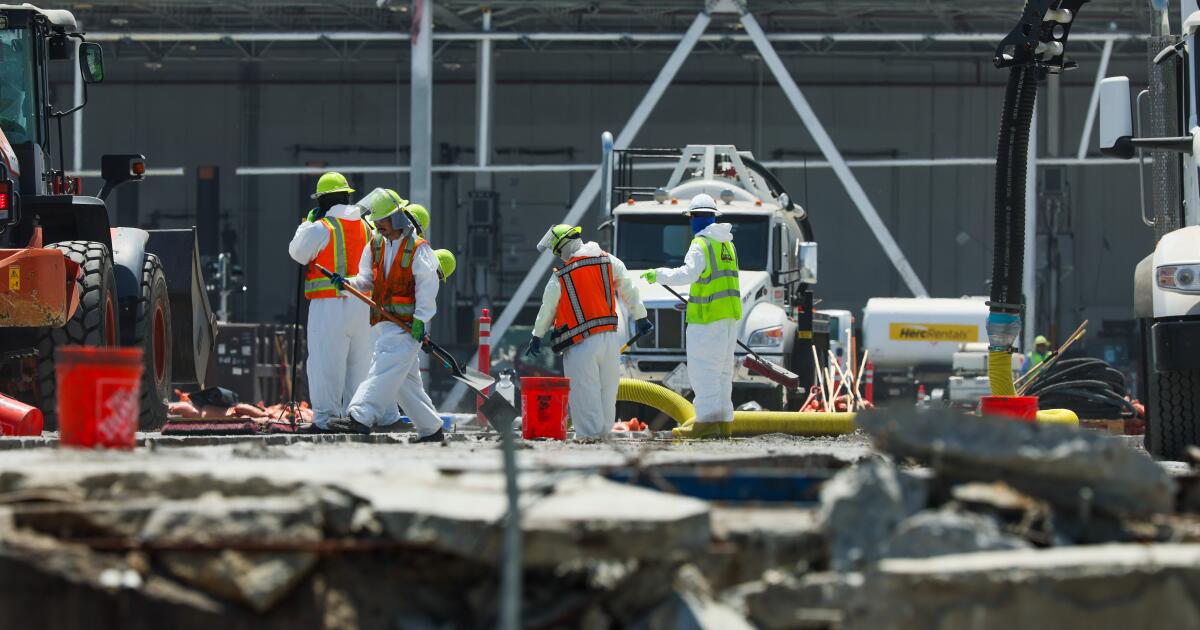
The uncertainty follows a dispute over a city-imposed deadline. The Los Angeles Times reported on Aug. 13 that city and county officials expected Lineage to finish removing rotting food by Friday, Aug. 14. A Lineage executive told the Times that the company would not complete the work by that date but argued that it had another week under a 45-day deadline.
Why the cleanup affects more than the warehouse
The central problem is the material inside a cold-storage facility that caught fire in June 2026. The LA Local reported that approximately 88 million pounds of food had been stored there when the fire occurred and that officials said Lineage would miss the deadline to clear it.
As food waste remains on or near the site, the consequence is not limited to a delayed industrial cleanup. The Times reported that Boyle Heights families had experienced strong odors, flies, pests, truck traffic and disruption to homes, businesses and daily life. Those effects create a direct trade-off: removing waste quickly may require sustained vehicle activity and heavy equipment, while delaying the work extends the neighborhood’s exposure to the conditions officials describe.
The evidence does not establish the precise health risk to residents, nor does it provide independent testing results for air, soil or water. It supports a narrower conclusion: the cleanup has created documented nuisance and quality-of-life concerns, while the available reports do not allow a definitive assessment of longer-term environmental or health effects.
The deadline dispute changes the accountability question
The disagreement over the date matters because a missed deadline can trigger enforcement and cost decisions. Mayor Karen Bass said the city was considering civil litigation, legal options for recovering costs and a lien on the property, according to the Times and the LA Local. A lien could give the city a legal claim against the property for eligible costs, but the supplied reporting does not confirm that one has been filed.
That leaves two separate issues for residents to track. The first is operational: whether Lineage completes the physical removal. The second is financial: whether public agencies seek reimbursement for emergency response, monitoring or related work, and whether those efforts result in penalties or other legal action.
Lineage’s position, as reported by the Times, is that the company has made significant progress and was working toward its interpretation of the 45-day deadline. City officials, meanwhile, treated the earlier date as meaningful and criticized the company for failing to meet it. Neither report establishes the final legal interpretation of the deadline.
What residents can verify next
The most useful next update would be a specific completion statement from Lineage or Los Angeles officials identifying whether all rotting food and debris have been removed. A credible update should also clarify whether any waste remains, what site monitoring continues and whether access or truck activity will change.
Residents should also watch for a formal city announcement about civil litigation, penalties, cost recovery or a lien. Public criticism alone does not prove that enforcement has begun. The available evidence shows officials discussing those options, not a completed legal action.
For now, the decision-relevant fact is that cleanup progress does not equal resolution. Lineage says the work is nearly finished, but the evidence still leaves the neighborhood without a confirmed end date and without a settled answer on the final cost burden.
The Lineage warehouse cleanup is best understood as two unresolved decisions rather than one missed date. The physical work is reportedly nearing completion, but the neighborhood still lacks a confirmed endpoint for odors, pests and truck activity. At the same time, Los Angeles officials are weighing whether public costs should be recovered through litigation, penalties or a lien. The available reporting supports the existence of those concerns and proposals, but not a final legal outcome, a complete waste tally or an independently verified environmental assessment. The next meaningful update is therefore a documented completion milestone paired with a clear statement of financial responsibility.
Sources and methodology
- Another cleanup deadline for Lineage - FOX 11 Los Angeles - https://www.foxla.com/video/fmc-noo08e39vtjjy8m2
- L.A. says Lineage will miss deadline - https://www.latimes.com/california/story/2026-08-13/lineage-boyle-heights-warehouse-deadline
- Lineage won't meet city's cleanup deadline - https://thelalocal.org/neighborhoods/boyle-heights/lineage-deadline-clean-up-boyle-heights
- Another Boyle Heights cleanup deadline arrives for Lineage - https://ktla.com/news/local-news/lineage-logistics-boyle-heights-cleanup-deadline-2