
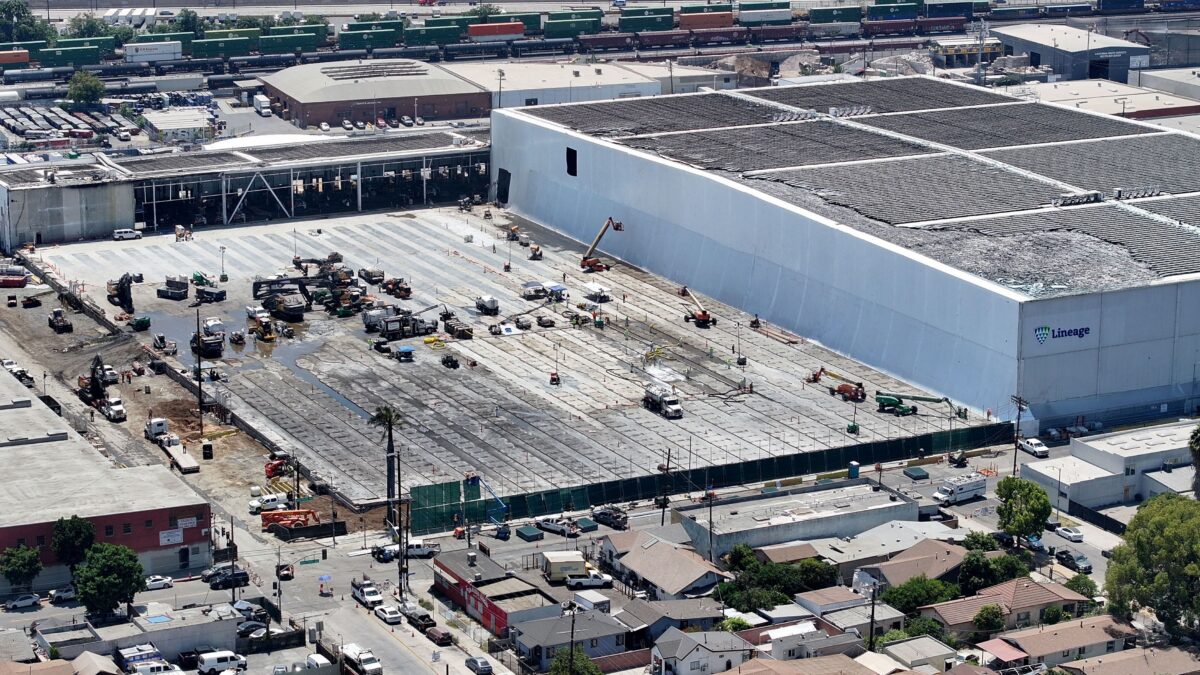
Lineage’s cleanup of its burned Boyle Heights food warehouse remained unresolved after the company missed a city deadline and Los Angeles Mayor Karen Bass said it also failed to meet a second deadline on Aug. 20, 2026. The immediate consequence for nearby neighborhoods is that odor complaints and concerns about flies, rats and other pests may continue while officials determine whether the site is actually clear.
The evidence supports a narrower conclusion than either side’s headline figure: cleanup work was substantial, but completion of the entire affected facility was not independently established in the supplied reports.
Why the cleanup is difficult to verify
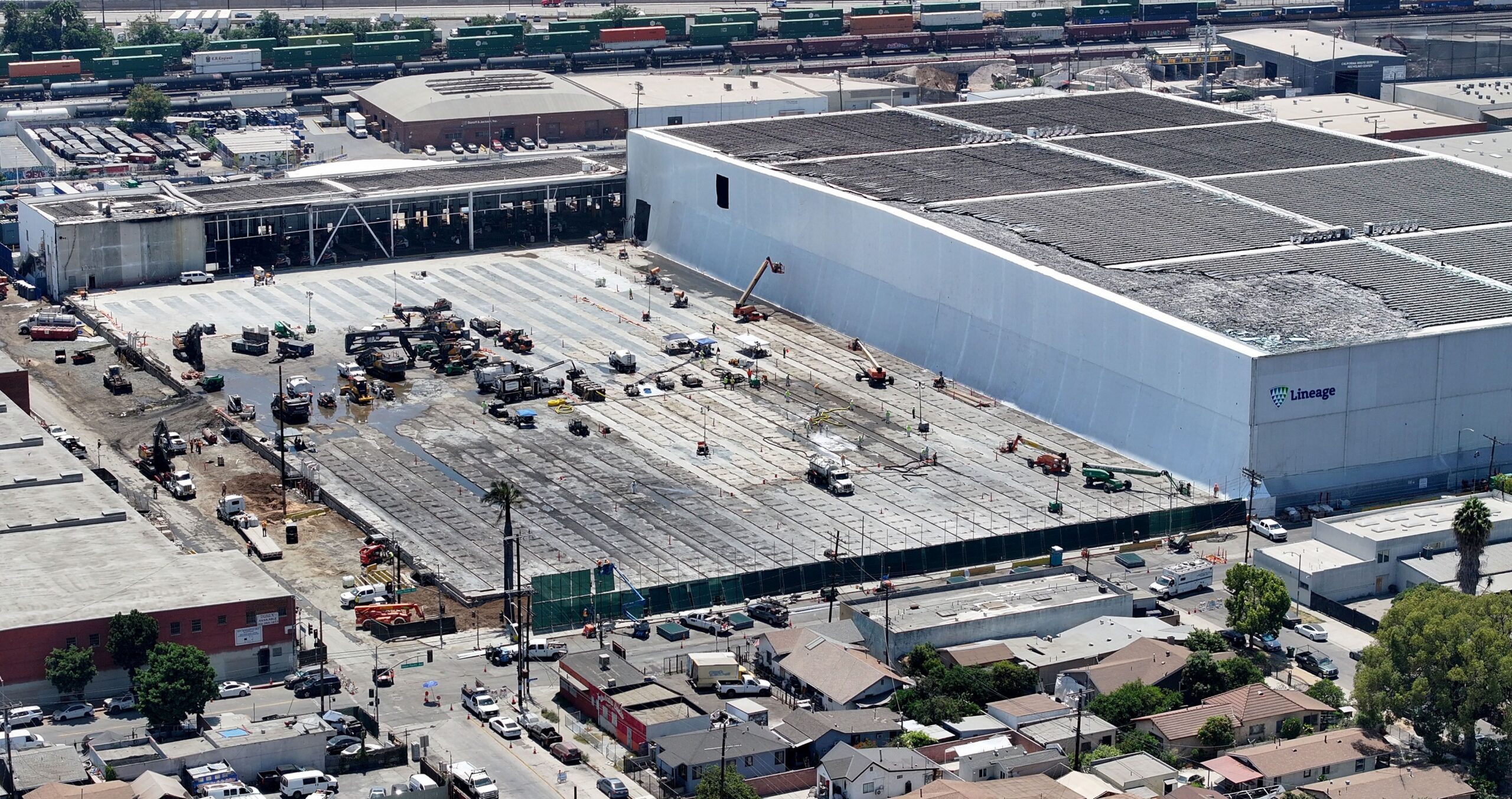
The warehouse contained large quantities of food that deteriorated after the June fire. The Los Angeles Daily News reported that the company was removing bulk food waste from the facility and said the remaining material was lodged inside a six-story rack system spanning 40 miles of shelving. According to a company statement quoted by the Daily News, some areas could not be reached by heavy equipment, requiring workers in protective gear to manually push product down while other crews cleared the building bay by bay.
That mechanism explains why a reported percentage can diverge from an on-site inspection. Lineage said in a community update that it had removed 101.8% of the bulk food waste from Freezer 1, the unburned structure. The LA Local report also said city personnel observed food waste inside the warehouse on Aug. 20. Those statements describe different measurements and viewpoints; the 101.8% figure, attributed to Lineage, does not by itself verify that every part of the burned facility was clean.
Two deadlines, two different accountability tests
Los Angeles officials had set Aug. 14 as the deadline to remove the food and fire-damaged material, according to the Daily News and The LA Local. The company disputed when that deadline expired, saying the 45-day timetable set by Mayor Bass did not end until later in the week.
A separate deadline came from the South Coast Air Quality Management District. The LA Local reported that Lineage faced an Aug. 20 deadline to remove remaining food and that Bass said the company had failed to meet it. The Daily News likewise described Thursday as the deadline imposed by air quality regulators, while quoting Lineage as saying completion was expected “in the coming days.”
The difference matters because a company progress update and a regulator’s completion determination serve different purposes. Lineage’s statement describes the work it says has been performed. An inspection can test whether inaccessible racks, damaged sections and remaining loose product have been addressed under the applicable order. The evidence pack does not include that order or a final inspection result.
Who is affected beyond the warehouse
Residents in surrounding neighborhoods have generated thousands of odor complaints, according to the FOX 11 Los Angeles report. The LA Local report connected the unresolved cleanup to continuing community concern about remaining food waste. For nearby residents, the practical issue is not the company’s internal completion percentage but whether odors and pest concerns decline after the material is removed and the site is inspected.
Small businesses and private nonprofit organizations affected by the June fire also became eligible for low-interest federal disaster loans after the Small Business Administration approved California’s disaster declaration request, the Daily News reported. The supplied evidence does not specify loan amounts, application deadlines or individual eligibility, so affected organizations should not treat the article’s account as a complete guide to assistance.
The next verifiable milestone
The next checkpoint identified in the evidence is a city inspection planned for Friday, Aug. 21, 2026. Bass said city personnel had been inside the warehouse on Thursday and observed remaining food waste, then planned to inspect again the following day. That inspection could clarify whether the reported cleanup figure applies to the whole facility or only to a defined portion of the work.
Until an official inspection or regulatory closure document is available, the responsible reader takeaway is conditional: Lineage has reported major progress, but the supplied evidence does not establish that the cleanup is complete. The strongest signal to watch is not another percentage announcement; it is a documented inspection finding that addresses the remaining food waste and the specific deadline requirements.
The Boyle Heights cleanup dispute is best understood as a verification problem, not simply a missed deadline. Lineage says it removed more than the bulk-food baseline from Freezer 1, but officials reported seeing food waste inside the warehouse and said another inspection was needed. The reports also describe physical obstacles, including product lodged in tall rack systems that workers must clear manually. That makes the next inspection more useful than another company percentage: it can establish whether the metric covers the damaged sections, whether remaining material violates the regulatory order and whether neighborhood odor and pest concerns have a measurable path to improvement.
Sources and methodology
- Another cleanup deadline for Lineage - FOX 11 Los Angeles - https://www.foxla.com/video/fmc-g04emkx9bu9j9coo
- Another deadline passing for cleanup of burned-out Boyle ... - https://www.dailynews.com/2026/08/20/another-deadline-passing-for-cleanup-of-burned-out-boyle-heights-food-warehouse
- Lineage faces deadline to remove food from Boyle Heights ... - https://thelalocal.org/neighborhoods/boyle-heights/lineage-faces-aqmd-deadline-to-remove-food
- L.A. says Lineage will miss deadline - https://www.latimes.com/california/story/2026-08-13/lineage-boyle-heights-warehouse-deadline