

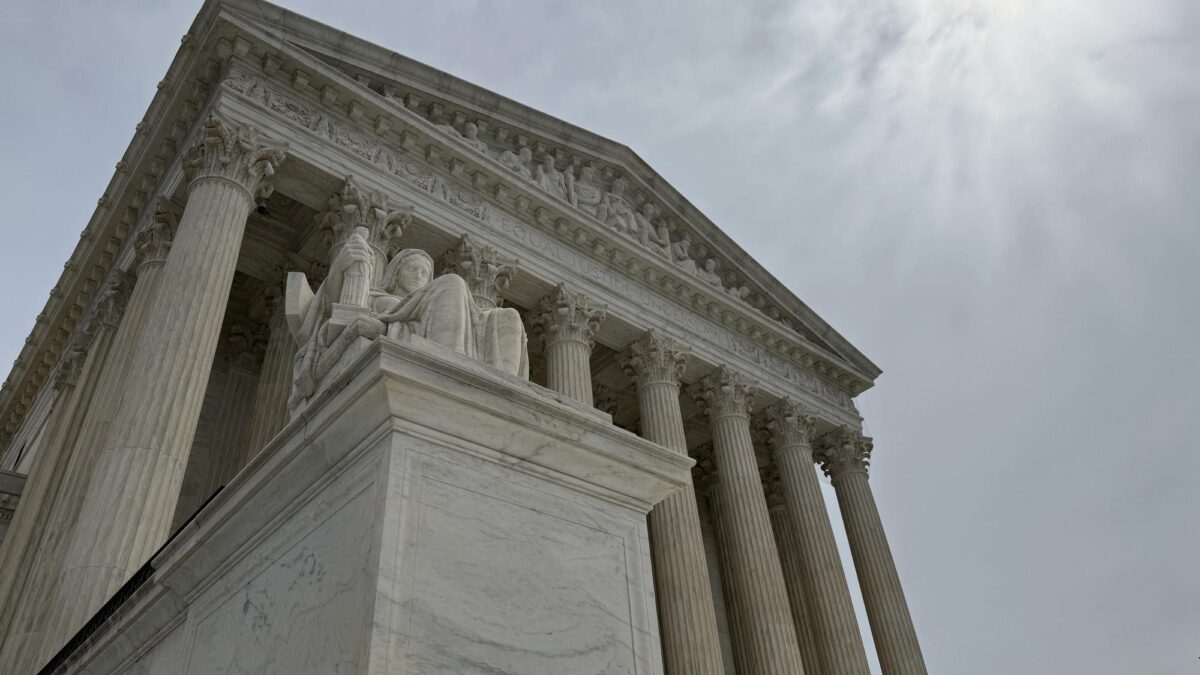
The immediate answer for Texas families and people who download apps is practical rather than final: the Supreme Court did not restore district-court orders that had blocked enforcement of a Texas law requiring parental consent and age verification for app-store downloads and purchases of paid content within apps. That means the requested judicial barrier to enforcement was not put back in place. It does not, on the evidence available, settle whether the law will ultimately survive the underlying litigation.
The July 2026 order is also a useful example of why the Supreme Court’s emergency docket matters outside legal circles. These orders can change what governments, businesses, and users must navigate now, even when the fuller court fight remains unresolved.
The claim: an emergency order can reshape everyday access
Texas’s law reaches two routine actions: downloading an app through an app store and buying paid content within an app. SCOTUSblog reported that a youth advocacy organization and a trade group had asked the Supreme Court to reinstate district-court orders preventing Texas from enforcing those requirements. The Court denied those requests.
For a reader deciding what to do, the near-term takeaway is limited but consequential. A Texas parent, young app user, or household that expects seamless access to downloads and paid in-app content should not assume the earlier court blocks remain in force. The trade-off is straightforward: requirements framed around parental involvement and age verification may affect convenience and access while legal challenges continue.
That is not the same as a Supreme Court declaration that Texas’s policy is lawful. The available report identifies a denial of requests to reinstate lower-court orders, not a final merits decision explaining the constitutionality of the law.
The evidence: emergency-docket decisions are usually interim tools
Emergency-docket applications move on an accelerated track, often while litigation is still underway in lower courts. Harvard Law School described these matters as typically involving abbreviated written briefing and no oral argument. Orders are often short and unsigned, without the detailed reasoning commonly associated with decisions after full briefing and argument.
That procedural context matters. It is tempting to treat any Supreme Court intervention as the last word, particularly when it changes what happens on the ground. But an emergency ruling generally answers an immediate request for relief. It may determine whether a policy is blocked or allowed to operate during litigation without delivering the final resolution that comes later.
The National Constitution Center likewise notes that important Supreme Court actions do not always arrive through traditional merits decisions. Its 2026 educational overview describes emergency actions as an increasingly prominent part of the Court’s work and points to disputes where interim orders can carry major real-world stakes.
Why app access makes the procedural fight more personal
Emergency-docket coverage can sound abstract because it centers on stays, injunctions, and procedural requests. This Texas dispute shows the consumer-facing side. The reported law concerns app downloads and paid content inside apps—activities that can be part of how families use phones and other devices.
For people affected by the Texas law, the decision is not necessarily to stop using apps. It is to recognize that access may be governed by parental-consent and age-verification requirements while the case proceeds. Readers should be cautious about claims that the Supreme Court has permanently endorsed or invalidated the policy; neither conclusion is established by the order described in the available reporting.
The record also leaves important first-hand questions unanswered. The supplied evidence does not detail how the law’s requirements will be administered in practice, what particular verification process users may encounter, or how individual app providers will respond. Those details should not be assumed from the Court’s denial alone.
A broader emergency-docket debate, with competing concerns
Legal scholars have debated whether heavier reliance on emergency orders is a necessary response to urgent nationwide disputes or a process that gives high-stakes issues too little public explanation. Harvard Law School reported both sides of that argument: one view emphasizes the need to respond when lower-court rulings halt national policies; critics worry that temporary orders can effectively become decisive in important disputes without the usual level of briefing and reasoning.
The Texas app-access case does not resolve that institutional debate. It does show its stakes. A short order can alter the immediate legal environment for a state policy affecting families, users, advocacy organizations, and the app economy, while leaving the central legal questions for later proceedings.
What to follow instead of treating this as the endpoint
The next meaningful signal is not another broad prediction about the emergency docket. It is the next lower-court action in the challenge to the Texas law. A ruling, filing, or further request for interim relief could clarify whether the disputed requirements remain operative and whether the case advances toward a more complete judicial decision.
Until then, the most responsible reading is narrow: the Supreme Court declined to restore the requested lower-court blocks in July 2026. That has immediate consequences for enforcement, but the ultimate fate of the Texas app-access law remains unclear in the evidence provided.
The notable part of this July 2026 Supreme Court action is not simply that an emergency-docket request was denied. It is that a procedural order can shape the immediate rules around ordinary app access while leaving the ultimate legal dispute unsettled. SCOTUSblog reported that the Court declined to restore lower-court blocks on Texas requirements involving parental consent and age verification. Harvard Law School's discussion of the emergency docket helps explain the limit: these accelerated orders often address interim relief without the extensive briefing, argument, or reasoning associated with merits decisions. For affected readers, the practical issue is current enforceability; the unresolved issue is the law's final legal status.
Sources and methodology
- The latest emergency docket ruling - https://www.scotusblog.com/2026/07/the-latest-emergency-docket-ruling
- The Supreme Court's Emergency Docket - https://constitutioncenter.org/education/constitution-in-the-headlines/the-supreme-courts-emergency-docket
- Shedding light on the Supreme Court's shadow docket - https://hls.harvard.edu/today/shedding-light-on-the-supreme-courts-shadow-docket
- Supreme Court shadow docket cases on the rise - https://spectrumlocalnews.com/us/snplus/news/2026/05/01/experts-say-high-profile-supreme-court-shadow-docket-cases-have-increased--with-major-implications-for-trump-and-the-nation