

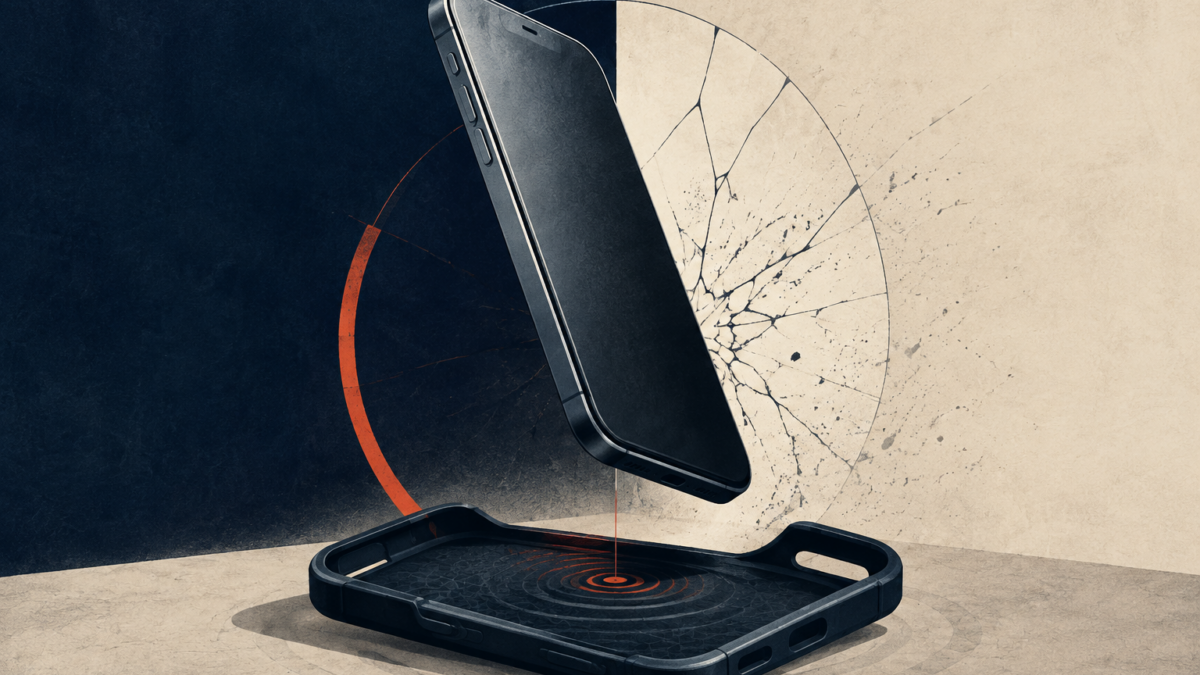
The practical answer is not that every iPhone needs a case, or that every case is worth buying. It is that going without one trades lower bulk and a more direct feel for greater exposure to damage. The evidence supports modern smartphones being tougher than older models, but it does not support treating a case-free iPhone as risk-free.
The case-free appeal is real
The strongest argument against a case is tactile. A bare phone is thinner in the hand, shows the design more clearly and avoids the added material around the edges. The BBC explored that appeal in an article published on April 13, 2025, describing a growing group of phone owners who use their devices without a case or screen protector. Its account also reported that newer phones can sometimes survive drops from more than 2 meters, or 6.6 feet.
That “sometimes” matters. A drop is not a standardized event: the landing surface, impact point and object that strikes first can change the result. The BBC’s reporting presents tougher phones as a meaningful development, not as proof that damage is unlikely.
Why one bad drop can change the calculation
An Apple Community discussion from May 1, 2024 shows why the decision remains personal. The original question came from an iPhone 13 Pro Max owner asking whether a screen shield could be enough for drops of up to 5 feet. One experienced responder described a phone breaking after a fall of less than 3 feet, while another advised a case for anyone who could not comfortably pay for a replacement. Other replies emphasized that neither a case nor a screen protector guarantees protection.
Those comments are anecdotes, not controlled testing. They do, however, identify the practical downside: a case can reduce the consequences of an accident, but it cannot eliminate them. A screen protector may help with some screen damage, yet the evidence supplied here does not show that it replaces full case coverage.
What independent testing says about alternatives
Wirecutter’s guide, updated March 16, 2026, takes a category-by-category approach rather than naming one universal answer. It says its recommendations come from testing hundreds of cases and lists options for basic protection, leather, wallet use, clear designs, maximum protection, thinness and accessory compatibility.
Its recommended basic case, the Smartish Gripmunk, is described as generally available for $10 to $20. Wirecutter says the case provides shock absorption, finger grooves and covered buttons while remaining flexible enough to install easily. It also lists versions for several iPhone generations, including models with MagSafe support. These are Wirecutter’s testing conclusions and product recommendations, not a guarantee that the case will prevent damage in every accident.
The price point changes the decision for some owners. A relatively inexpensive third-party case may be a modest cost compared with replacing a damaged phone, but the supplied evidence does not provide repair prices, insurance terms or a quantified probability of breakage. The rational choice therefore depends on how an owner handles the phone, how costly a replacement would be and how much they value the bare-device feel.
The Apple-specific claim remains unverified
The original search topic centers on no longer buying an iPhone case from Apple. The supplied evidence does not verify why an Apple-branded case should be rejected, whether Apple sells a particular case in the relevant period, or whether its protection, price or durability differs from the third-party products reviewed by Wirecutter.
That distinction prevents a broader conclusion from being overstated. The evidence supports comparing case-free use with tested alternatives. It does not support a verdict about Apple’s case business specifically.
A decision based on exposure, not fashion
For an owner who rarely drops a phone, values the original feel and can absorb the cost of damage, case-free use may be a deliberate trade-off. For someone who regularly drops a phone, carries it around hard surfaces or cannot easily fund a replacement, the protection argument is stronger. A thin case may address some of the bulk objection; a more protective model may make sense when damage costs matter more than appearance.
The next step is model-specific testing. Phone durability claims vary by device and impact conditions, while case performance varies by design. Until those details are available, “tougher than before” is useful context—not a substitute for deciding how much risk the owner can accept.
The useful question is not whether modern iPhones are indestructible. It is how much risk an owner is willing to carry in exchange for a thinner, more natural-feeling device. The supplied evidence supports a middle position: newer phones may withstand more abuse, but drops remain unpredictable, and cases still serve distinct protection and grip needs. Independent testing also shows that alternatives span thin, basic, rugged and accessory-focused designs. What cannot be established from the evidence is the central Apple-specific quality or value claim. That makes the decision a personal cost-and-exposure calculation, not a settled verdict on one manufacturer.
Sources and methodology
- The 8 Best iPhone Cases for 2026 | Reviews by Wirecutter - https://www.nytimes.com/wirecutter/reviews/best-iphone-cases
- Does iPhone need case - Apple Community - https://discussions.apple.com/thread/255599579
- Is it finally safe to ditch your phone case? I put it to the test - BBC - https://www.bbc.com/future/article/20250410-why-your-phone-doesnt-need-a-case-anymore