
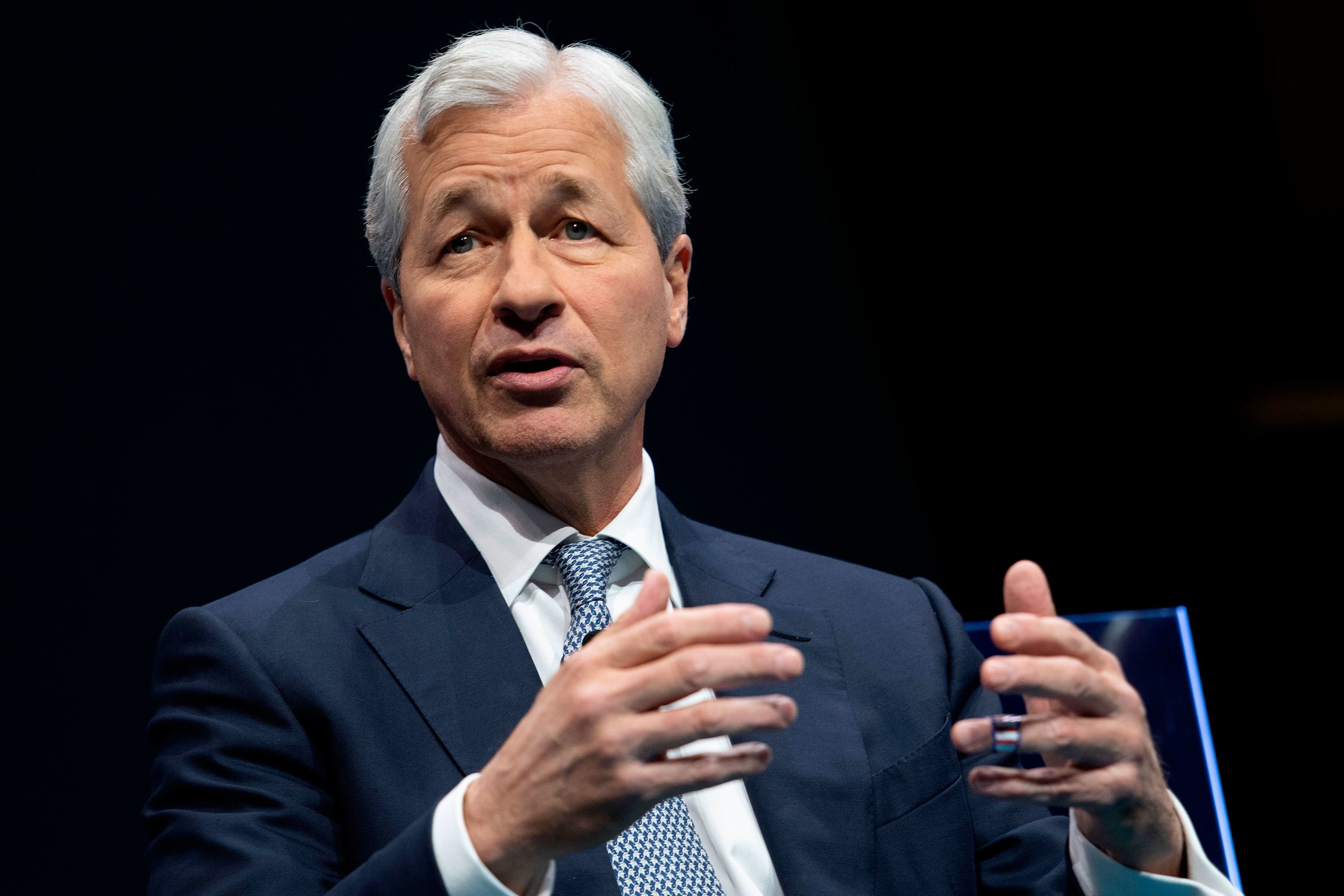
Jamie Dimon is an American banker and financial-services executive who has led JPMorgan Chase for more than two decades. He became chief executive officer on January 1, 2006, and chairman of the board one year later, according to JPMorgan Chase’s official leadership biography. As of August 31, 2026, he remains the company’s chairman and CEO.
Dimon is best known for steering JPMorgan Chase through the 2008 financial crisis and for building a career across consumer finance, insurance, brokerage, investment banking and commercial banking. His path to the top was not linear: he worked under financier Sandy Weill, left Citigroup after a high-profile break with Weill, rebuilt his career as Bank One’s CEO and then became the central executive in Bank One’s merger with JPMorgan Chase.
Jamie Dimon at a glance
- Full name
- James Dimon
- Born
- March 13, 1956, in New York City
- Age
- 70 as of August 31, 2026
- Current role
- Chairman and chief executive officer of JPMorgan Chase
- Education
- Bachelor’s degree from Tufts University; MBA from Harvard Business School
- JPMorgan Chase CEO since
- January 1, 2006
- Chairman since
- December 31, 2006
- Family
- Married to Judith Kent; they have three daughters
Where did Jamie Dimon grow up?
Dimon was born in New York City on March 13, 1956, and grew up in Queens. The supplied biographical record identifies his family as Greek American and says his father and grandfather worked as stockbrokers. Dimon attended the Browning School in Manhattan before studying at Tufts University, where he earned a bachelor’s degree in economics and psychology in 1978.
After college, he worked as a management consultant in Boston and then attended Harvard Business School. He graduated in 1982 with an MBA and received Baker Scholar honors, an award given to students in the top portion of their graduating class. During business school, he also worked at Goldman Sachs for a summer.
How did Dimon enter finance?
Dimon’s early career was shaped by Sandy Weill, a senior financial executive who had known the Dimon family. After Harvard, Dimon turned down offers from Goldman Sachs, Morgan Stanley and Lehman Brothers to join Weill at American Express. When Weill left American Express in 1985, Dimon followed him to Commercial Credit, a consumer-finance company.
At Commercial Credit, Dimon became chief financial officer at age 30 and later president. The company expanded through acquisitions, including the purchase of Primerica Corporation in 1987 and The Travelers Corporation in 1993, according to JPMorgan Chase’s account of Dimon’s career. Dimon later served as president and chief operating officer of Travelers and as chief operating officer of its Smith Barney subsidiary.
These roles gave Dimon experience beyond traditional commercial banking. A profile of Dimon by the Chase Alumni Association, which interviewed biographer Duff McDonald, describes him as a financial-services executive and operations specialist whose background included consumer lending, insurance, brokerage and investment banking. That range helps explain why his career has often been defined by managing complex businesses rather than by a single narrow specialty.
Why did Jamie Dimon leave Citigroup?
In 1998, Dimon became president of Citigroup, the financial-services company created by the combination of Travelers Group and Citicorp. He left the company later that year after Weill asked him to resign. The precise cause of the split has been described differently in published accounts. Business Insider reported that Weill later said Dimon wanted to become CEO before Weill was ready to retire, while other accounts have cited disagreements over Dimon’s status and authority.
The important documented point is that Dimon’s departure ended his long working relationship with Weill and forced him to find a new route to senior leadership. In 2000, he became chairman and CEO of Bank One, then one of the largest banks in the United States. That appointment established Dimon as a chief executive in his own right rather than only as Weill’s protégé.
When did Dimon become CEO of JPMorgan Chase?
JPMorgan Chase merged with Bank One in July 2004. Dimon became president and chief operating officer of the combined company. He was named CEO on January 1, 2006, and chairman on December 31, 2006. He has held both positions since then, based on the company’s official biography.
His leadership has included an emphasis on operating discipline, detailed financial review and risk management. The Chase Alumni Association’s interview with McDonald characterizes Dimon as highly focused on data and on understanding the details of businesses below the executive level. That description is an attributed assessment, not an independently measurable fact, but it is consistent with the management style described in multiple supplied accounts.
What was Dimon’s role during the 2008 financial crisis?
JPMorgan Chase was one of the major financial institutions involved in the emergency consolidation of the U.S. banking system during the 2008 crisis. Under Dimon, the company agreed to acquire Bear Stearns and later acquired Washington Mutual. Business Insider reported that JPMorgan purchased Bear Stearns for $10 a share and described the Washington Mutual transaction as the largest U.S. savings-and-loan acquisition at the time.
Dimon’s reputation benefited from JPMorgan Chase’s relative strength during the crisis, but that record was not free of setbacks. In 2012, the company disclosed at least $2 billion in losses from trades intended to hedge broader credit risks. Dimon called the strategy “flawed, complex, poorly reviewed, poorly executed and poorly monitored,” according to the supplied historical record. The episode became associated with the trader known as the “London Whale” and was investigated by federal authorities.
That distinction matters. Descriptions of Dimon as an unusually successful crisis-era bank leader are assessments built partly on JPMorgan Chase’s performance and transactions. They should not be read as evidence that every decision made during his tenure succeeded or that the bank avoided major control failures.
What is Jamie Dimon’s role at JPMorgan Chase today?
JPMorgan Chase describes itself as a global financial-services firm with $3.2 trillion in assets and operations worldwide. Its businesses include investment banking, consumer and small-business financial services, commercial banking, payment processing and asset management. Those figures and descriptions come from the company itself and should be understood as corporate-reported information.
Dimon also maintains a public voice on economic policy and business conditions. His LinkedIn profile identifies him as chairman and CEO and lists a May 2026 article titled “Policy Matters,” in which he discussed U.S. economic growth. His public commentary does not establish government policy or independent economic forecasts; it shows how he presents his views as a corporate leader.
What is known about Dimon’s family and wealth?
Dimon is married to Judith Kent, whom he met at Harvard, and they have three daughters. Those details have been publicly reported, but they do not provide a basis for broader claims about the family’s private life. This profile does not include private addresses, personal contact information or details about minors.
Wikipedia’s supplied entry cites a Forbes estimate placing Dimon’s net worth at $3 billion as of December 2025. That is an attributed estimate, not a verified accounting of his assets. Net-worth figures can change and depend on valuation methods, so the figure should not be presented as a precise current fact as of August 31, 2026.
How should Jamie Dimon’s career be understood?
Dimon’s career combines three strands: a long association with Sandy Weill, repeated responsibility for integrating financial businesses and sustained leadership of the largest U.S. bank by several commonly used measures. He moved from consulting and consumer finance into a succession of executive roles, survived a sudden exit from Citigroup, led Bank One and then used the JPMorgan Chase merger as the platform for his longest period of influence.
Supporters point to JPMorgan Chase’s scale, crisis-era resilience and expansion under his leadership. Critics and historical accounts also point to the bank’s risk-control failures, including the 2012 trading loss, and to Dimon’s demanding and sometimes blunt management style. The evidence supports both parts of that picture. The most defensible summary is that Jamie Dimon is a highly influential, long-serving financial-services executive whose record includes major strategic successes as well as significant failures under his watch.
Sources: JPMorgan Chase leadership biography; Wikipedia’s biographical overview; Business Insider career timeline; Chase Alumni Association interview with Duff McDonald.
Related coverage about Jamie Dimon
Jamie Dimon is a New York-born financial-services executive whose career moved from consumer finance and consulting into the leadership of JPMorgan Chase. His documented record is substantial but mixed: he helped expand the bank and guide it through the 2008 crisis, while major control failures, including the 2012 trading loss, occurred during his tenure. Current corporate-role information is supported by JPMorgan Chase; family details and wealth figures require more limited, attributed treatment.
Sources and methodology
- JPMorgan Chase leadership biography: https://www.jpmorganchase.com/about/leadership/jamie-dimon
- Wikipedia biographical overview: https://en.wikipedia.org/wiki/Jamie_Dimon
- Business Insider career timeline: https://www.businessinsider.com/jamie-dimon-career
- Chase Alumni Association interview with Duff McDonald: https://www.chasealum.org/article.html?aid=524