

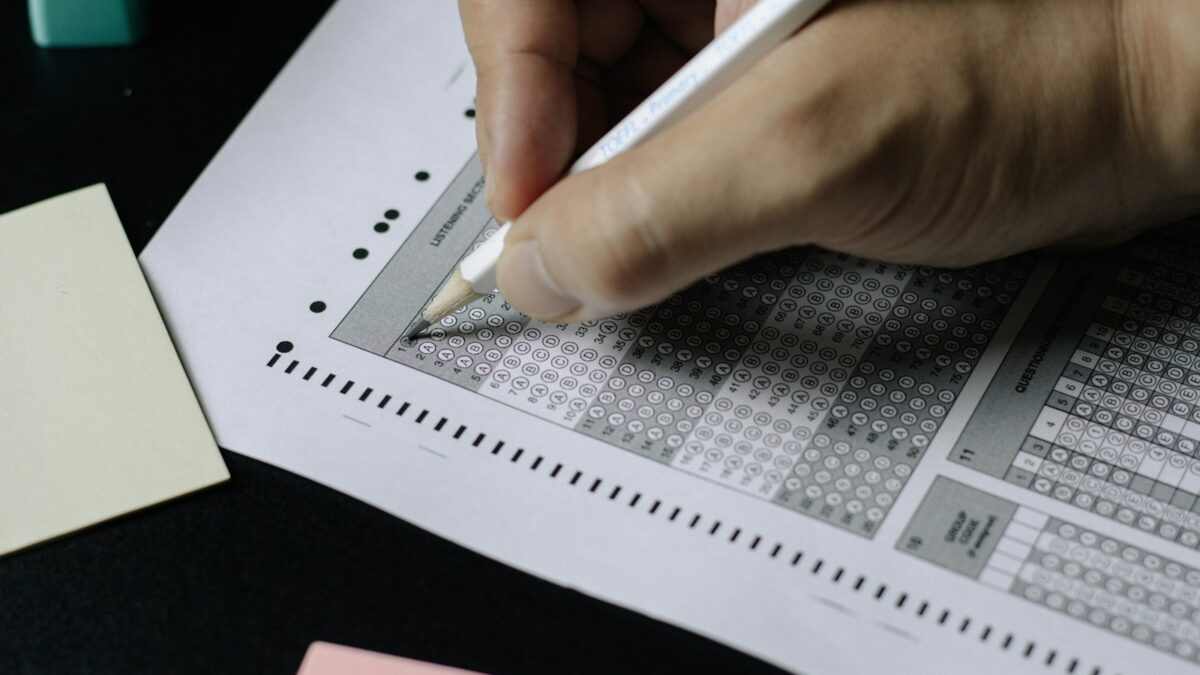
The National Autonomous University of Mexico is requiring 58,783 applicants to sit an in-person control exam after irregularities clouded its first online undergraduate admissions test. The episode is not public proof that generative AI caused widespread cheating. It is a test of whether AI-assisted proctoring, human review and vendor oversight can produce evidence strong enough to support decisions that reshape thousands of students’ futures.
What happened in UNAM’s online admissions process?
UNAM administered its undergraduate selection exam online from May 23 to June 10, 2026. The university said 191,306 people registered and 158,712 took the test, competing for 21,962 places available through the selection process.
Before publishing results on July 17, UNAM said it had cancelled the admissions process for 2% of test-takers because of conduct contrary to the call for applications and university rules. CNN estimated that this represented about 3,000 exams. UNAM’s announcement gave a percentage rather than an exact count.
The university’s admissions call listed prohibited conduct including identity substitution, communicating with another person, copying or sharing test content, using phones or other unauthorized devices, leaving the camera’s field of view without permission and other actions that could create an unfair advantage.
That distinction matters. Public discussion has often described the episode as an AI-cheating scandal, but UNAM has not released a technical report showing how many applicants used generative AI, how many received other forms of outside help or how each type of irregularity affected the score distribution.
Did AI automatically cancel applicants’ exams?
No, according to UNAM’s published rules. The online system continuously recorded the exam and used artificial intelligence to report incidents to human supervisors. The call for applications explicitly states that AI did not cancel exams automatically. Recordings and other evidence were to be reviewed by authorized personnel at UNAM’s General Directorate of School Administration.
This creates an important evidence chain: the software produces an alert, a human reviews the underlying material and the institution makes a decision. UNAM says it does not cancel an exam on suspicion alone. But the university has not publicly released the alert thresholds, false-positive rate, reviewer consistency data or anonymized case breakdown needed for outsiders to assess how reliably that chain worked.
CNN reported that a technical commission identified an unusual increase in perfect scores as well as more extremely low scores. Commission member Alma Maldonado said perfect scores had tripled compared with previous years. Those statements are relevant warning signals, but UNAM has not published the raw score distributions or a full statistical methodology. An unusual result can justify investigation; it does not identify who cheated or what tool was used.
Why are 58,783 people being retested?
On July 31, a technical commission recommended an in-person control exam. UNAM accepted the recommendation and registered 58,783 applicants for testing at four locations from August 12 to August 19: 2,777 in Leon, 1,920 in Oaxaca, 518 in Tijuana and 53,568 in Mexico City.
The group is much larger than the 2% whose original process was cancelled. It includes applicants who initially received a selection notice and applicants whose score equalled or exceeded the lowest score that secured entry to the same program, campus and study mode at any point from 2021 through 2026. Being called to the control exam is therefore not, by itself, an accusation of misconduct.
UNAM says places will be assigned from the control-exam results, making the original online score no longer decisive for this group. The university has said applicants will not pay an additional exam fee. It has also moved the intended start of classes for new undergraduate students to August 31, while current students are due to resume classes on August 17.
Who carries the cost of the remedy?
The in-person test may create a common verification standard, but it transfers time, travel and uncertainty to applicants, including people who have not been individually accused of breaking a rule. The four-site plan reduces the number of locations compared with a nationwide test network, so the practical burden will vary by where a candidate lives and which appointment UNAM assigns.
It also changes the decision facing students. Applicants must now check their appointment in UNAM’s “TU SITIO” portal, bring the required documents and attend at the assigned time. Missing that step could affect access to a scarce public-university place, even though the institutional investigation and vendor audits remain unfinished.
What is UNAM investigating about the technology vendor?
UNAM contracted Territorium Life to administer online admissions exams. On August 5, the university announced three reviews connected to that contract: a specialist technology audit, a review requested from Mexico’s federal audit authority and an internal contracting audit.
The university also said it had ended the contract early and required the company to return databases owned by UNAM. UNAM reported paying 69.19 million Mexican pesos for undergraduate and high-school testing, including 41.91 million pesos associated with 158,558 undergraduate applicants. That billing count differs by 154 from the 158,712 undergraduate test-takers in UNAM’s July results announcement; the public bulletins reviewed by Newsr do not explain the difference.
The audits are essential because exam integrity is broader than whether a camera noticed suspicious movement. It includes identity controls, question security, system access, incident logs, human-review procedures, data protection, procurement and the ability to reconstruct why a consequential decision was made.
What rules applied to unauthorized AI assistance?
The 2026 admissions call does not need to name every generative-AI product to prohibit its use during the exam. Its restrictions already cover unauthorized electronic devices, communication with others, copying test material and any action that creates an advantage. A tool used to obtain answers would fall within those broader restrictions.
However, this admissions rule should not be mistaken for a comprehensive UNAM-wide policy governing acceptable generative-AI use in coursework and research. Newsr did not find a publicly cited university-wide rule in the reviewed admissions documents that defines permitted and prohibited generative-AI use across every academic setting. Guidance, teaching practice and formal disciplinary rules are different layers and should not be conflated.
What remains uncertain before the control exam?
- UNAM has not published a full technical report, anonymized incident categories or raw score data.
- The public record does not show how many cases involved generative AI, phones, another person, identity substitution or compromised questions.
- The university has not published the proctoring system’s alert thresholds, error rates or inter-reviewer consistency.
- The announced technology, federal and internal audits had not produced public findings as of August 11.
- The reviewed announcements do not fully explain an appeal process for control-exam results, individualized accommodations, travel support or the reason for the 154-person discrepancy between two official undergraduate counts.
Those gaps do not prove the original test was valid or invalid. They define what UNAM must document if it wants the remedy to be understood as accountable rather than merely decisive.
An AI alert is not a finding of guilt, and a statistical anomaly is not an individualized case. UNAM's control exam may restore a comparable testing condition, but credibility will depend on a transparent evidence chain: what the system flagged, how humans reviewed it, how applicants can challenge a decision and what the vendor audits reveal. In high-stakes education, the durable measure of AI is not how much it monitors. It is whether institutions can audit its role and protect due process when the technology becomes part of a life-changing decision.
Sources and methodology
- UNAM, July 16, 2026 - Results announcement and official participation figures: https://www.dgcs.unam.mx/boletin/bdboletin/2026_413.html
- UNAM DGAE - 2026 undergraduate admissions call, prohibited conduct and human-review language: https://repositorio.dgae.unam.mx/Licenciatura2026/convocatoria_licenciatura2026.pdf
- UNAM, July 21, 2026 - Technical review and access to evidence for cancelled applicants: https://www.dgcs.unam.mx/boletin/bdboletin/2026_421.html
- UNAM, July 31, 2026 - Technical commission recommendations and control-exam scope: https://www.dgcs.unam.mx/boletin/bdboletin/2026_442.html
- UNAM, August 3, 2026 - Updated academic-calendar plan: https://www.dgcs.unam.mx/boletin/bdboletin/2026_449.html
- UNAM, August 4, 2026 - Control-exam participation procedure: https://www.dgcs.unam.mx/boletin/bdboletin/2026_451.html
- UNAM, August 5, 2026 - Territorium contract, payments and three announced audits: https://www.dgcs.unam.mx/boletin/bdboletin/2026_454.html
- UNAM, August 7, 2026 - Final registered count, locations and dates: https://www.dgcs.unam.mx/boletin/bdboletin/2026_459.html
- CNN, August 2, 2026 - Applicant reporting and independent news context: https://edition.cnn.com/2026/08/02/americas/mexican-university-unam-ai-cheating-scandal-intl-latam
- N+, August 4, 2026 - Independent report on the control-exam procedure: https://nmas.com.mx/sociedad/educacion/anuncian-fecha-hora-aplicacion-examen-control-unam-licenciatura-nuevo-ingreso-2026-2027
- Methodology: Newsr treated UNAM's admissions call and dated university bulletins as the baseline for institutional actions, rules and counts, and used CNN and N+ for independently reported context. Newsr did not treat social-media demonstrations or applicant anecdotes as proof of misconduct. Calculation: the discrepancy in official undergraduate counts is 158,712 minus 158,558 = 154.