
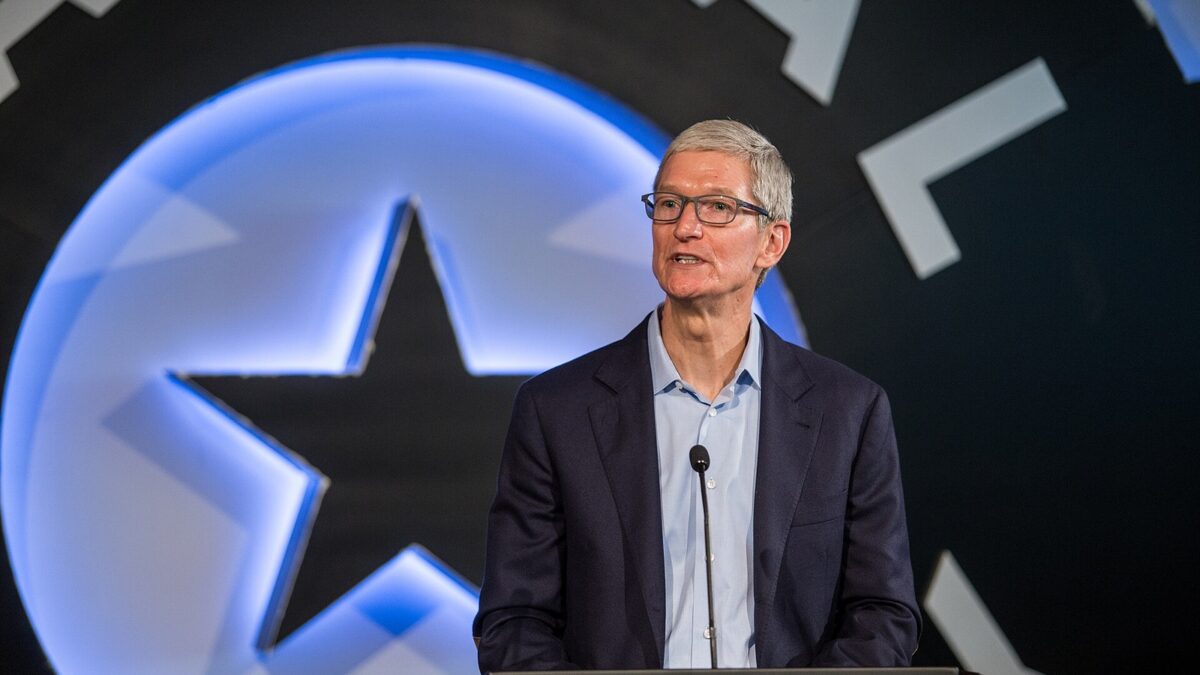
Tim Cook is an American business executive and engineer who has led Apple as chief executive officer since August 2011. As of August 23, 2026, he remains Apple’s CEO and a member of the company’s board of directors, according to Apple’s leadership biography. The supplied source set also reports that Apple has named John Ternus as Cook’s successor, with Cook expected to step down on September 1, 2026. Because that transition date is still in the future relative to this article’s fact date, Cook’s current role is best described as Apple CEO through August 31, 2026, based on the reported plan.
Tim Cook at a glance
- Full name
- Timothy Donald Cook
- Born
- November 1, 1960
- Birthplace
- Mobile, Alabama, United States
- Education
- Bachelor of Science in industrial engineering from Auburn University; MBA from Duke University
- Current role as of August 23, 2026
- Chief executive officer of Apple
- Joined Apple
- March 1998
- Apple roles before CEO
- Senior vice president for worldwide operations; chief operating officer
- Previous employers
- IBM, Intelligent Electronics and Compaq
What is Tim Cook known for?
Cook is best known for succeeding Apple co-founder Steve Jobs and running the company during a period of major financial growth, expanding services and continued dependence on a global manufacturing and supply-chain network. Before becoming CEO, Cook was Apple’s chief operating officer, responsible for worldwide sales and operations, including supply-chain management, sales activity, and service and support across the company’s markets.
His reputation inside Apple was built less around product design than around operations. Apple’s official biography says Cook managed the company’s end-to-end supply chain and supplier and reseller relationships. The supplied Wikipedia and Biography.com accounts describe his earlier work as helping Apple reduce inventory, close or consolidate facilities, and rely more heavily on contract manufacturing. Those accounts present these moves as important to Apple’s ability to control costs and respond to demand, although the sources do not provide a complete independent accounting of how much of the company’s later performance can be attributed to Cook personally.
How did Tim Cook become Apple CEO?
Cook joined Apple in early 1998, when the company was struggling and had not yet introduced the iPod, iPhone or iPad. He had previously spent 12 years at IBM, where he rose to director of North American fulfillment in the company’s Personal Computer business. He later became chief operating officer of Intelligent Electronics’ reseller division and then vice president of corporate materials at Compaq.
According to Cook’s account of the decision, he accepted the Apple job after meeting Jobs, even though conventional business calculations favored remaining at Compaq. At Apple, he initially served as senior vice president for worldwide operations. He later took responsibility for broader operations and became chief operating officer. Apple’s official biography says he headed worldwide sales and operations and also led the Macintosh division.
Cook was appointed Apple CEO on August 24, 2011, after Jobs resigned. Jobs died in October of that year. The change placed Cook in charge of a company strongly associated with Jobs’s product vision and management style. Cook’s tenure therefore became a test of whether Apple could continue to innovate and grow without its co-founder as chief executive.
Where did Tim Cook go to school?
Cook graduated from Auburn University in 1982 with a Bachelor of Science degree in industrial engineering. He earned an MBA from Duke University’s Fuqua School of Business in 1988 and was a Fuqua Scholar, an honor the supplied sources describe as being awarded to students who graduate near the top of their class.
Cook grew up in Robertsdale, Alabama, after being born in nearby Mobile. The supplied biographies identify his father as a shipyard worker and his mother as a pharmacy worker or homemaker, depending on the source’s wording. Those details describe his family background but do not establish a broader claim about his personal life or upbringing beyond the information publicly reported in the cited biographies.
What has Apple done under Cook?
During Cook’s tenure, Apple expanded its product and services ecosystem beyond the Mac and iPhone. The supplied Biography.com account identifies several notable launches and announcements during his time as CEO, including the Apple Watch, Apple Pay, Apple News, larger-screen iPhones and the iPhone X. Apple also acquired Beats Music and Beats Electronics in 2014 for a reported $3 billion, according to that account.
The company’s financial scale grew substantially during Cook’s leadership. The supplied Wikipedia extract states that Apple’s revenue and profit doubled between 2011 and 2020, while its market value rose from $348 billion to $1.9 trillion over that period. It also reports that Apple generated approximately $416 billion in revenue in 2025 and ranked as the second-largest technology company by revenue that year. These figures are presented here as reported figures from the supplied source, rather than as independently recalculated estimates.
Cook’s Apple has also placed greater public emphasis on privacy, cybersecurity, environmental preservation and domestic manufacturing. His public profile has included advocacy concerning international surveillance and technology policy. Those positions have often placed Apple in tension with governments and regulators, while also making the company’s policy arguments part of Cook’s public leadership record.
What controversies has Tim Cook faced?
Cook has faced scrutiny over Apple’s tax arrangements, especially the company’s use of overseas structures. Biography.com reports that Cook testified before the U.S. Senate in 2013 and rejected the claim that Apple was deliberately bypassing U.S. tax law. The same account describes later European Union scrutiny of Apple’s Irish tax arrangements and the company’s response to revelations in the Paradise Papers.
These matters are corporate and regulatory controversies rather than allegations about Cook’s private conduct. The supplied sources do not provide enough current legal detail to summarize the ultimate status of every tax dispute, so this profile does not treat the reported tax figures or enforcement actions as a complete account of Apple’s present obligations.
What is Tim Cook’s public role outside Apple?
Cook has served on Nike’s board of directors since 2005, according to the supplied Wikipedia extract. That source also identifies him as a trustee of Duke University and a board member of the National Football Foundation. He has publicly discussed philanthropy and said in 2015 that he intended to donate his fortune to charity.
In 2014, Cook publicly came out as gay. The supplied Wikipedia account describes him as the first and only chief executive of a Fortune 500 company to do so at that time. He was inducted into the Alabama Academy of Honor in 2014, which the same source identifies as the state’s highest honor for its citizens. Cook also appeared on Time’s annual Time 100 list in 2012 and 2021, according to the supplied source.
How much is Tim Cook worth?
Cook’s wealth is not an official Apple figure. The supplied Wikipedia extract attributes an estimated net worth of $2.6 billion to Forbes as of December 2025. That is an attributed estimate, not a verified disclosure of all of Cook’s assets, compensation, investments or charitable commitments. It should not be confused with Apple’s market value or with Cook’s annual compensation.
What happens to Tim Cook after Apple?
As of the August 23, 2026 fact date, the supplied source set reports that Cook is scheduled to leave the CEO position on September 1, 2026, with John Ternus named as his successor. The available Apple leadership page supplied for this profile still identifies Cook as CEO and does not itself describe the transition. The most precise wording, therefore, is that Cook remains CEO at the time covered here, while a reported succession plan is scheduled to take effect shortly afterward.
Cook’s documented legacy is likely to rest on two connected roles: the operations executive who joined Apple before its modern product expansion, and the chief executive who managed the company after Jobs. The sources support a clear account of his education, career path, Apple responsibilities and public positions. They support less certainty about how individual products, financial outcomes or strategic decisions should be credited to Cook alone. That distinction matters when assessing a leader whose work has been closely tied to a large executive team and an unusually influential company.
Sources
Related coverage about Tim Cook
Tim Cook’s public record is strongest as an operations and corporate leadership story: he joined Apple in 1998, became chief operating officer and succeeded Steve Jobs as CEO in 2011. The available sources document his education, executive responsibilities, public policy interests and board roles, while some financial figures and the reported 2026 succession plan remain attributed or time-sensitive.
Sources and methodology
- Apple Leadership - Tim Cook: https://www.apple.com/leadership/tim-cook/
- Tim Cook - Wikipedia: https://en.wikipedia.org/wiki/Tim_Cook
- Tim Cook - Apple, Education & Career: https://www.biography.com/business-leaders/tim-cook