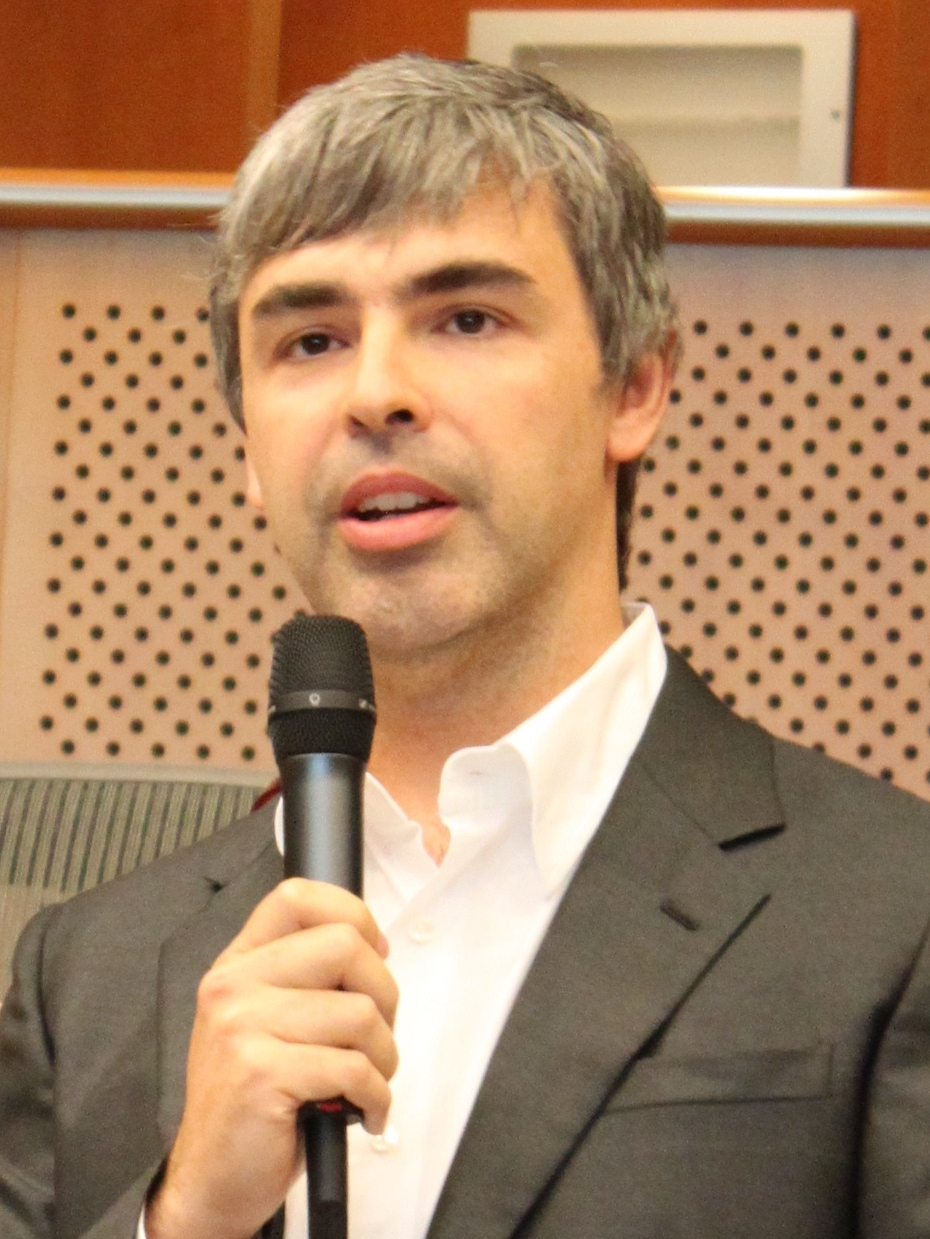

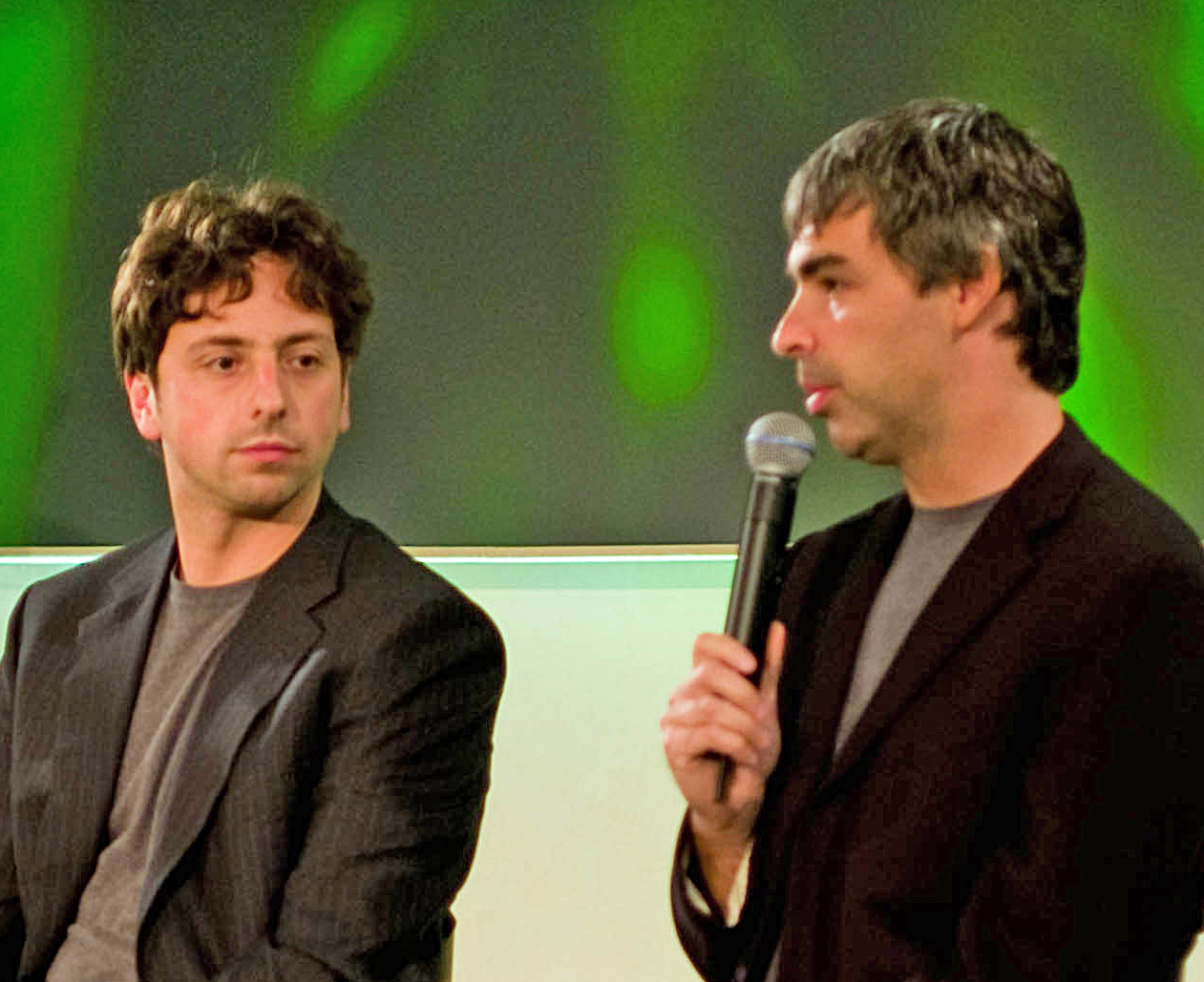
Larry Page is an American computer scientist and businessman best known for co-founding Google with Sergey Brin. The pair developed the search technology that became Google while they were graduate students at Stanford University, then incorporated the company in 1998. Page later served as chief executive of Google and Alphabet, the parent company created by Google in 2015.
Page is no longer a day-to-day executive at Alphabet. He stepped down from executive roles in December 2019, but available profiles identify him as an Alphabet board member and controlling shareholder. His public legacy rests on three connected achievements: helping develop the PageRank search algorithm, building Google into a major technology company and supporting ambitious projects in areas such as transportation, energy and climate technology.
Larry Page at a glance
- Full name
- Lawrence Edward Page
- Born
- March 26, 1973, in Lansing, Michigan
- Known for
- Co-founding Google, co-founding Alphabet and co-creating PageRank
- Education
- University of Michigan; Stanford University
- Current public role
- Alphabet board member and controlling shareholder, according to available profiles
- Reported wealth
- Forbes estimated his real-time net worth at $285.1 billion on Aug. 24, 2026
How Larry Page became a Google co-founder
Page was born in Lansing, Michigan, to parents connected to computer science and programming. His father, Carl Victor Page Sr., was a computer science professor at Michigan State University, and his mother, Gloria, taught computer programming there, according to the American Academy of Achievement. The academy says the family home included early personal computers and scientific magazines, giving Page an unusually direct introduction to computing.
He studied computer engineering at the University of Michigan and later entered the computer science Ph.D. program at Stanford. At Stanford, Page began examining the structure of the World Wide Web, particularly the way links connected one page to another. He met Sergey Brin during this period and brought him into the research project.
Their work led to an early search system called BackRub. Instead of ranking pages only by how often a search term appeared, the system analyzed links as signals of importance or relevance. Page and Brin described the work in academic papers, including “The Anatomy of a Large-Scale Hypertextual Web Search Engine.” The research became the technical foundation for Google.
Page and Brin registered the Google.com domain in September 1997 and incorporated Google in 1998. The name was derived from “googol,” a mathematical term for the number one followed by 100 zeros. The company initially operated with servers assembled from relatively inexpensive computer equipment before moving from Stanford facilities to a garage in Menlo Park, California.
What PageRank changed about web search
PageRank was named after Larry Page, although the concept was developed jointly with Brin. Its central insight was that a link from one web page to another could function as a signal about the destination page’s importance. The quality and number of links mattered more than simply counting repeated words.
That approach helped Google return results that users often found more useful than the lists produced by earlier search tools. It also gave Google a scalable way to organize a rapidly expanding web. The algorithm was not the only part of Google Search, and search-ranking systems have evolved substantially since the company’s early years. Still, PageRank remains the achievement most closely associated with Page’s technical contribution.
For that work, Page and Brin received the 2004 Marconi Prize, according to the biographical record maintained by Wikipedia. The recognition reflected the broader impact of their research on information retrieval and internet infrastructure.
Page’s leadership at Google and Alphabet
Page was Google’s founding chief executive. The XPRIZE Foundation says he grew the company to more than 200 employees and profitability before moving into a product leadership role in 2001. Eric Schmidt then became Google’s chief executive, while Page continued as one of the company’s founders and senior leaders.
Page returned as Google CEO in April 2011. His second tenure placed greater emphasis on product development and long-term technology bets. In 2015, Google reorganized under a new parent company, Alphabet Inc., and Page became Alphabet’s CEO. Sundar Pichai became Google’s CEO as part of the restructuring.
Page and Brin left their executive positions and day-to-day company roles on Dec. 4, 2019. The change did not end their relationship with Alphabet. Forbes describes Page as an Alphabet co-founder and board member, while the available biographical record identifies him as one of the company’s controlling shareholders. The precise scope of his ongoing involvement is less visible than it was during his executive years.
What Page has worked on beyond search
Page has long expressed interest in projects that extend beyond Google’s core search and advertising businesses. His public interests have included sustainable transportation, clean energy and advanced technology. The Academy of Achievement notes that he participated in the University of Michigan’s solar car team, an early indication of his interest in transportation and engineering systems.
During his time leading Google and Alphabet, the companies pursued projects in areas including autonomous vehicles, life sciences, internet access and renewable energy. Some of those efforts were reorganized into separate Alphabet businesses or discontinued; a company association alone does not establish that Page personally managed each project.
The XPRIZE Foundation lists Page as a supporter and technology figure associated with ambitious research and innovation programs. Its profile describes him as a computer engineer, computer scientist and entrepreneur whose interests include large-scale technical challenges. These descriptions support a broad picture of Page as a technology-focused founder, but they do not provide a complete account of his current activities.
Larry Page’s wealth and public profile
Page is among the wealthiest people in the world because of his ownership and control of Alphabet stock. Forbes listed his real-time net worth at $285.1 billion as of Aug. 24, 2026, placing him second on its global ranking at that time. That figure is an estimate, not a cash balance or an independently audited statement of personal assets.
Net-worth rankings can differ because they use different assumptions about shareholdings, private assets, market prices and the timing of calculations. The Wikipedia orientation supplied for this profile cites a higher $334.1 billion estimate from Bloomberg and Forbes, but the supplied Forbes profile gives the more specific Aug. 24, 2026 figure of $285.1 billion. The discrepancy illustrates why reported billionaire rankings should be treated as time-sensitive estimates rather than fixed facts.
Page has also maintained a relatively low public profile compared with many technology founders. Forbes says he avoided public appearances after Pichai became Google’s CEO, including Alphabet’s 2019 shareholders meeting. Limited public appearances do not establish that he has left technology or philanthropy; they only show that less current information about his activities is publicly available.
What is known—and what remains uncertain
The well-supported account is straightforward: Page was born in Michigan in 1973, studied engineering at the University of Michigan and computer science at Stanford, met Brin there, co-founded Google and helped create PageRank. He led Google during two periods, became Alphabet’s first CEO in 2015 and left executive duties in 2019.
Some personal details are less consistently reported across the supplied sources. Public profiles differ on the number of Page’s children, so this profile does not repeat that detail. The available sources also do not establish a complete, current description of his investments, private companies or daily work. Those areas should not be filled in with speculation.
For readers asking who Larry Page is today, the most accurate answer is that he remains a major Alphabet shareholder and board member identified with the founding technology of Google, while keeping a lower public profile than during his years as the company’s operating leader.
Related coverage about Larry Page
Larry Page’s significance is not limited to founding Google. His central contribution was helping turn the structure of the web—especially the links connecting pages—into a practical method for ranking information. That technical idea became the basis of a company that reshaped how people access knowledge online. His later role is different: Page is no longer a day-to-day executive, but remains tied to Alphabet through board service, ownership and control. Public reporting about his current projects is comparatively limited, so the durable record is his influence on search, internet infrastructure and the culture of pursuing technically ambitious projects.
Sources and methodology
- Larry Page - Wikipedia: https://en.wikipedia.org/wiki/Larry_Page
- Larry Page | Academy of Achievement: https://achievement.org/achiever/larry-page/
- Larry Page - Forbes: https://www.forbes.com/profile/larry-page/
- Larry Page - XPRIZE Foundation: https://www.xprize.org/people/larry-page