

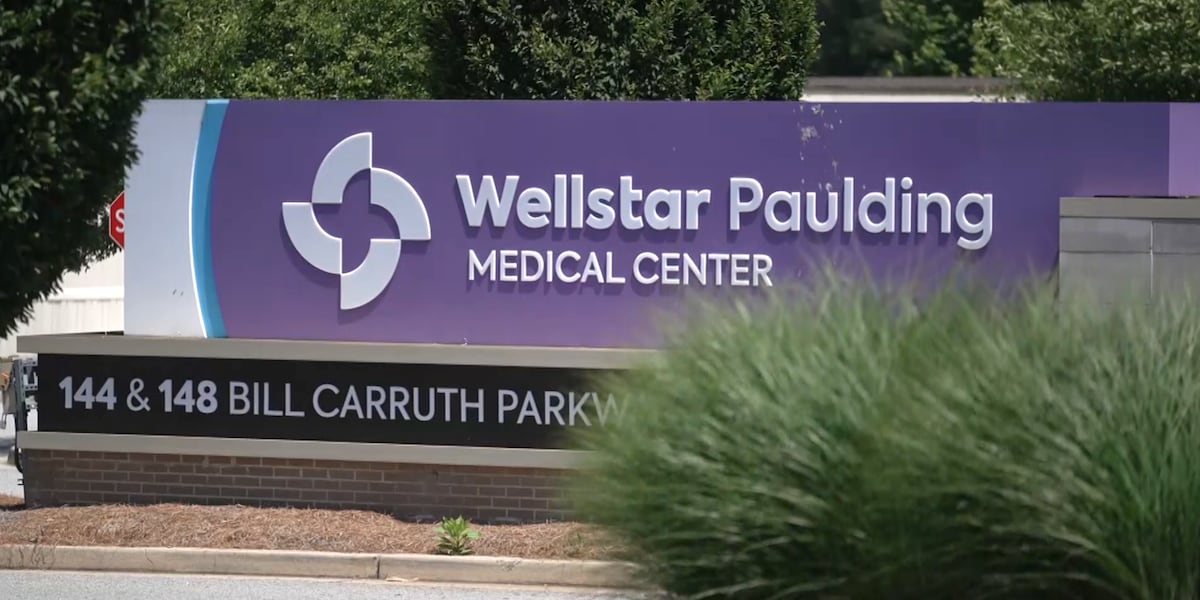
People in the United States who used Wellstar Health System’s website or MyChart patient portal between Feb. 19, 2020, and July 22, 2026, may be included in a proposed privacy settlement. The alleged consequence is disclosure of personal or health-related browsing activity to third parties, including Meta and Google, through tracking tools. The reported claim deadline is Nov. 10, 2026. The next step is to check any settlement notice for the required ID and PIN, then file online or use the mailed claim form; the payment amount is not set and filing does not guarantee money.
The proposed settlement would create a $4.25 million fund in a lawsuit over tracking pixels, cookies and similar technologies allegedly placed on Wellstar’s website and patient portal. The case is not the same as a final finding that every user’s information was disclosed. The supplied reporting describes allegations and a proposed resolution, while also saying a federal judge allowed some claims to proceed.
Who may qualify
According to the settlement summary supplied by ClaimDepot, the proposed class includes U.S. residents whose personal information Wellstar disclosed to a third party through tracking technologies on its website or patient portal during the stated period. The summary identifies the period as Feb. 19, 2020, through July 22, 2026.
That description does not establish that every visitor qualifies. The likely issue is whether a person’s information was captured or disclosed within the alleged class period, not simply whether the person knew about Wellstar or had a medical record there. The evidence pack does not provide the complete class definition, exclusions, a list of qualifying web pages or a method for independently checking an individual’s records.
Wellstar’s Augusta network is relevant because Wellstar merged with Augusta University Health in August 2023, according to WRDW/WAGT. The report says Augusta became part of Wellstar’s network and used the same MyChart system discussed in the lawsuit. That does not, by itself, prove that every Augusta patient is a class member. Eligibility still depends on the settlement’s formal definition.
What the lawsuit alleges about tracking tools
The central mechanism is common to many websites but potentially sensitive in a health-care setting. A tracking pixel or similar code can record actions such as page views, searches, button clicks or calls initiated from a webpage. The complaint described by WRDW alleges that activity on Wellstar’s site and MyChart portal could be connected with Meta or Google tools.
One example in the report is a patient searching for a medical condition. The complaint alleges that Meta Pixel could connect that activity to the user’s Facebook profile, potentially enabling health-related advertising. The report also says the alleged arrangement involved enhanced advertising services and more cost-efficient marketing rather than a direct cash payment to Wellstar.
Those allegations explain why the case has a consumer consequence beyond ordinary online advertising. A visitor may reasonably treat a patient portal or medical-condition search as private, while tracking code can create a separate data flow outside the visible appointment or information service. The evidence supplied here does not independently establish what data was received by each company, how any data was used, or whether a particular person’s information was tied to an identifiable account.
How much could a claimant receive?
The proposed fund is $4.25 million, but the reported payment is a pro rata share of the net fund rather than a fixed amount. Before payments, the fund may cover up to $250,000 in administration costs, up to $1,416,667 in attorneys’ fees plus expenses, and $10,000 in service awards for class representatives, according to ClaimDepot’s summary.
The final payment would therefore depend on the money approved for distribution and the number of valid claims. No reliable payment estimate was supplied. A person should not treat the $4.25 million headline figure as an individual payout, and submitting a claim does not guarantee payment. The settlement may also remain subject to court approval.
Deadlines and filing steps
The reported deadline to submit a claim is Nov. 10, 2026. ClaimDepot says online filers must provide the unique ID and PIN from the settlement notice they received. It also describes a paper option: print and complete the claim form and mail it to Wellstar Pixel Settlement, Settlement Administrator, PO Box 2197, Portland, OR 97208-2197.
The supplied evidence does not include a direct administrator URL or the official court-approved claim form. Readers should compare any notice they received with the formal settlement materials before providing sensitive information. The listed payment options are PayPal, Venmo, Zelle, ACH transfer and paper check, but the evidence pack does not establish whether every option remains available through the official administrator.
Anyone considering exclusion from the settlement reportedly faces an earlier deadline of Oct. 26, 2026. Opting out can preserve the ability to pursue an individual claim related to the allegations, but the consequences depend on the official settlement documents. The final approval hearing is listed for Dec. 1, 2026. Until that process is complete, the case should be described as a proposed settlement rather than a completed resolution.
What remains unverified
The strongest available evidence is a local news report describing the lawsuit and a settlement listing that supplies practical deadline and payment details. The evidence pack does not contain the settlement agreement, preliminary approval order, official administrator website or final approval order. It also does not show whether Wellstar denies the allegations, whether the court has approved the proposed class, or how many valid claims have been filed.
For readers, the practical decision is limited but clear: preserve the settlement notice, verify the formal claim instructions, and submit by Nov. 10, 2026 if the official class definition covers you. Keep a copy of what you submit. Do not assume that a claim proves eligibility or guarantees a payment; the amount and final availability of funds remain unresolved until the court and administrator complete the process.
The proposed Wellstar privacy settlement gives affected website and MyChart users a possible claim route, but the $4.25 million figure should not be read as a promised payout. The alleged mechanism matters: tracking code may transmit activity that users considered part of a private health-care interaction. The available evidence supports the reported eligibility window and deadlines, yet it does not include the official administrator URL, court order or final payment calculation. Readers should verify the formal class definition and retain filing records before the Nov. 10, 2026 deadline.
Sources and methodology
- Federal suit alleges Wellstar patient data shared with ... - https://www.wrdw.com/2026/07/30/wellstar-lawsuit-federal-suit-alleges-patient-data-shared-with-facebook-google
- Wellstar Health System $4.25M Tracking Pixel Settlement - https://www.claimdepot.com/settlements/wellstar-data-privacy-settlement
- Wellstar Health System Privacy Lawsuit | Data Sharing? - https://www.classaction.org/wellstar-privacy-lawsuit