

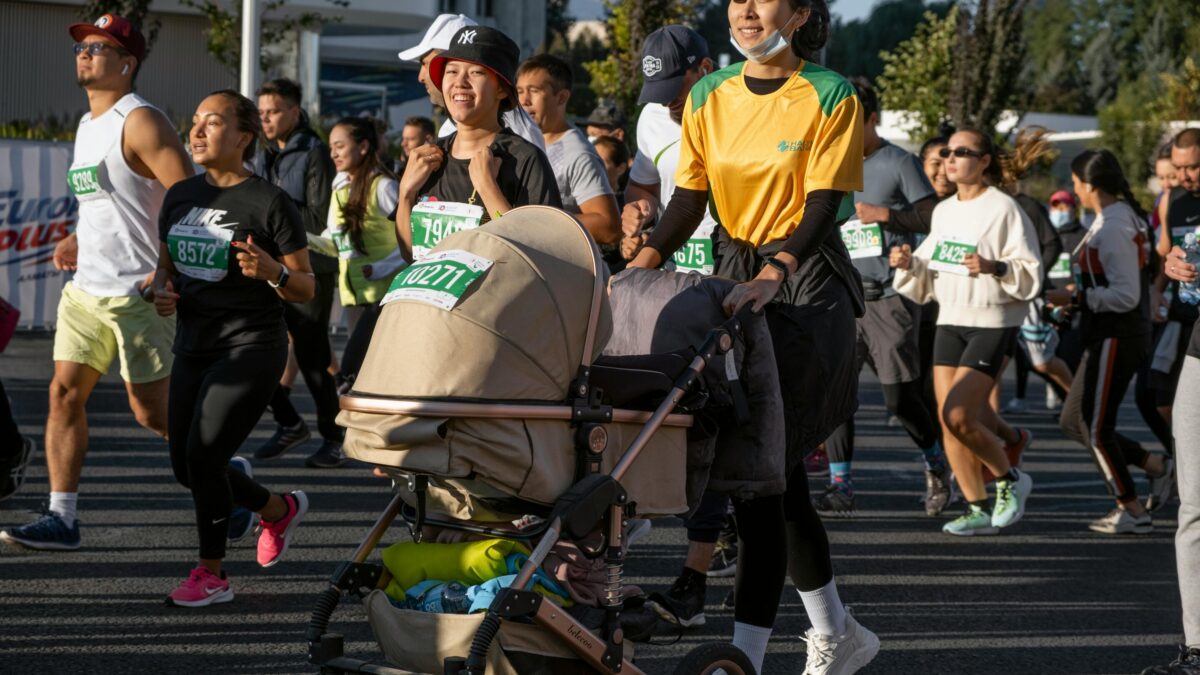
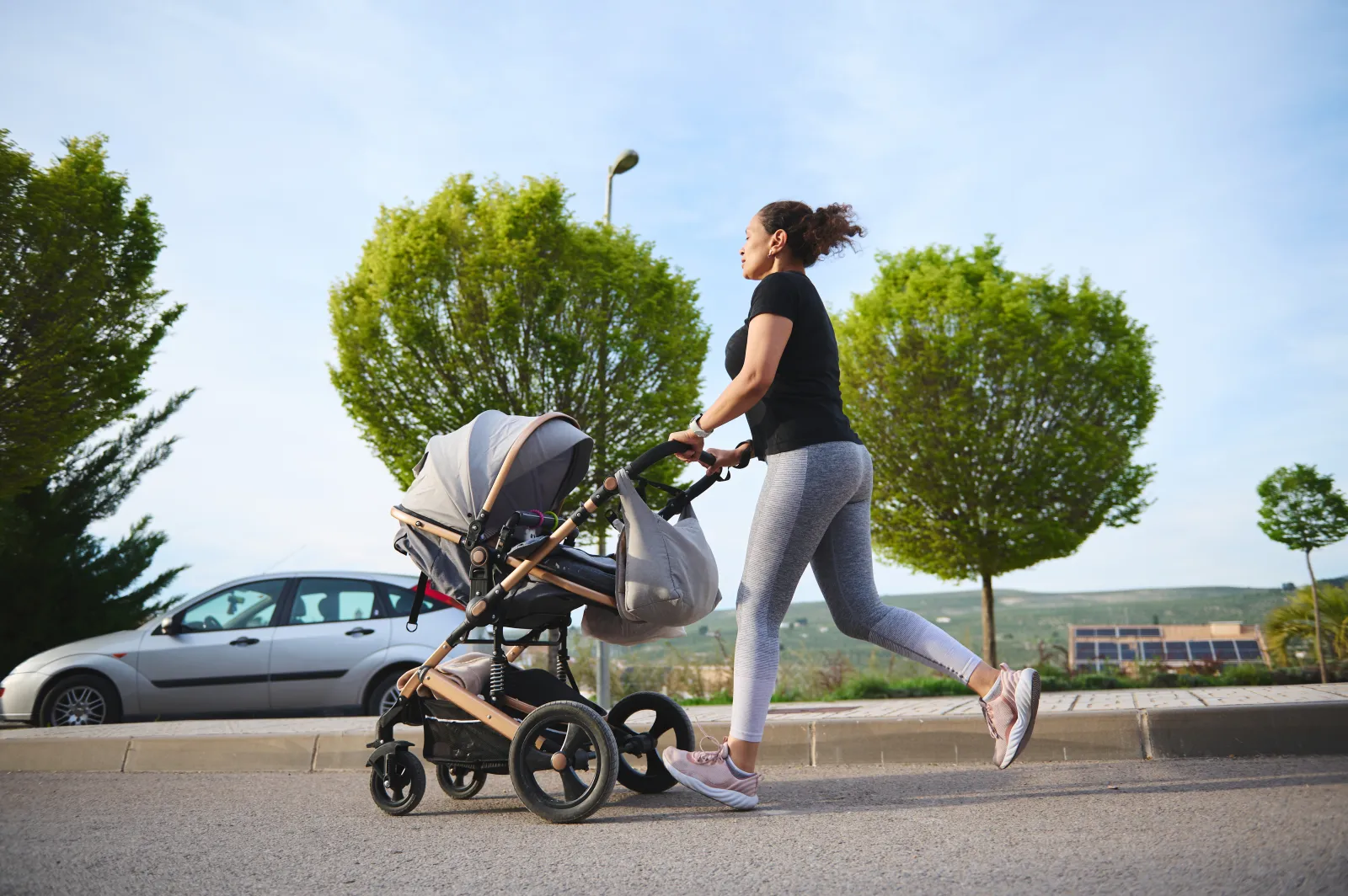
Parents who run with a stroller may have a lower risk of some running-related overuse injuries, but the safest reading is not that a stroller is protective gear. The evidence points to a plausible mechanism: pushing a stroller can reduce vertical impact forces with each step. It also changes running form and may add other loads, so the finding is useful for decision-making, not a prescription.
What changed for running parents
The new injury signal comes from a survey of parents who ran while their children were very young. New Scientist reported that researchers compared parents who used a pram or stroller on at least some runs with parents who ran without one. In that account, 19% of stroller runners reported running-related injuries, compared with 30% of non-stroller runners.
Newsweek reported the same broad pattern, describing a PLOS One study in which stroller runners were 58% less likely to report an overuse injury and had injuries at a 55% lower rate per 1,000 miles run. Newsweek also reported the absolute comparison as 19% of stroller runners versus 30% of non-stroller runners.

Those absolute numbers matter because they keep the result in scale. The difference was not zero injuries versus frequent injuries. It was a lower reported injury share among stroller runners in an observational survey, with injuries still occurring in both groups.
The likely mechanism: lower vertical load, not magic protection
The most concrete biomechanical evidence in the supplied record comes from Penn State Berks research published in 2025. In an official Penn State account, researchers said they recruited 38 healthy runners who were injury-free and ran at least five miles per week. Participants ran with and without a stroller over a force plate, which measured the impact of each step.
That study found vertical loading metrics were reduced by at least 8% and up to 17% when participants ran with a stroller, according to Penn State. Vertical loading is relevant because high loading rates have been associated with overuse injuries such as knee pain, stress fractures and plantar fasciitis, the university report said.
Allison Altman Singles, associate professor of kinesiology and mechanical engineering at Penn State Berks, gave Newsweek a concise explanation of the proposed mechanism: stroller running involves “more flexed posture, more forward lean and less vertical force.” That does not prove stroller use prevents injuries, but it helps explain why the survey finding is biologically plausible.
The trade-off: less impact can come with more twisting
The same Penn State report also flagged a downside. While impact per step was lower with stroller running, torsion, or twisting forces of the foot during push-off, increased. Penn State described this as a “biomechanical trade-off.” The report also noted that this twisting motion is not as consistently associated with injuries as step impact, but it is still a load runners and clinicians may want to consider.
That distinction is important for parents returning to activity after childbirth or after a break from running. A stroller may reduce one type of mechanical stress while adding coordination, steering and posture demands. The evidence supplied here does not establish which stroller designs, surfaces, speeds or pushing styles are safest.
Who is represented in the evidence
The survey population was parents who already had some running experience before becoming parents, according to New Scientist. That limits how broadly the finding should be applied. It may not describe brand-new runners, parents with current injuries, people recovering from surgery, or those with pelvic floor symptoms, balance concerns or other postpartum complications.
There is also a small but real reporting inconsistency in the supplied sources. New Scientist described 196 parents who used a pram on at least some runs and 53 who ran without prams, a total of 249. Newsweek described 255 runners with children aged 0 to 3 years. Without the full paper URL in the evidence pack, that discrepancy cannot be resolved here. The overall direction of the reported finding is consistent across both accounts, but the exact denominator should be treated cautiously.
What the evidence can and cannot say
Known: In the reported survey, stroller runners had a lower share of self-reported running-related injuries than non-stroller runners. In the 2025 biomechanics study, runners had lower vertical loading metrics when running with a stroller than without one.
Uncertain: The survey design cannot prove causation. Parents who choose stroller running may differ from those who do not in training habits, pace, surface, sleep, recovery, prior injury history or access to safe places to run. The injury data were self-reported, and the supplied evidence does not show clinical confirmation of each injury.
Next steps: Stronger evidence would track parents prospectively, verify injuries clinically, record mileage and pace, and separate outcomes by stroller type, child age, terrain and running experience. Until then, the practical takeaway is measured: stroller running may be a reasonable option for experienced parents who can do it safely, but the study should not be read as a guarantee against injury.
Practical stakes for a parent deciding whether to try it
For an already-experienced runner, the findings may be reassuring. A stroller does not necessarily mean higher impact on the legs, and the evidence suggests it may reduce some forces associated with overuse injury risk. It may also help parents fit activity into a constrained schedule, though the supplied evidence does not establish a universal benefit for every parent.
The cautious path is to treat stroller running as a different running condition, not simply the same run with a child along for the ride. That means considering route safety, control of the stroller, gradual mileage, comfort, symptoms during and after runs, and whether a health professional has given individualized guidance when recovery or medical issues are relevant. The evidence supports attention to mechanics; it does not support diagnosing pain, ignoring symptoms or assuming that any stroller run is low risk.
The most useful reading for parents is not that stroller running is automatically safer, but that it appears mechanically different. Survey reports link stroller running with fewer self-reported overuse injuries, while Penn State’s 2025 lab work provides a plausible mechanism: lower vertical loading during stroller runs. The caveat is substantial. The injury evidence is self-reported and observational, and one supplied source discrepancy leaves the exact survey denominator unresolved. For experienced runners, the finding may support stroller running as a practical option when done gradually and safely. For anyone with pain, postpartum concerns or limited running background, individualized guidance remains the safer next step.
Sources and methodology
- Running with a stroller seems to reduce the risk of injuries - https://www.newscientist.com/article/2584315-running-with-a-pram-seems-to-reduce-the-risk-of-injuries
- Running with a stroller lowers impact, potential injury risk, ... - https://www.psu.edu/news/research/story/running-stroller-lowers-impact-potential-injury-risk-researchers-find
- Parents May Have Accidentally Found a Way to Reduce ... - https://www.newsweek.com/parents-may-accidentally-found-way-reduce-running-injuries-12312959
- Stroller running linked to lower overuse injury rates for new ... - https://www.news-medical.net/news/20260812/Stroller-running-linked-to-lower-overuse-injury-rates-for-new-parents.aspx