
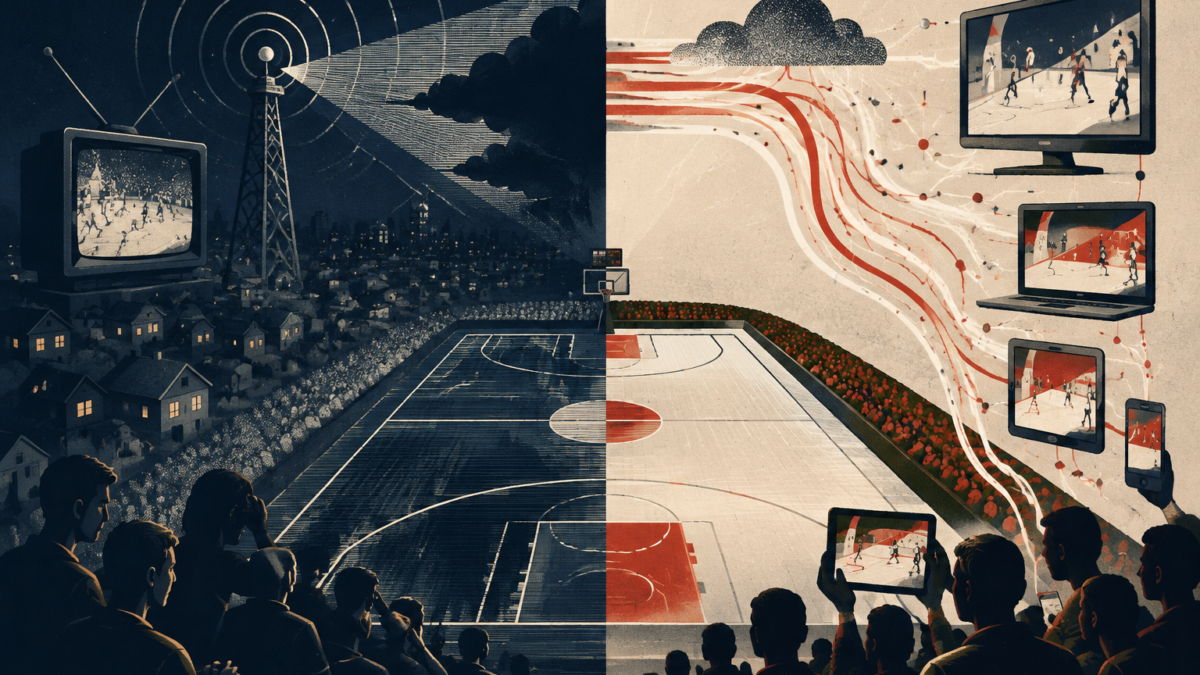
The NBA’s proposed streaming hub is less a finished product than a response to a distribution problem: local basketball rights are becoming harder to place through regional sports networks. Sports Business Journal reported in August 2026 that the league and YouTube were in advanced talks, while other platforms were also exploring the opportunity. For fans and teams, the immediate stakes are access, pricing and who absorbs the risk if a digital bundle fails to attract enough subscribers.
Nothing in the supplied evidence confirms a signed deal. The NBA still has to decide how many teams would participate, which platform would host the games and whether the service arrives for the 2026-27 season or waits until 2027-28.
Teams need distribution, but not just another outlet
The likely pressure point is local coverage. The reporting connects the proposed hub to Main Street Sports Group’s expected demise in April and describes a market in which several clubs may need alternatives to traditional regional sports networks. A reproduced account of the SBJ report identified 13 Main Street teams as likely candidates and said the total could reach as many as 22 if other clubs also become available.
That scale would change the economics of the project. A small collection of teams could be sold as a limited local-rights package. A much larger group could make a national subscription product more attractive to a platform, while also requiring the NBA to coordinate more rights, blackout rules and revenue-sharing terms. The trade-off is that a larger bundle may improve reach but could make the service more expensive or less flexible for people who follow only one team.
Platforms are buying a difficult product
YouTube, DAZN, Amazon and ESPN were identified in the supplied reporting as platforms involved in discussions or under consideration. Each would have to weigh the cost of rights against the value of acquiring regular sports viewing, retaining subscribers and gaining leverage in future negotiations. The evidence does not establish what any platform has offered or whether a deal would be profitable.
That uncertainty matters because local games are not automatically equivalent to a national event package. A platform may want enough teams to create a compelling subscription, but each additional franchise adds programming obligations and operational complexity. It also creates a consumer question: would fans pay for a broad hub, a team-specific option or both?
Independent industry analysis supplied with the report offers a broader warning. The Entertainment Strategy Guy described local media rights as weakening while discussing the NBA’s larger media-rights economics. That does not verify the NBA hub negotiations, but it supports the basic business context: a new digital product would be competing in a rights market under pressure, not simply expanding an already stable category.
Fans could gain convenience and lose simplicity
For viewers, a streaming hub could reduce the need to find a separate regional sports network arrangement. It could also bring more local games into a single interface if enough teams join. But those benefits depend on the final package. A service that excludes a fan’s team, carries a high price or introduces geographic restrictions would not solve the access problem.
The cost is therefore not measurable yet. No monthly price, annual fee, household rule or revenue split is confirmed in the evidence. Nor is there a verified guarantee that every game from a participating team would be included. Until those details emerge, the hub should be treated as a possible distribution mechanism rather than a confirmed consumer product.
The decision that will clarify the market
The NBA’s next meaningful milestone is a formal announcement about timing and participation. A launch for 2026-27 would represent an accelerated response to the regional-network disruption. Waiting until 2027-28 would give the league and platforms more time to assemble the package, while leaving individual teams to seek interim arrangements.
DAZN was also described as discussing one-year local bridge deals with teams if the larger hub waits. That possibility shows the competing incentives: teams need near-term certainty, while platforms may want a position in a future leaguewide package. The final decision will reveal whether the NBA prioritizes speed, a larger national bundle or a more gradual transition.
Until the league names the platform, participating teams and price, the durable conclusion is narrower. The NBA is exploring a way to consolidate local distribution as regional sports networks weaken. Whether that produces better access for fans or simply moves the complexity into streaming will depend on the terms that have not yet been disclosed.
The NBA’s streaming-hub discussion is best understood as a rights-market restructuring rather than a confirmed app launch. The league may be responding to the collapse or weakening of regional distribution, while platforms weigh whether a sufficiently large team bundle can justify the cost of acquiring and serving subscribers. Fans could gain a simpler way to find local games, but they may also face a broader package, new pricing and unresolved access rules. The central business question is not whether streaming is technically possible; it is whether the NBA, teams and platforms can divide the cost and risk without making the product less useful to the people who follow one club.
Sources and methodology
- Who could get the NBA’s streaming hub — and how much it may cost - Sports Business Journal - https://www.sportsbusinessjournal.com/Articles/2026/08/17/who-could-get-the-nbas-streaming-hub-and-how-much-it-may-cost
- NBA may launch a national streaming hub as soon as the 2026-2027 ... - https://www.resetera.com/threads/nba-may-launch-a-national-streaming-hub-as-soon-as-the-2026-2027-season-sports-business-journal.1455154
- What Drove the 2026 Finals Viewership Increase? Why Did the ... - https://entertainment.substack.com/p/what-drove-the-2026-finals-viewership
- Game On: How the NBA Transformed Digital Streaming at Scale with AWS - https://www.nabshow.com/video/game-on-how-the-nba-transformed-digital-streaming-at-scale-with-aws