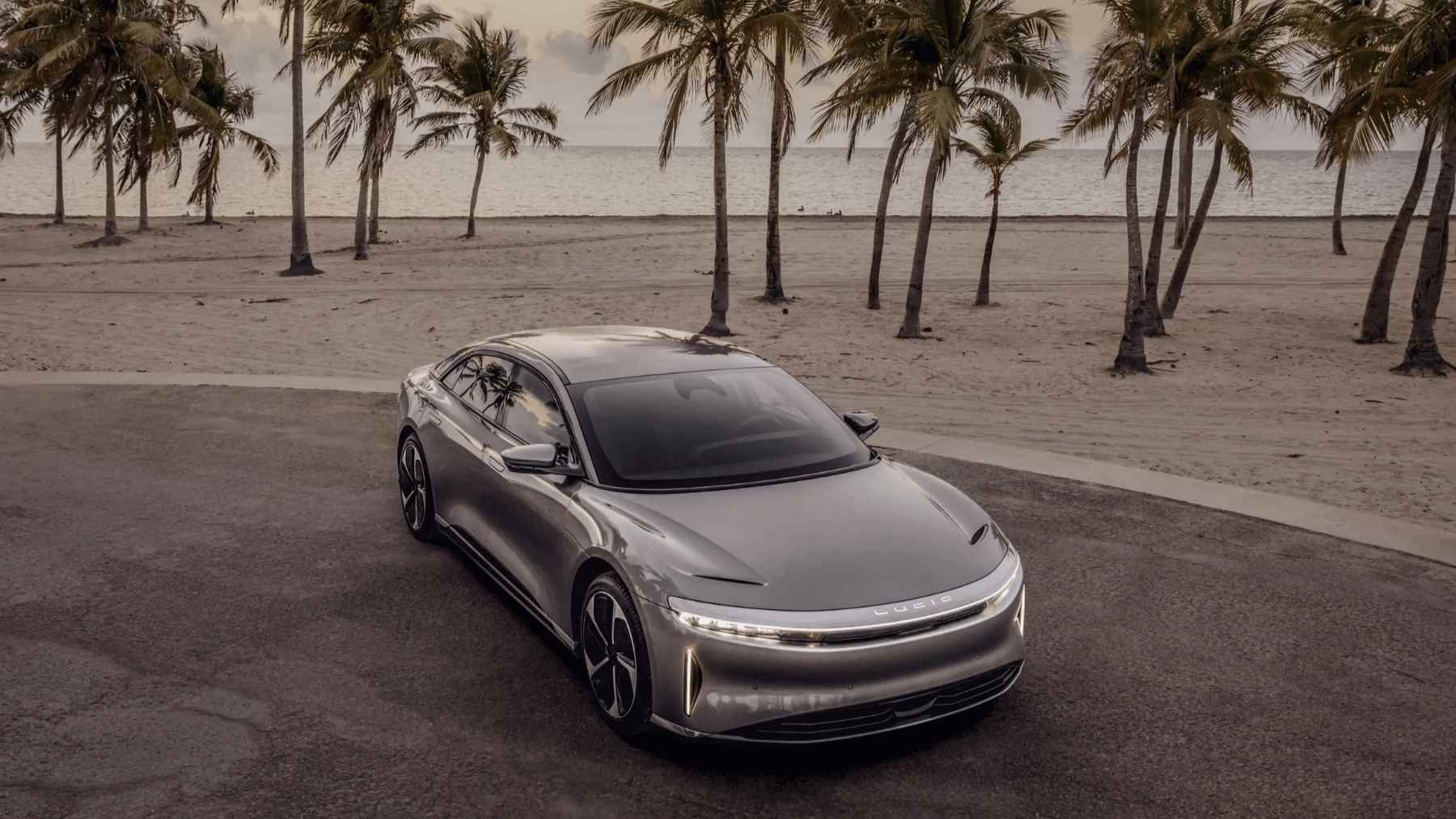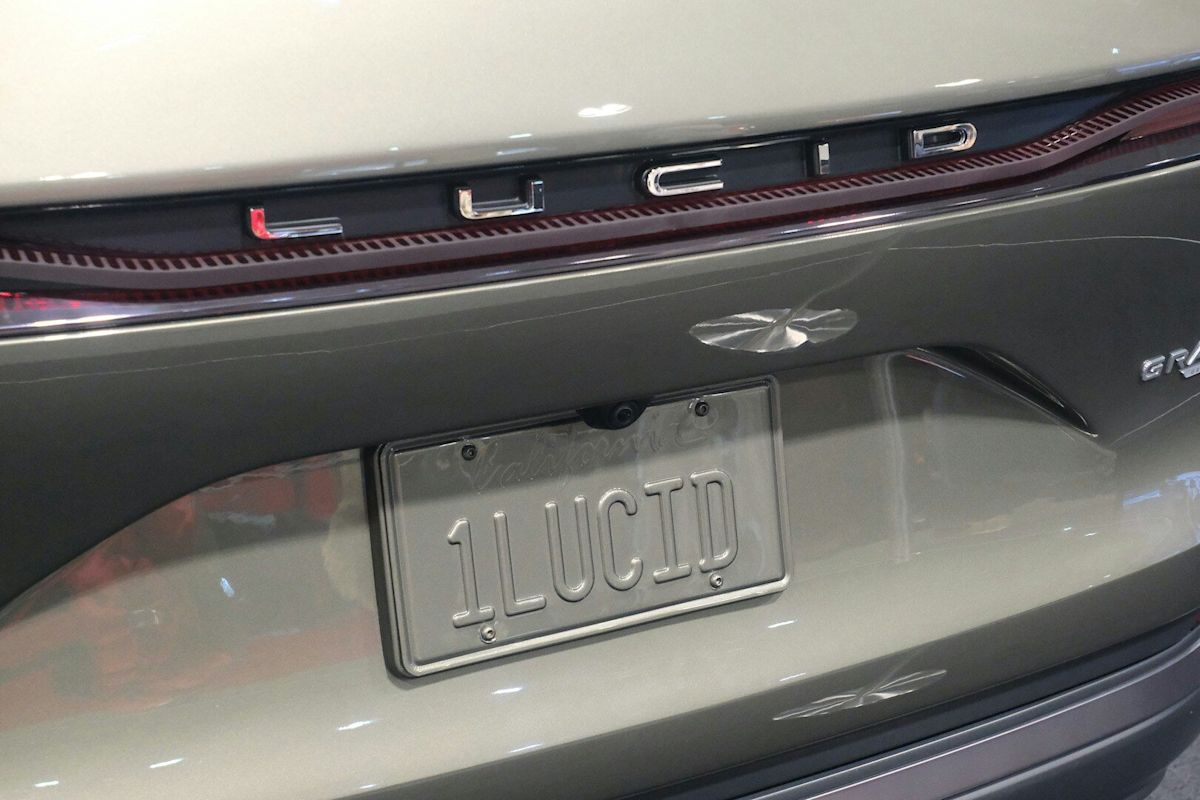

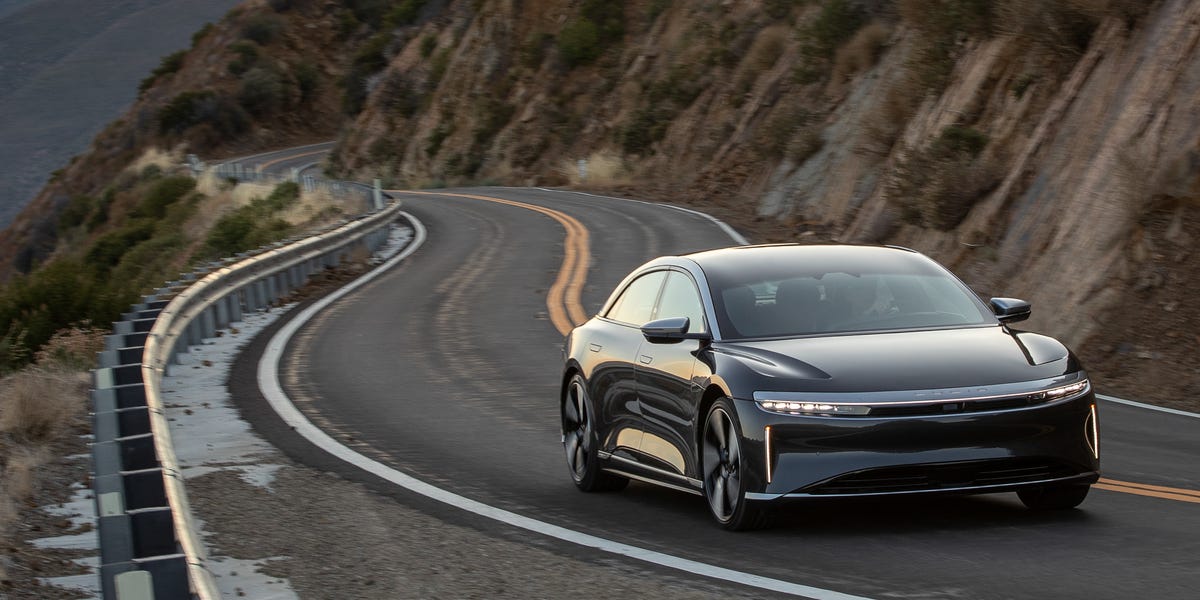
Lucid Air owners should treat this as a safety recall, not a routine software update. Reports citing the National Highway Traffic Safety Administration say 27,185 Air sedans in the United States are covered because an exterior-lighting circuit may overheat, creating a risk of smoke or fire and potentially disabling exterior lights. The reported instruction is to park an affected vehicle outside and away from structures until the remedy is deployed.
Lucid has developed a free over-the-air software update for the problem. NHTSA said 20,719 vehicles had already received the update, but that figure does not establish whether any particular owner’s car is fixed. The available evidence also does not provide the official VIN range, owner-notification schedule, repair deadline or a complete list of model identifiers. Those gaps matter: the evidence pack cannot confirm that a specific reader’s vehicle is affected.
What the recall concerns
The reported defect involves software logic controlling a low-voltage circuit for exterior lighting. Road & Track, citing the recall notice, described the problem as insufficient overcurrent protection that could allow the circuit to remain energized at excessive amperage. That can overheat the circuit and lead to smoke or fire. A lighting malfunction could also reduce visibility to other road users and increase crash risk.
This is different from a claim that the vehicle’s high-voltage battery is defective. The supplied reports describe an exterior-lighting circuit and its software controls. Readers should not decide whether a car is included based on its battery, trim, paint color, appearance or the fact that it is an electric vehicle. Recall status must be checked using the official vehicle identifier process.
Which Lucid Air cars are described in the reports
Road & Track reported that the recall covers 2022 through 2026 model-year Lucid Air sedans built from October 11, 2021, through July 27, 2026, and said the affected population was estimated at 100% of the vehicles in that production group. Reuters separately reported the total U.S. population as 27,185 vehicles.
Because the supplied material does not contain the official NHTSA notice or a VIN lookup result, these production details should be treated as reported scope rather than proof that every vehicle matching a broad model-year or build-date description is affected. The safest verification step is to use the official NHTSA or Lucid recall system with the vehicle’s VIN and follow the result for that car.
What owners should do now
- Check the VIN through an official source. Use the official NHTSA or Lucid recall information rather than relying on a dealership listing, a social-media post or a general model-year search.
- If the vehicle is listed as affected and has not received the remedy, park it outside and away from structures. That is the precaution reported in connection with the NHTSA notice.
- Verify the software remedy. Lucid’s reported fix is an over-the-air update at no cost. An update count for the overall recall population is not the same as confirmation for an individual vehicle, so owners should verify their car’s status.
- Do not assume that an update is installed because the vehicle operates normally. The reported defect may involve a circuit that has not yet produced an obvious warning. Normal driving or working lights do not independently rule the vehicle in or out.
The reports mention smoke, a burning odor or an exterior-lighting malfunction as possible signs associated with the issue. The supplied evidence does not provide a separate emergency procedure beyond the reported parking instruction, so owners should follow the exact action language in the official recall notice and any directions from Lucid or NHTSA.
How the issue was identified
Road & Track reported that Lucid learned of a fire involving the front-left side of an Air in 2023, although no definitive cause was determined at that time. The publication said Lucid received another fire report in May 2026 and later formed a Product Safety Working Group. It reported three fire reports between 2023 and 2026, four smoke reports from October 2025 through April 2026 and 33 additional warranty reports involving damage to a Center High Mounted Stop Lamp wire harness that could be related.
Those figures are reported incident and warranty counts, not a probability that a particular vehicle will catch fire. They also do not establish that every reported event had the same cause. The recall’s stated mechanism is the software-controlled overcurrent problem described above.
What is known about the remedy—and what is not
The software remedy is identified in the supplied reporting as version 2.10.0. Road & Track said the update lowers the eFuse amperage threshold and disables retry logic that could re-energize a faulted circuit more than once during the same key cycle. Lucid’s Product Safety Working Group reportedly certified the update as an adequate fix, and the update is delivered over the air without charge.
However, the evidence does not state a final completion date, whether every affected vehicle is technically able to receive the update immediately, or whether some owners must arrange a service visit. It also does not state whether owners are entitled to reimbursement, a replacement vehicle or any other payment. No such benefit should be assumed.
The practical decision for owners
If an official lookup identifies the vehicle as affected and the remedy is not confirmed, the reported parking instruction is the controlling precaution in the supplied evidence: keep the car outside and away from structures until the remedy is deployed. If the official lookup does not identify the vehicle, that result is more meaningful than a broad internet description of the recall, but owners should retain the result and follow any later manufacturer notice.
Consumer Reports separately says the 2026 Air has three NHTSA recalls and that its predicted-reliability assessment is based on limited data from the 2023, 2024 and 2025 model years. That information provides context about the limits of available reliability data; it does not determine whether a particular Air is included in this fire-risk recall.
The central unresolved question for each owner is therefore vehicle-specific: has the official system identified the VIN, and has the corrective update been installed? Until both points are verified, the recall should be handled according to the official notice rather than inferred from the car’s model, symptoms or appearance.
This recall is best understood as a vehicle-verification and software-remedy issue, not a general finding that every Lucid Air has a battery problem. The reported safety mechanism is software logic that may fail to limit current in an exterior-lighting circuit. That distinction changes the reader's next step: checking the VIN and update status is more reliable than judging the car by model year, symptoms or appearance. The evidence supports the parking precaution and free OTA remedy, but not a repair deadline, payment claim or individual eligibility decision.
Sources and methodology
- Lucid to recall more than 27000 luxury sedans over fire risk ... - https://lufkindailynews.com/news_reuters/business/ev-maker-lucid-to-recall-more-than-27-000-luxury-sedans-over-fire-risk-nhtsa/article_eef220de-5ade-5fb6-9138-6b68d67c1e4f.html
- Lucid Air Hit With Fire Risk Warning, Over ... - https://www.roadandtrack.com/news/a73553469/lucid-air-recall-battery-fire-issue
- 2026 Lucid Air Reliability - https://www.consumerreports.org/cars/lucid/air/2026/reliability