

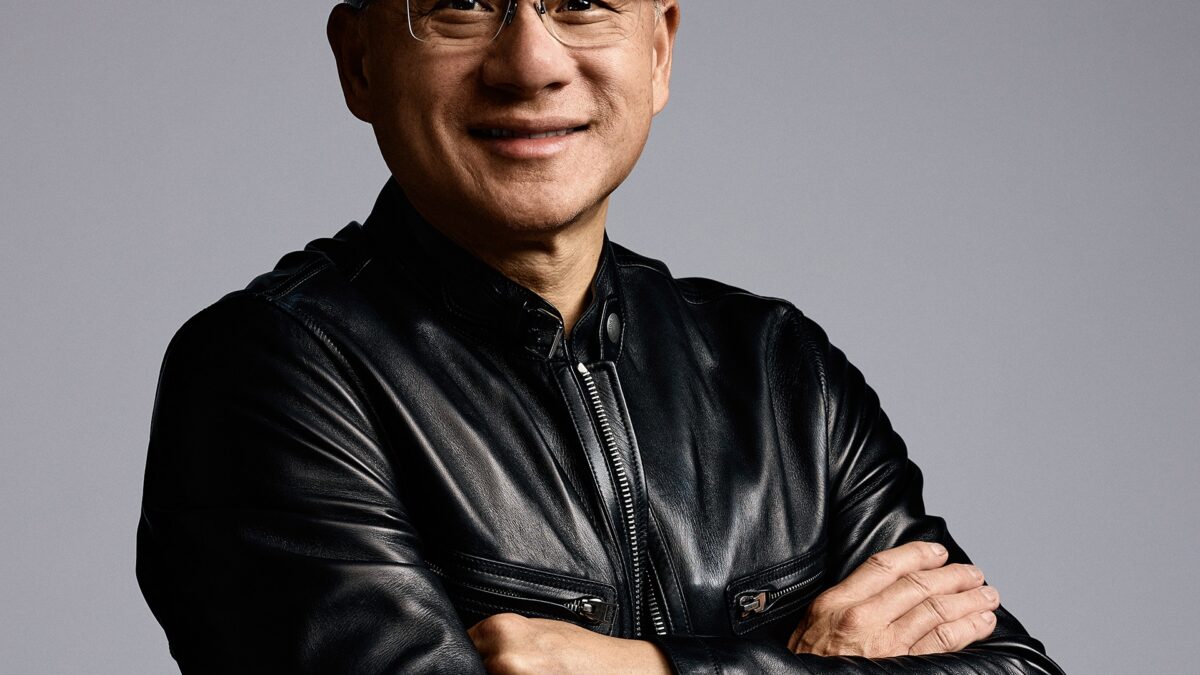
Jensen Huang’s childhood was shaped by migration, family sacrifice and an unusually difficult transition to the United States. Born in Taipei, Taiwan, in 1963, he spent part of his early life in Taiwan and Thailand before his parents sent him and his older brother to America. He later studied electrical engineering at Oregon State University and Stanford University, worked at AMD and LSI Logic, and cofounded Nvidia in 1993.
Those facts are the foundation of Jensen Huang’s broader career profile, but his early years deserve separate attention because they explain the circumstances behind his education and first steps in the semiconductor industry.
Where Jensen Huang was born and how his family moved
Wikipedia’s current biography identifies Huang as born in Taipei on February 17, 1963. One secondary account from Quartr describes him as born in Tainan, while other supplied sources simply say Taiwan. Because the sources do not agree on that city, the safest conclusion is that Huang was born in Taiwan and moved to Tainan as a child. This article uses Taipei because it is the specific birthplace listed in the current Wikipedia entry.
Huang was the younger of two sons in a middle-class Taiwanese family. His father, Huang Hsing-tai, was a chemical engineer who worked at an oil refinery. His mother, Lo Tsai-hsiu, was a schoolteacher. The family moved frequently, and Taiwanese Hokkien was their native language, according to the biographical account supplied by Wikipedia.
When Huang was five, the family moved to Thailand because of his father’s work. Huang attended Ruamrudee International School in Bangkok. The move placed him in an international setting, but it did not immediately make English easy for him or his family.
What Huang’s parents did to prepare their sons
Huang’s parents treated education and relocation as a long-term project. After his father traveled from Taiwan to New York for technical training connected to the air-conditioning industry, he became convinced that the United States offered his sons stronger educational opportunities. The family was also living in a region affected by political and military instability during the Vietnam War era.
Huang’s mother prepared the boys for an English-speaking country without private lessons. She selected 10 words from a dictionary each day and taught them to her sons. The routine was practical rather than ceremonial: the children needed enough English to function after moving across the Pacific.
The exact year of the brothers’ move is reported differently. Wikipedia places it in 1973, while Quartr says 1972. The consistent point is that Huang was about nine years old when his parents sent him and his older brother to the United States to live with an uncle in Tacoma, Washington. Their parents remained in Thailand while they saved money and completed the arrangements needed to follow them.
The Kentucky school years were difficult
Huang and his brother were eventually enrolled at Oneida Baptist Institute in Kentucky. The family believed the school was a prestigious boarding institution, but the school was in fact a reform academy. Huang lived in student housing connected to the academy while attending a separate public elementary school because he was too young for the academy’s classes.
Carnegie Corporation describes Huang as badly bullied during this period. Wikipedia’s account says he arrived as a small Asian immigrant with heavily accented English and was frequently beaten. These details come from published biographical and attributed accounts, not from private records about other students, so they should be understood within that documented context.
The school also required students to work. Fortune reported, based on Huang’s later podcast comments, that he cleaned bathrooms as a nine-year-old. His older brother was assigned manual labor on a tobacco farm. Fortune’s account also says the brothers communicated with their parents through recorded audio letters because international phone calls were too expensive.
Huang has not presented the Kentucky years only as a story of hardship. Quartr reports that he has said the experience ultimately helped him become a better person and that he remembers positive elements as well. Carnegie quotes him recalling that there was no counselor to consult and that students had to toughen up and move forward. Both perspectives matter: the period involved bullying and isolation, but Huang later interpreted it as formative rather than defining him solely as a victim.
Reuniting in Oregon and finding his first job
About two years after the boys left Thailand, their parents joined them in the United States. Fortune reported that Huang’s mother worked as a maid after arriving, while his father, a trained engineer, searched newspaper classifieds before finding work with a consulting engineering firm that designed factories and refineries.
The family eventually settled in Oregon. Carnegie says Huang graduated from high school there at age 16. The early move into American schooling had therefore compressed an already complicated education: a Taiwanese childhood, years in Thailand, a difficult Kentucky transition and a later Oregon high school experience.
During his youth in Oregon, Huang worked at a local Denny’s. Quartr says he began as a dishwasher and later became a waiter. Fortune likewise reports that he worked first as a dishwasher and then a busboy. Huang has connected the job with his later approach to pressure, saying the pace of restaurant rushes taught him to operate effectively under stress.
From electrical engineering to semiconductor work
Huang attended Oregon State University, where he earned an undergraduate degree in electrical engineering. Quartr reports that he met Lori, his future wife, while they were laboratory partners in an electrical engineering class. The supplied sources identify their marriage as beginning in 1985, but this article does not expand into his private family life because the focus is his early education and career formation.
After Oregon State, Huang earned a master’s degree from Stanford University. He then entered the semiconductor industry. Quartr says he worked at AMD, where he was involved in microprocessor design, before moving to LSI Logic, a semiconductor manufacturer. These jobs gave him experience with chip development and the commercial technology industry before he became an entrepreneur.
In 1993, at age 30, Huang cofounded Nvidia with two colleagues during a meeting at a Denny’s restaurant in San Jose, according to Carnegie Corporation. His early restaurant work and the later founding meeting are connected by place, but the evidence does not suggest that the diner job itself created Nvidia. The documented sequence is more precise: he worked at Denny’s as a young man, developed an engineering and semiconductor career, and later helped launch Nvidia from a Denny’s meeting.
What the early record shows—and what it does not
The evidence supports a clear account of Huang’s early life: Taiwanese parents pursued opportunity and safety for their children; his mother built an English-learning routine at home; the brothers crossed into American life before their parents could join them; Kentucky brought hardship and compulsory work; Oregon provided greater stability; and engineering education led to semiconductor jobs.
It would be harder to prove that any single childhood event directly caused Huang’s later success. His own comments and published profiles show that he draws lessons from those experiences, especially persistence, comfort under pressure and appreciation for opportunity. But those interpretations are attributed reflections, not independently measurable explanations. The verified chronology is more modest—and more revealing—than a simple success myth.
For the next stage of that story, see Jensen Huang’s leadership and Nvidia profile.
Jensen Huang’s rise began with a family migration story, not a conventional technology pathway. His parents’ decision to send their sons ahead to the United States, the difficult Kentucky school experience, an early Denny’s job and rigorous engineering training all preceded his entry into the semiconductor industry. The sources support those milestones while leaving some details—particularly the exact year of his move and his birthplace city—uncertain.
Sources and methodology
- Jensen Huang - Wikipedia: https://en.wikipedia.org/wiki/Jensen_Huang
- The Story of Jensen Huang and Nvidia - Quartr Insights: https://quartr.com/insights/edge/the-story-of-jensen-huang-and-nvidia
- Jensen Huang - Carnegie Corporation: https://carnegie.org/great-immigrants/jensen-huang/
- Before running the world's most valuable company, Jensen Huang was a 9-year-old janitor in Kentucky - Fortune: https://fortune.com/2025/12/05/jensen-huang-nine-year-old-janitor-before-nvidia-joe-rogan-podcast/