
For travelers with plans involving Iran or nearby Gulf states, the available Iran news points to higher uncertainty but does not yet prove widespread travel disruption. A statement from Iranian Parliament Speaker Mohammad Bagher Ghalibaf and a separate assessment from the Institute for the Study of War describe regional security developments, including messages between governments, threats to energy infrastructure and pressure on commercial shipping. None of the supplied evidence confirms broad flight cancellations, new consumer costs or a completed regional security agreement.
That distinction matters for anyone making a time-sensitive decision. The reports justify checking current official notices and transport updates before committing money or relying on an itinerary. They do not justify assuming that every destination in the region is affected in the same way.

What the latest reports actually establish
On Aug. 22, 2026, Ghalibaf said Tehran had received “numerous messages” from neighboring countries about establishing new regional security arrangements. The statement indicates diplomatic communication, but it does not identify all of the countries involved, describe the proposed arrangements or show that an agreement has been reached.
The Institute for the Study of War’s Aug. 1 report presents a separate set of developments. It said Iran was threatening regional energy infrastructure, that Kuwaiti air defenses intercepted an unspecified number of Iranian drones, and that Iran was attacking commercial vessels attempting to use routes through the Strait of Hormuz. The report characterized those actions as part of an effort to impose economic costs and influence the course of the conflict.
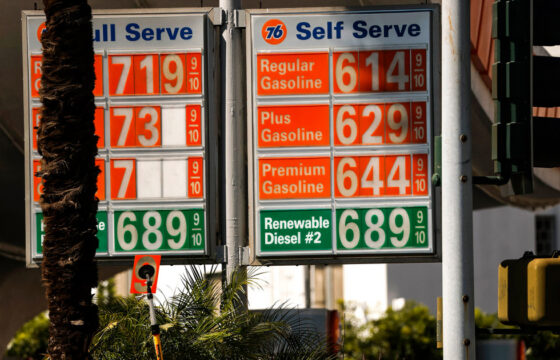
Those claims describe security risks and strategic intent. They are not the same as evidence that a particular traveler’s flight, hotel booking or border crossing has been canceled. The supplied sources also do not provide verified figures for airfare, insurance, fuel, hotel prices or delivery costs.
The decision for people with Gulf plans
The practical choice is whether to treat a headline as a confirmed change to travel conditions. On the evidence available here, the safer approach is to separate three questions: whether the destination is directly named in an official notice, whether the transport provider has changed its operation, and whether the booking can be changed without a financial penalty.
That approach protects against two opposite mistakes. A traveler could overreact to a broad regional report and cancel a plan that remains operational. The reverse mistake is also possible: treating the absence of a reported cancellation as proof that an itinerary is unaffected. The sources do not support either assumption.
People whose plans depend on shipping, port access or connections through the Gulf have an additional trade-off. The ISW report describes pressure on commercial shipping and energy infrastructure, but it does not establish the status of any individual route or shipment. A decision based on that report alone would therefore leave the most important operational details unverified.
What remains unknown before plans are changed
The biggest unresolved issue is whether the diplomatic messages described by Ghalibaf will lead to a formal arrangement with observable consequences. The report does not say whether neighboring governments have confirmed receiving or sending those messages, nor whether any new security mechanism has been announced publicly.
It is also unclear how the reported risks translate into day-to-day access. The evidence does not establish changes to airports, visa rules, telecommunications, hotel availability or public transport. Those gaps are material for travelers and families deciding whether to proceed, postpone or absorb cancellation costs.
The next useful milestone is not another generalized headline. It is a verifiable operational signal: an official travel advisory, a carrier or port notice, a confirmed route change, or a public document explaining the proposed regional security arrangements. Until one of those appears, the evidence supports caution and active verification, not a definitive claim that Gulf travel has broadly stopped or become more expensive.
The current Iran news supports a cautious planning decision rather than a sweeping travel conclusion. An Iranian parliamentary statement describes messages from neighboring governments about possible regional security arrangements, while the Institute for the Study of War documents reported threats involving energy infrastructure, Kuwait and commercial shipping. Together, the sources show why Gulf-related plans may require closer verification. They do not establish that travel has broadly stopped, that prices have risen or that a new agreement is in force. The most useful next evidence will come from official advisories, transport operators, ports or a public description of the proposed security arrangements.
Sources and methodology
- iran news - https://www.iranintl.com/en
- Iran Update Special Report, August 1, 2026 - ISW - https://understandingwar.org/research/middle-east/iran-update-special-report-august-1-2026
- 2026 Iran war - Wikipedia - https://en.wikipedia.org/wiki/2026_Iran_war
- 'Change is inevitable': What is next for Iran? | Conflict News - Al Jazeera - https://www.aljazeera.com/news/2026/1/24/change-is-inevitable-what-is-next-for-iran