

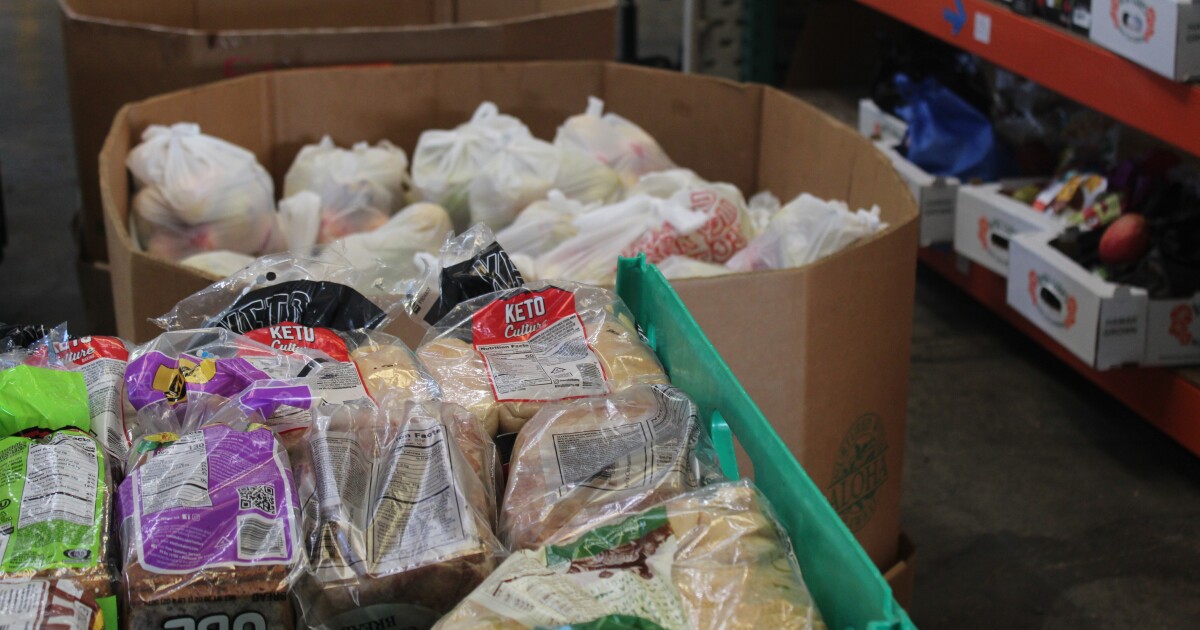
A Hawaiʻi Public Radio report published on August 19, 2026, said some SNAP recipients who lost food may be eligible for replacement benefits. That is a useful lead, but the evidence available here does not establish who qualifies, what caused the food loss, how much could be replaced or when a request must be filed.
For recipients deciding what to do, the safest conclusion is narrow: treat replacement benefits as a possibility to verify with the administering agency, not as an automatic entitlement. The next reliable document would be an official state notice or application instruction that defines the qualifying circumstances and deadline.
What the current evidence actually confirms
The primary report’s headline establishes that Hawaiʻi Public Radio covered a possible replacement-benefit option for SNAP recipients whose food was lost. The supplied text, however, contains site navigation and does not include the article’s substantive explanation. That means the central practical details cannot be independently extracted from the evidence pack.
Two broader sources help define the limits of what can be inferred. A 2026 report from California’s Legislative Analyst’s Office explains that CalFresh is California’s version of SNAP and that benefits are administered through state and local human-services systems. It also notes that benefit amounts depend on household circumstances. Those points show why state administration matters, but they do not establish Hawaiʻi’s replacement rules.
A separate Think Global Health explainer discusses changes to SNAP work requirements in 2026. Its subject is ongoing eligibility and work-related policy, not replacement of food lost after a qualifying event. It therefore cannot answer whether a particular Hawaiʻi household can recover benefits for food that is no longer available.
Why a headline is not enough to establish eligibility
Replacement rules generally depend on the facts of the loss, the program’s administrative rules and the timing of the request. None of those elements is supplied here for Hawaiʻi. A recipient may therefore be affected by details that are not visible in the report title, including whether the loss followed a qualifying emergency, whether the food was purchased with SNAP benefits and what evidence the agency accepts.
Those missing details matter because a possible benefit is different from a guaranteed payment. The evidence does not support a specific dollar amount, a universal deadline or a claim that every SNAP household with spoiled or destroyed food can receive a replacement. It also does not support transferring California’s CalFresh procedures to Hawaiʻi.
A practical verification checklist
Before relying on the report, a recipient should look for an official instruction tied to the relevant state program. The document should answer five questions:
- What event or type of food loss qualifies?
- Which agency receives the request?
- What deadline applies?
- What information or documentation is required?
- Does the rule cover the household’s specific benefit transaction or loss?
If an official notice is unavailable, the recipient should ask the administering agency for the current replacement-benefit procedure and keep a record of the request. This is not a substitute for the agency’s determination; it is a way to avoid treating an incomplete news report as a final eligibility decision.
What remains unverified
The evidence pack does not say whether the report concerns a particular disaster, outage, evacuation or other event. It does not identify a Hawaiʻi government bulletin, quote an official, provide an application link or state a filing window. It also does not show whether the possible replacement would restore the full value of lost food or use another calculation.
Those gaps are not minor editorial details. They determine whether a household has a usable remedy and how quickly it must act. Without them, a reader cannot responsibly be told to expect replacement benefits or to follow a particular procedure.
The next signal readers should look for
The most useful follow-up would be an official Hawaiʻi benefits notice or form that names the qualifying circumstances, deadline and required proof. If that document confirms the report, the story would move from a developing lead to a practical eligibility guide. Until then, the verified takeaway is limited: replacement assistance may be available in some circumstances, but the supplied evidence does not yet show whether any individual recipient qualifies.
The durable reader question is not whether a headline mentions replacement benefits, but whether an official rule confirms a usable remedy. The available evidence supports a cautious lead from Hawaiʻi Public Radio and broader context showing that SNAP administration depends on state and local systems. It does not verify Hawaiʻi’s eligibility test, deadline, documentation requirements or payment calculation. Readers should therefore seek the relevant state notice or agency determination before assuming that lost food will be replaced.
Sources and methodology
- SNAP recipients who lost food may be eligible for replacement benefits - Hawaii Public Radio - https://www.hawaiipublicradio.org/local-news/2026-08-19/snap-recipients-who-lost-food-may-be-eligible-for-replacement-benefits
- The 2026-27 Budget: Food Assistance Programs - https://lao.ca.gov/Publications/Report/5126
- SNAP Benefits in 2026: What Older Adults Should Expect ... - https://www.thinkglobalhealth.org/article/snap-benefits-in-2026-what-older-adults-should-expect-from-work-requirements
- DSHS benefits and H.R. 1 - WA.GOV - https://www.dshs.wa.gov/office-of-the-secretary/dshs-benefits-and-hr-1