
The safest choice for a teen is not automatically the newest, cheapest or most entertaining car. The practical decision is to find a vehicle that meets credible safety criteria, fits the family budget and does not create avoidable ownership risks. Consumer Reports and the Insurance Institute for Highway Safety updated their joint teen-vehicle guidance on May 27, 2026, offering a useful starting point for that decision.
That guidance matters because driving risk is unusually high early on. Consumer Reports, citing IIHS data, says drivers ages 16 and 17 have a fatal crash rate per mile about three times that of drivers age 20 and older. A vehicle cannot replace supervision or driver education, but the right one can make the consequences of a mistake less severe.
Start with the safety filter, not the badge
IIHS separates used recommendations into Best Choices and more affordable Good Choices, while also maintaining a separate list of new vehicles. Its Best Choice criteria include a curb weight above 2,750 pounds, a good driver-side small-overlap front rating, at least average Consumer Reports braking and emergency and routine handling scores, and usable controls and displays. The vehicles also need standard automatic emergency braking with a qualifying IIHS pedestrian crash-prevention rating and headlights rated good or acceptable.
Those details turn a broad “best cars” list into a screening tool. A family comparing two cars should verify the specific model year, trim and production window rather than assume every version performs identically. IIHS notes that some recommendations have exceptions tied to when a vehicle was built, including changes made during a model year.
Used versus new: the budget decision
Used cars can make the safety conversation more accessible, but a lower purchase price is not the same as a lower total cost. IIHS says starting prices for its recommended used vehicles range from under $5,000 to nearly $20,000. Its listed median retail examples include a Mazda CX-5 at $13,100, a Mazda3 hatchback at $13,200 and a Toyota Camry, including its hybrid version, at $17,300. Those figures were obtained from Black Book in April 2026 and rounded to the nearest $100, so they are reference points rather than guaranteed purchase prices.
A used car also brings questions the ranking cannot answer for you: How was it maintained? Are there outstanding recalls? Will insurance and repairs fit the household budget? IIHS specifically advises checking a vehicle identification number or license plate for recalls before buying. It also says owners should check NHTSA’s database for new recalls every six months or so.
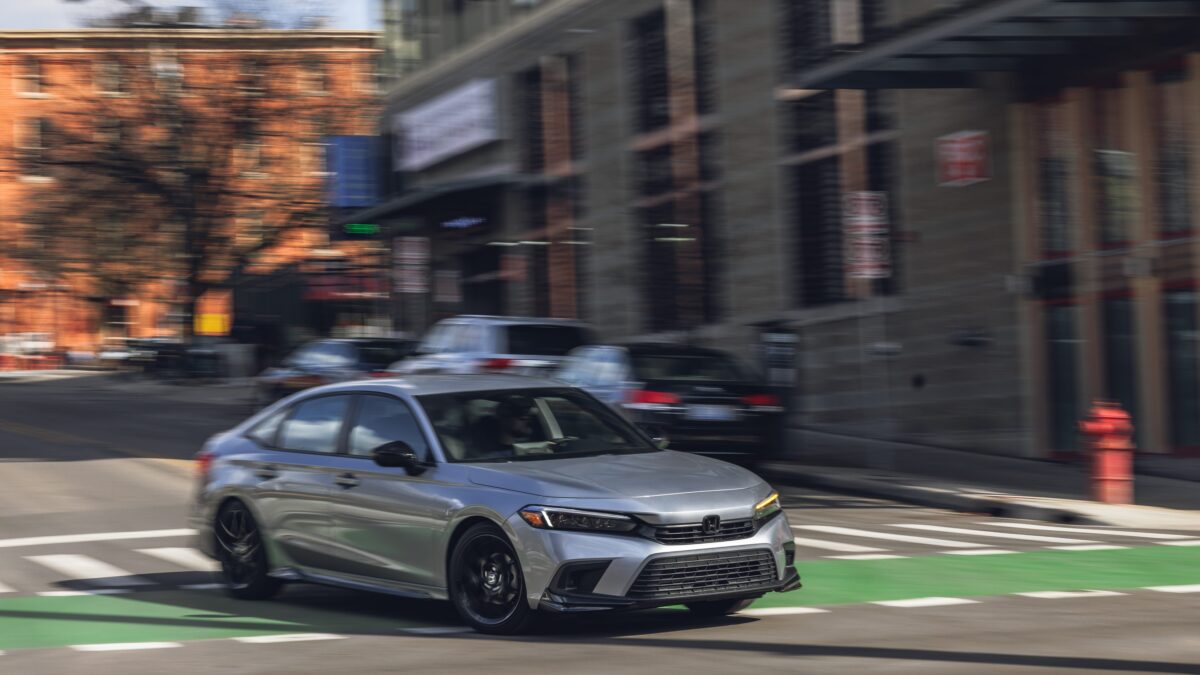
New vehicles may reduce uncertainty about history and may offer newer safety equipment, but the purchase price can be substantially higher. Car and Driver’s 2026 rankings list the Honda Civic at a starting price of $25,890, the Subaru BRZ at $37,055 and the Toyota GR86 at $32,695. Those are manufacturer-listed starting prices in the ranking, not estimates of insurance, financing, fuel or maintenance costs.
Why different lists can disagree
Car and Driver’s ranking is not measuring exactly the same thing as the CR-IIHS guide. It says its rankings use roughly 200 data points, including acceleration, handling, comfort, cargo space, fuel efficiency, value and enjoyment, while also considering safety, size and price. That broader approach helps explain why a sports car such as the BRZ or GR86 can appear near the top of a teen-focused ranking even though a parent may prefer a different balance of visibility, restraint and operating cost.
The useful lesson is not to declare one universal winner. Use the CR-IIHS criteria as the safety gate, then use a broader road test to compare comfort, practicality and driving behavior. A highly rated car that a teen cannot comfortably fit, safely control or afford to insure is not a good household decision.
A workable buying sequence
- Set the full budget. Include insurance, fuel, maintenance and likely repairs, not just the listing price.
- Filter by exact vehicle details. Check model year, body style, trim and build-date exceptions against the current IIHS guidance.
- Verify the history. Run the recall search and inspect maintenance records before negotiating.
- Test the fit. Confirm that the teen can reach the controls, see clearly and operate the vehicle without distraction.
- Pair the car with rules. Driver education, supervision and clear limits remain part of the safety decision.
The durable takeaway is simple: treat a teen-car ranking as a shortlist, not a verdict. The strongest choice is the vehicle that clears the independent safety screen while leaving enough money and attention for the less visible costs of ownership.
The current teen-car trend is most useful as a decision framework rather than a single winner list. CR and IIHS provide the safety screen, including crash-test, braking, handling, controls, emergency-braking and headlight requirements for qualifying used vehicles. Car and Driver evaluates a broader set of driving and ownership considerations, which produces a different kind of ranking. Families should therefore compare exact vehicles and model years, check recalls, calculate ongoing costs and test the fit for the individual teen before treating any recommendation as a purchase decision.
Sources and methodology
- Best New Cars for Teens - Consumer Reports - https://www.consumerreports.org/cars/best-new-cars-for-teens-a8314221512
- Safe vehicles for teens - IIHS - https://www.iihs.org/ratings/safe-vehicles-for-teens
- Best Cars for Teens for 2026 - Car and Driver - https://www.caranddriver.com/rankings/best-cars-for-teens
- The safest vehicles for teen drivers and how much they cost - CBS News - https://www.cbsnews.com/news/safest-vehicles-teens-2026-consumer-reports-insurance-institute-for-highway-safety