

The practical answer is simple: do not treat Alan McKnight’s market optimism as a direct signal to increase household spending or investment risk. His comments make the U.S. consumer the key test for whether a broader stock-market advance can hold, but the supplied reports do not provide enough data to measure consumer strength for yourself.
In a CNBC report published August 17, 2026, McKnight, chief investment officer at Regions Wealth Management, said he saw room for stocks to run as earnings broadened. The report said he favored small- and mid-cap stocks while watching a divided U.S. consumer. That is an outlook from one investment professional, not a finding that American households are uniformly resilient.
The decision behind the headline
For a reader deciding how much weight to give the story, the important distinction is between a market thesis and a household diagnosis. McKnight’s thesis connects the durability of consumer demand with the possibility that gains could spread across more of the stock market. His stated preference for small and mid caps makes the view more specific than a general claim that stocks may rise.
But the evidence does not say which consumers are divided, what costs or income pressures are driving that divide, or how large the effect is. It also does not establish that smaller companies will outperform. Those missing details matter because a household can be cautious even while investors remain hopeful about future earnings.
What the second report adds
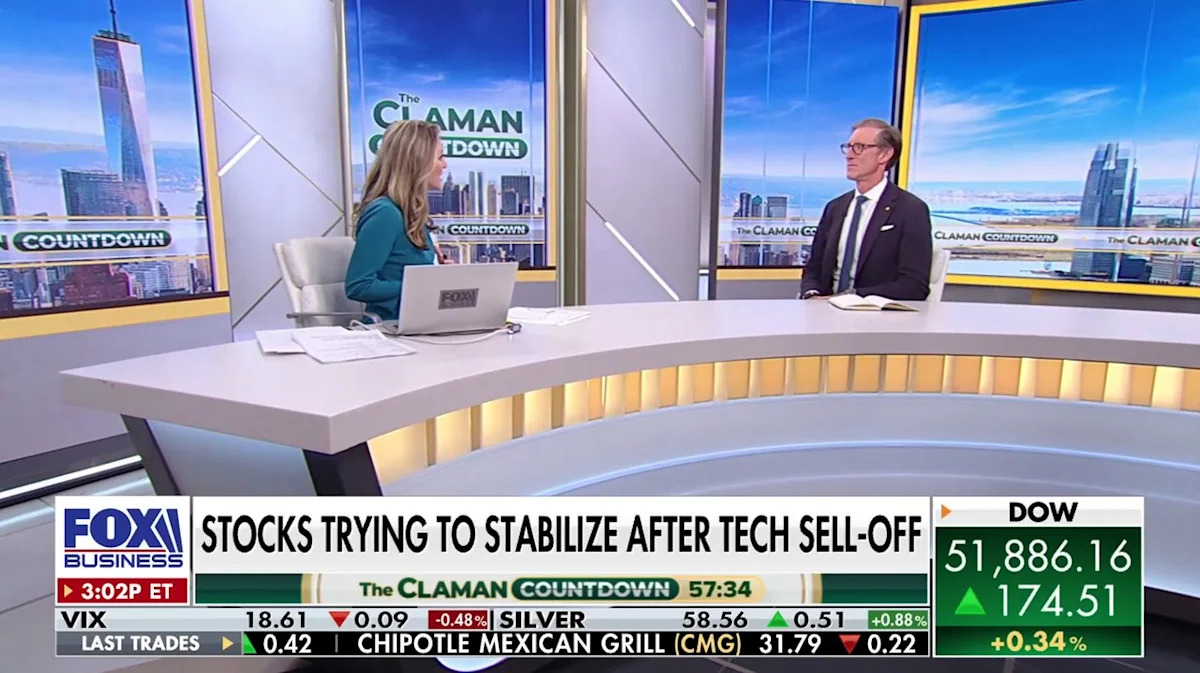
Fox Business reported on July 24, 2026, that McKnight described the U.S. consumer as resilient despite lingering economic concerns. That report also said he discussed upcoming earnings from Microsoft, Apple and Amazon as possible influences on investor sentiment, alongside rising bond yields and their effect on company valuations.
This adds context, but not independent confirmation of consumer strength. The Fox Business item records McKnight’s analysis in another interview; it does not present a consumer-spending dataset, a survey, or a company filing that would test the claim. The two reports therefore support what McKnight said, while leaving the underlying economic picture incomplete.
What households should—and should not—take from it
The useful takeaway for households is restraint about translating market commentary into personal action. A claim that the consumer is holding up does not tell an individual whether their own budget can absorb higher prices, whether job security is stable, or whether a particular investment fits their time horizon. Those decisions require personal information that these reports do not contain.
There is also a trade-off in the market view. If earnings broaden and investors respond positively, small- and mid-cap companies could receive more attention. If consumer demand proves less durable than expected, the same optimism could be harder to sustain. The reports do not quantify either outcome, so readers should regard the forecast as a scenario rather than a promised result.
The next test is observable, but not yet resolved
The clearest milestone in the evidence is the next round of corporate earnings and the market’s reaction to them. Fox Business specifically pointed to Microsoft, Apple and Amazon as companies whose results could influence sentiment. That gives readers something concrete to watch, but it still will not answer every question about households: company earnings can reflect factors beyond consumer demand, and a market reaction can change without proving the underlying thesis.
Until a published consumer measure, earnings evidence or another primary document fills that gap, McKnight’s comments are best used as a framework for watching the market—not as a verdict on the financial health of every American consumer.
The consumer is the hinge in Alan McKnight's market argument, but the evidence supports only the existence of that argument—not a complete diagnosis of household finances. CNBC reports that the Regions Wealth Management CIO sees room for stocks to run as earnings broaden and favors small and mid caps. Fox Business separately records his emphasis on consumer resilience, upcoming earnings and rising bond yields. For readers, the trade-off is clear: these comments offer a watch list for market sentiment, not a reason to change a personal budget or investment plan without more data. Earnings results and their market response are the next measurable test.
Sources and methodology
- Alan McKnight: This week, everything comes down to the American consumer - cnbc.com - https://www.cnbc.com/video/2026/08/17/alan-mcknight-this-week-everything-comes-down-to-the-american-consumer.html
- How consumer resilience remains the market's biggest strength - https://www.foxbusiness.com/video/6402034741112
- The consumer is still in 'good shape', feel good about the economy, says ... - https://www.cnbc.com/video/2026/01/08/the-consumer-is-still-in-good-shape-feel-good-about-the-economy-says-regions-alan-mcknight.html
- How consumer resilience remains the market's biggest strength - https://beta.video.foxbusiness.com/v/6402034741112