
Food fraud is not only a labeling problem for shoppers: a 2026 University of Portsmouth study estimates that it costs the UK economy between £400 million and £2 billion each year. The estimate includes food substitution, false labeling and document fraud, and suggests the biggest cost comes from fraudulent products displacing legitimate ones.
For consumers, that means the immediate risk is often not an obvious illness or a dramatic recall. It can be paying for a product that is not what its label claims. For businesses, the stakes are larger: lost sales, damaged trust and the cost of competing with products made cheaper through deception.
What does the estimate actually measure?
The research is described as the first study to calculate the full economic impact of food fraud in the UK. Rather than counting only individual incidents, it examines the wider operation of the crime, including the effect on legitimate companies and markets.
That produces a wide range: £400 million at the lower end and as much as £2 billion annually at the upper end. The range matters. It is not a precise bill sent to consumers, and it should not be read as proof that every shopper loses a specific amount. It is an estimate of the wider economic burden.
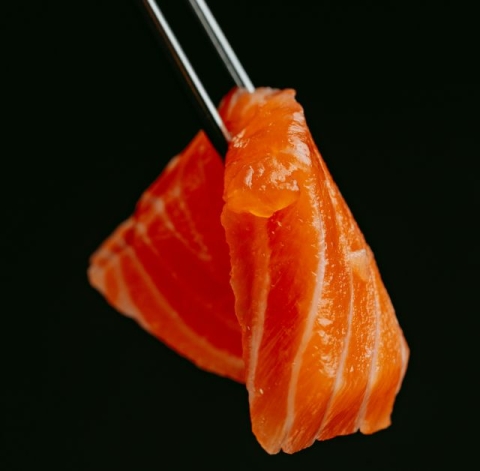
The reported breakdown is more revealing than the headline figure. Researchers say around three-quarters of the total cost comes from direct replacement of genuine products with fraudulent alternatives. One example is a product marketed as Scottish smoked salmon even though it was sourced in Norway.
Who pays when genuine products are displaced?
Legitimate businesses are the clearest economic losers. If a fraudulent product is sold as a genuine one, an honest producer can lose a sale without having changed its own price, quality or practices. The resulting distortion also makes it harder for buyers to compare products on a fair basis.
Consumers can lose money in a quieter way. A shopper may receive a substitute or a misrepresented product without realizing it, which makes the harm difficult to detect at the checkout. The available reports do not quantify the average household loss or identify which food categories account for the largest consumer impact.
There is also a trust cost. Researchers cited damage to confidence in food supply chains as one consequence, even when a buyer never discovers that a product was misrepresented. That makes food fraud different from an ordinary pricing dispute: the problem concerns whether the product can be trusted to match its description.
When does food fraud become a health issue?
Not every fraudulent product is described as dangerous to health. The central economic mechanism in the study is substitution and displacement, not a claim that most fraudulent food is contaminated.
However, the reports say some cases can create serious public-health risks. Fake spirits containing industrial chemicals are given as an example. That is a materially different risk from receiving a cheaper or incorrectly sourced substitute, and the evidence supplied does not establish how frequently such cases occur in the UK.
This distinction is important for shoppers. The study supports concern about financial deception and market harm across food supply chains, but it does not support treating every unusual label or low-priced product as a health emergency.
Are existing checks working?
The researchers reportedly describe food fraud as comparatively uncommon relative to other forms of fraud because UK food supply chains contain extensive checks. Regulators, manufacturers, retailers and certification bodies are said to provide multiple layers of quality assurance that make it harder for rogue traders to operate.
That is a trade-off rather than a guarantee. Checks can reduce opportunities for fraud, but they also require time, testing and cooperation across the supply chain. The supplied evidence does not show how much those controls cost, how often they detect fraud or whether enforcement resources are concentrated on the highest-risk products.
What should UK shoppers do with the headline?
The practical conclusion is measured: shoppers should take food labeling seriously without assuming that the entire food supply is unreliable. The evidence points to a system with safeguards and a persistent economic-crime problem, not to proof that fraud is widespread in every shop.
For a household deciding how much attention to give a product, the clearest trade-off is between price, trust and information. A very low price may be attractive, but the study shows why the cost of a misrepresented product can be carried by consumers and legitimate producers in different ways. The reports do not provide enough evidence to recommend a particular retailer, certification mark or food category.
The next meaningful test is transparency around the study itself. More detail on its methods, assumptions and category-level findings would show whether the upper end of the estimate is driven by a small number of high-impact cases or by a broader pattern. Until then, the £2 billion figure is best treated as an upper estimate of a serious but imperfectly measured problem.
The food-fraud estimate is most useful as a measure of market damage, not as a claim that shoppers routinely face dangerous food. The supplied reporting links the largest share of the burden to legitimate products being displaced by fraudulent alternatives, which explains why businesses can lose even when consumers do not notice the deception. Health risks are presented as a serious possibility in specific cases, such as fake spirits containing industrial chemicals, but their frequency is not established here. Existing supply-chain checks appear to limit the problem, while the missing study detail leaves the estimate's range and category-level impact unresolved.
Sources and methodology
- Food Fraud Costs UK Economy Up to £2 Billion a Year ... - https://www.newswise.com/articles/food-fraud-costs-uk-economy-up-to-2-billion-a-year-new-study-finds
- Food fraud costs UK up to £2 billion per year - https://www.foodsafetynews.com/2026/08/food-fraud-costs-uk-up-to-2-billion-per-year
- Exposing food fraud: the new hidden truth - https://www.qassurance.com/exposing-food-fraud-the-new-hidden-truth
- Food Crime Costs UK Up to £2 Billion Annually - https://www.food-safety.com/articles/8948-food-crime-costs-uk-up-to-2-billion-annually