

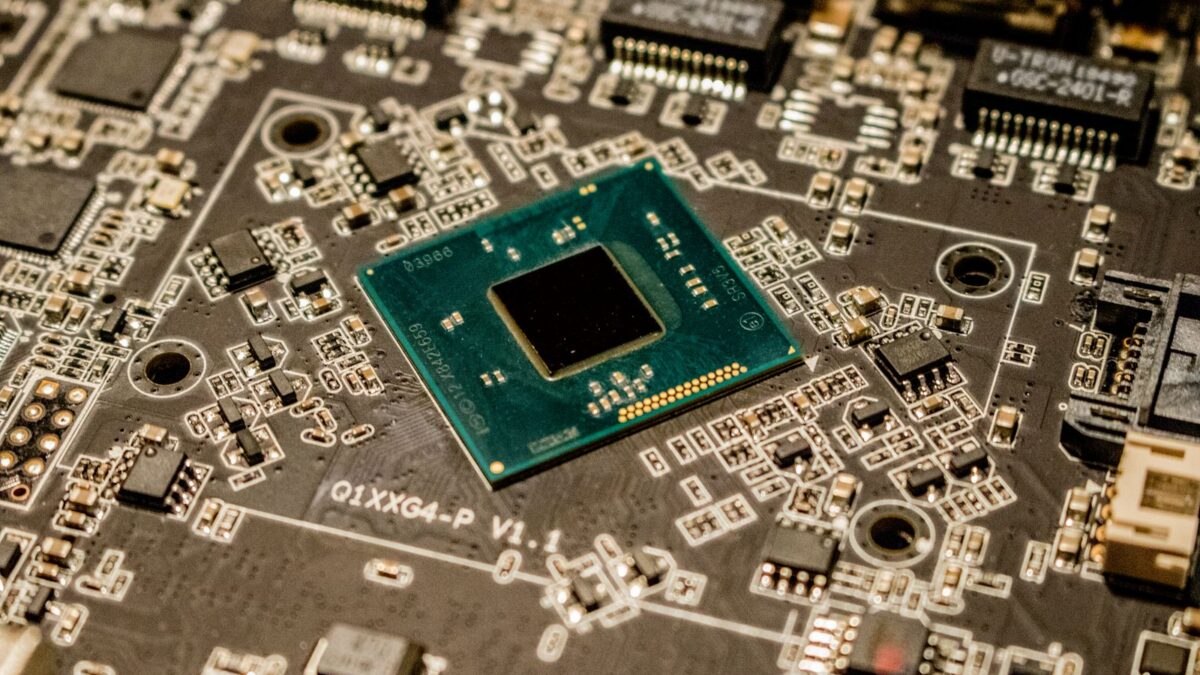
Intel priced an upsized $20 billion stock offering at $95 a share, creating about 210.5 million new shares. Against the 5.043 billion shares Intel said were outstanding on June 27, that would reduce an existing holder’s relative ownership by about 4.0% before any underwriter option. The capital may strengthen Intel’s funding capacity, but the return on that capital remains unproven.
Key takeaways
- Intel increased its offering from the $15 billion proposal announced on August 10 to a priced $20 billion deal early on August 11.
- The base offering is 210,526,315 shares at $95 each. Intel expects approximately $19.7 billion in net proceeds if the underwriters do not exercise their option.
- Using Intel’s June 27 count of 5.043 billion shares outstanding, Newsr calculates that the new shares increase the count by about 4.18% and reduce existing holders’ relative ownership by about 4.01%.
- Intel says the money is for general corporate purposes, which may include capital expenditures and working capital. It has not earmarked the full amount for AI, foundry operations, a factory or a named process node.
- The offering was expected to close on August 12, subject to customary conditions. Completion and the economic return on the proceeds were not yet confirmed as of August 11.
What happened to Intel’s stock offering?
Intel first announced a proposed $15 billion underwritten common-stock offering on August 10. The preliminary prospectus was marked “subject to completion” and left the public offering price and number of shares blank, so an exact dilution figure could not be calculated when the original Yahoo Finance/Investing.com article was published.
At 2:36 a.m. EDT on August 11, Intel announced that it had priced 210,526,315 shares at $95 apiece and increased the base deal to $20 billion. The company also granted underwriters a 30-day option to buy as many as 31,578,947 additional shares at the offering price, less underwriting discounts.
Intel estimated net proceeds of approximately $19.7 billion without that option. The company said the deal was expected to close August 12, subject to customary closing conditions. “Priced” is therefore the accurate status at this snapshot; it is not the same as a confirmed closing or receipt of funds.
Why does the Intel stock offering matter?
An equity raise gives Intel capital without adding conventional debt principal or mandatory interest payments. That can provide balance-sheet room for a company pursuing expensive manufacturing and technology programs. The trade-off is that the company divides future voting power and per-share economics among more shares.
Intel’s official use-of-proceeds language is broad: general corporate purposes, which may include capital expenditures and working capital. Its initial announcement also pointed to demand related to AI compute and opportunities in packaging, silicon and external wafers, but those are company claims and strategic context-not a commitment to spend all proceeds on AI, Intel Foundry, Intel 14A or a particular factory.
For shareholders, this distinction matters. New equity can improve financing flexibility, but it creates value only if the company earns enough on the new capital to offset the larger share base and the opportunity cost of issuing stock.
How much ownership dilution does the priced deal imply?
The SEC preliminary prospectus used 5.043 billion issued and outstanding shares as of June 27, 2026. Newsr uses that figure as the baseline and the 210,526,315 shares in Intel’s pricing announcement as the new issuance.
| Measure | Calculation | Result |
|---|---|---|
| Increase in share count | 210,526,315 / 5,043,000,000 | Approximately 4.175% |
| Existing holders’ relative ownership reduction | 210,526,315 / (5,043,000,000 + 210,526,315) | Approximately 4.007% |
| Illustrative 1% stake after the base issuance | 1% x 5,043,000,000 / 5,253,526,315 | Approximately 0.9599% |
If underwriters exercise the option in full, total new shares would rise to 242,105,262. On the same baseline, that would increase the share count by approximately 4.801% and reduce existing holders’ relative ownership by approximately 4.581%. The option’s gross value is 31,578,947 x $95, or approximately $3.0 billion.
These are ownership and voting-dilution estimates, not a forecast of exact earnings-per-share dilution. EPS depends on weighted-average shares during the reporting period, the closing date, Intel’s future earnings, the return generated by the proceeds and other potentially dilutive securities. The SEC filing also excludes several award, option, plan, escrow and warrant categories from the 5.043 billion-share baseline.
What did the market price in?
Intel closed at $97.52 on August 10, down from $101.65 on August 7. Using those closes, Newsr calculates a one-session decline of approximately 4.06%: ($97.52 / $101.65) – 1. The $95 offering price was approximately 2.58% below the August 10 close: ($95 / $97.52) – 1.
Reuters reported the discount as 2.6% and described a decline of more than 4%. Those numbers establish the market move and pricing gap, but they do not prove the offering was the only cause of the share-price change. A market reaction reflects changing expectations; it does not establish whether Intel will ultimately deploy the capital well.
What analysts are saying
Wolfe Research analyst Chris Caso said an equity raise appeared dilutive to EPS but was a sensible option given Intel’s stock price, according to the original Investing.com report carried by Yahoo Finance. Separately, AJ Bell investment director Russ Mould told Reuters that raising equity made sense after the stock’s strong rise.
These are two attributed views, not evidence of a broad analyst consensus. They support a narrower conclusion: at least some market observers saw the higher share price as an opportunity for Intel to exchange equity for financial flexibility.
What remains uncertain?
- Whether the offering closes on the expected date and whether underwriters exercise any or all of their option.
- How Intel ultimately allocates the proceeds within its broad general-corporate-purpose mandate.
- Whether returns and future free cash flow from the additional capital offset dilution over time.
- The exact effect on EPS, which cannot be inferred from the ownership calculation alone.
- How much of the August 10 share-price decline was attributable specifically to the offering.
Newsr Reframed
The central trade is clearer after pricing: Intel is giving up roughly 4% of existing holders’ relative ownership in exchange for close to $20 billion of net equity capital. That can buy time and reduce pressure to fund a capital-intensive strategy with more debt, but “more capital” is not itself a turnaround result.
The useful scorecard now moves beyond the headline amount. Investors can monitor the closing, any option exercise, Intel’s later disclosure of capital allocation, changes in net debt and interest expense, and-most importantly-whether incremental returns and free cash flow compensate for the larger share base.
Sources and methodology
Newsr checked Intel’s initial announcement, preliminary SEC prospectus and free-writing prospectus, Intel’s later pricing announcement, timestamped closing-price data and independent Reuters reporting. The SEC submissions snapshot was checked on August 11 and showed no filing after the August 10 preliminary prospectus and free-writing prospectus. Calculations use unrounded source figures and are rounded for display.
This article is for general information and does not constitute personal investment advice. A Newsr finance editor should verify the offering’s closing status, market data, calculations, quotations and image license before publication.
What people are saying
Wolfe Research analyst Chris Caso told Investing.com that the transaction appeared EPS-dilutive but that an equity raise was sensible at the stock price.
AJ Bell investment director Russ Mould told Reuters that raising equity made sense after Intel's strong share-price rise.
These cited opinions do not establish broad analyst consensus.
Intel is exchanging roughly 4% of existing holders' relative ownership for close to $20 billion of net equity capital. The financing can reduce pressure to add debt, but the decisive test is whether Intel's incremental returns and free cash flow compensate for the larger share base.
Sources and methodology
- Intel initial announcement: https://newsroom.intel.com/corporate/intel-announces-proposed-15-billion-common-stock-offering
- SEC preliminary prospectus (424B5): https://www.sec.gov/Archives/edgar/data/50863/000119312526341318/d98483d424b5.htm
- SEC free-writing prospectus: https://www.sec.gov/Archives/edgar/data/50863/000119312526341325/d82791dfwp.htm
- Intel pricing announcement: https://www.intc.com/news-events/press-releases/detail/1779/intel-announces-upsize-and-pricing-of-20-billion-common
- Yahoo Finance INTC historical data: https://finance.yahoo.com/quote/INTC/history/
- Reuters: https://www.reuters.com/legal/transactional/intel-launches-15-billion-share-sale-turnaround-rally-lifts-stock-2026-08-10/
- Original Yahoo Finance/Investing.com article: https://finance.yahoo.com/markets/stocks/articles/intel-stock-stumbles-following-blockbuster-124522644.html