

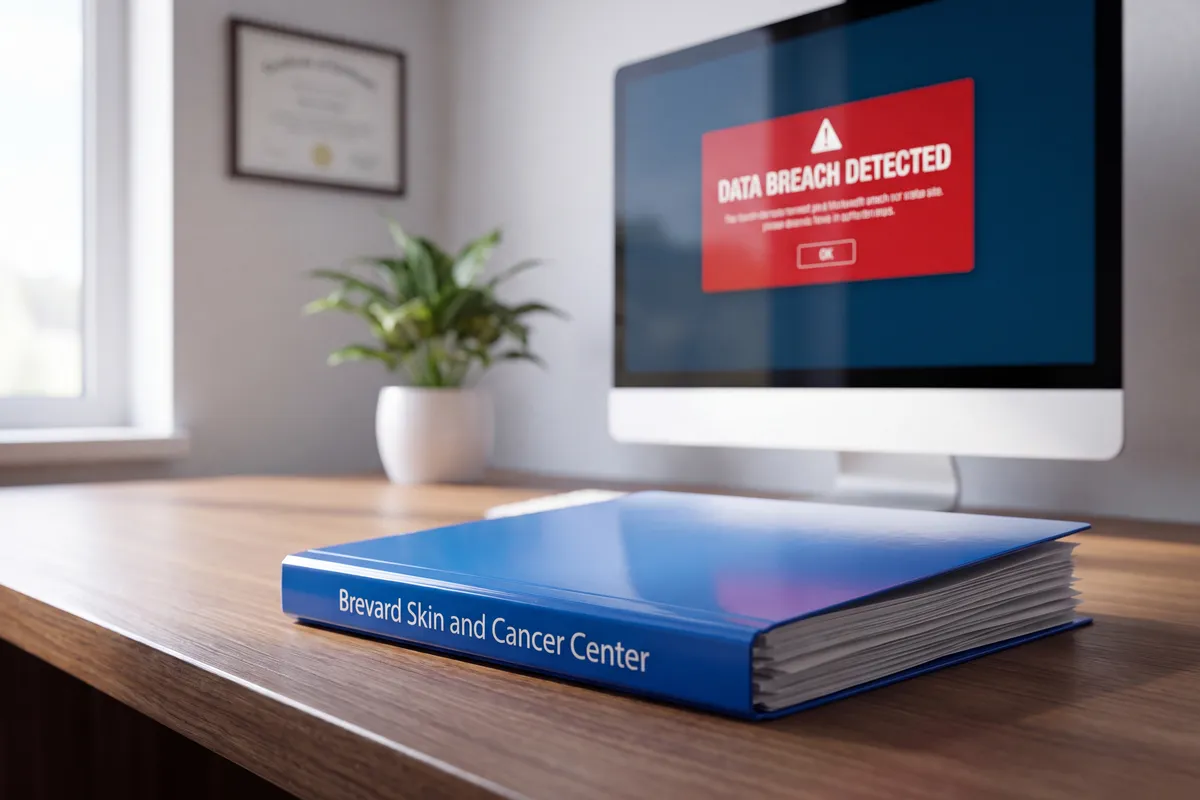
People in the United States who received a mailed notice from Brevard Skin and Cancer Center about a September 2025 data breach may qualify for a reported settlement benefit, including up to $2,500 for documented losses, a reported $45 alternative payment or medical-data monitoring. The supplied evidence does not verify a claim deadline, official administrator or final court approval. The next step is to locate the mailed notice, confirm the official filing instructions and preserve records before submitting anything.
Who may be included
According to the available settlement report, the proposed class covers individuals living in the United States whose private information was potentially compromised in the September 2025 breach and who received a mailed notice from Brevard Skin and Cancer Center. That notice is the key eligibility document described in the evidence pack.
The evidence does not establish that every patient, former patient or employee is automatically included. It also does not show whether people who did not receive a notice can request a claim form, whether excluded categories exist or how the settlement defines the relevant breach population. Readers should therefore treat receipt of the company notice as the supported starting point rather than assume that a relationship with the practice alone proves eligibility.
What information was involved
Separate reporting from the HIPAA Journal says the unauthorized access began on September 28, 2025, and was discovered on October 14, 2025. The reported data varied by person and could include names, dates of birth, home addresses, Social Security numbers, phone numbers, email addresses, diagnosis and clinical information, and billing or claims information.
Employee records were also reported to include names, contact information, dates of birth, home addresses, Social Security numbers, email addresses and health conditions contained in Family and Medical Leave Act forms. Claim Depot separately reported that the incident may have involved medical information and other sensitive records. These reports support a meaningful identity-theft and medical-privacy concern, but they do not show that every listed data type was exposed for every affected individual.
Reported benefit choices
The settlement report describes three potential benefits. The first is reimbursement for documented out-of-pocket losses, capped at $2,500. Examples listed in the report include identity theft or fraud losses, credit-report or credit-monitoring fees, costs to freeze or unfreeze credit, replacement identification expenses and postage used to contact banks.
The second option is a one-time $45 cash payment instead of documenting losses. The report does not establish whether that amount will be reduced if the total number of approved claims exceeds the settlement fund, nor does it say whether the payment is guaranteed. A settlement fund is generally divided according to the governing agreement and court orders, so readers should not treat the stated amount as a promise of payment.
The third reported benefit is one year of CyEx Medical Shield Complete medical-data monitoring. The package is described as including $1 million in medical identity-theft insurance, monitoring for health-insurance identification exposure, medical-record-number exposure and unauthorized health savings account spending. The report also says participants could consult a fraud-resolution agent if suspicious activity is detected.
Why the deadline and administrator matter
The supplied evidence says people can submit an online claim, mail a printed form or request a paper form by contacting the settlement administrator. However, it does not name that administrator or provide a verified deadline. It also does not include a court order, settlement website or official claim form.
That missing information changes the safest consumer action. Do not rely on a deadline, payment estimate or online form copied from a secondary settlement listing unless it matches the mailed notice or an official court-approved settlement source. Check the notice for the administrator’s name, case number, claim deadline, documentation rules and instructions for selecting between the payment options. Keep copies of the notice, receipts, fraud reports, credit-monitoring invoices and correspondence with financial institutions.
Security steps while checking eligibility
The breach reporting says Brevard Skin and Cancer Center offered 24 months of complimentary credit monitoring and identity-protection services through IDX after notifying affected individuals. That offer is separate from the one-year medical-data monitoring benefit described in the settlement report. Because the evidence does not explain how the programs interact, recipients should compare the terms in their company notice with any settlement benefit before enrolling twice or assuming one replaces the other.
People who received a notice can review credit reports and financial accounts for unfamiliar activity, be cautious with emails or calls that use personal details, and consider a fraud alert or credit freeze. Those steps address the potential misuse of exposed information; they do not establish settlement eligibility or guarantee reimbursement.
What is verified and what is not
The breach, the reported categories of affected information and the existence of reported settlement benefit options are supported by the supplied reports. The $350,000 fund, the $2,500 documented-loss cap, the $45 alternative payment and the monitoring terms come from a settlement-focused secondary report rather than an official court document in the evidence pack.
Until an official administrator and court record are verified, the responsible conclusion is limited: a noticed individual may have a claim, but the available evidence does not confirm the final terms, deadline, approval status or amount any claimant will receive. The next concrete milestone is publication or confirmation of the official settlement materials that establish those details.
The reported Brevard Skin and Cancer Center settlement offers several possible responses to the same breach: reimbursement for people who can document losses, a smaller alternative cash payment for those who cannot, and monitoring aimed at medical-identity risks. That structure makes documentation and eligibility more important than the headline fund size. The evidence supports the breach and the reported options, but it does not include the court order or administrator materials needed to verify the deadline, final approval or payment allocation. Readers should treat the mailed notice as the starting document and regard every unconfirmed term as provisional.
Sources and methodology
- Brevard Skin and Cancer Center $350,000 data breach settlement open for claims - Claim Depot - https://www.claimdepot.com/settlements/brevard-skin-data-settlement
- Brevard Skin Data Breach Exposes Data of 53K Patients & ... - https://www.claimdepot.com/data-breach/brevard-skin-and-cancer-center-2025
- Brevard Skin and Cancer Center Announces September ... - https://www.hipaajournal.com/brevard-skin-and-cancer-center-data-breach
- Brevard Skin and Cancer Center Data Breach Investigation - https://classlawdc.com/2025/12/22/brevard-skin-and-cancer-center-data-breach