

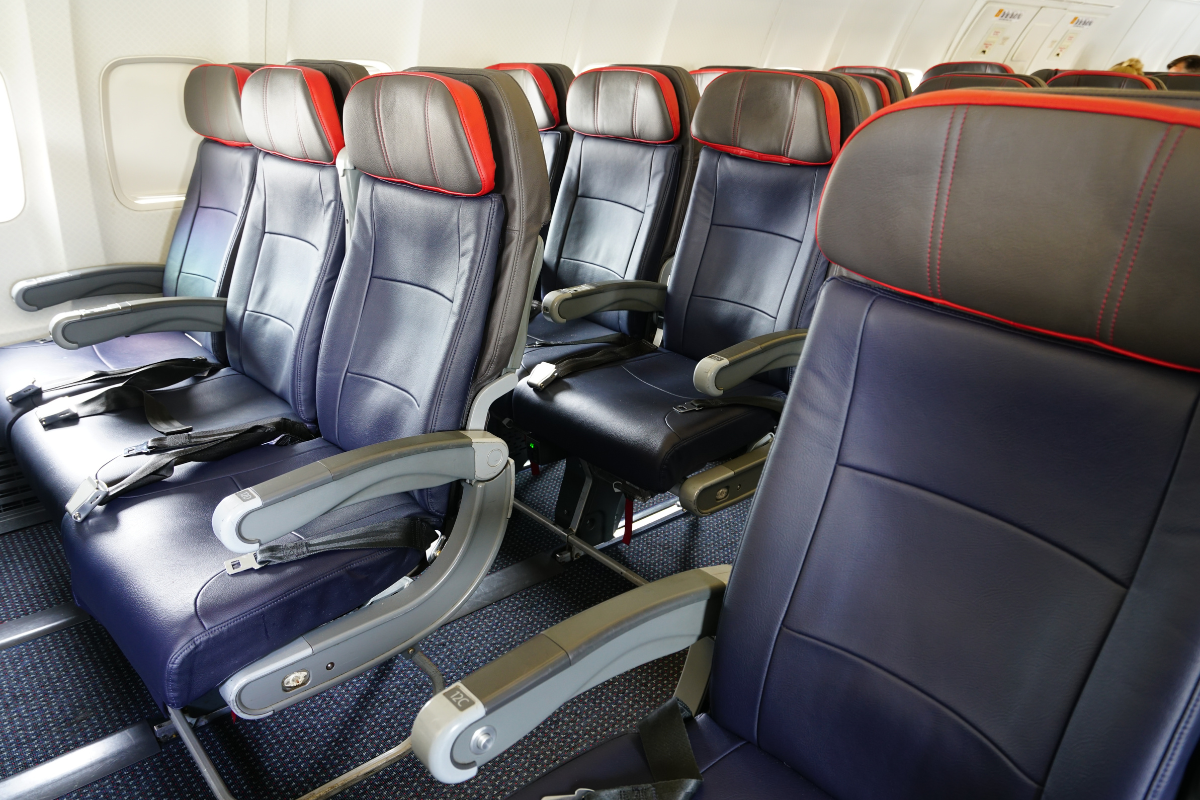
If American Airlines involuntarily moved you from a purchased premium cabin to a lower cabin, keep your original itinerary, boarding passes, seat records, and proof of payment, then ask the airline for a written calculation of any refund. A report published in August 2026 said American was using a flat 40% refund of the original ticket price in these cases. That policy description has not been independently verified in the supplied evidence through American’s tariff or conditions of carriage, and no claim deadline is established here.
Who this reported policy could affect
The issue concerns an involuntary downgrade: a passenger booked in one cabin but placed in a lower one by the airline. It is not the same as choosing a cheaper seat, voluntarily changing a ticket, accepting a travel credit, or canceling a trip. The distinction matters because the relevant question is not whether the itinerary was refundable; it is whether the service actually provided matched the cabin purchased.
The August 27, 2026 report said American had changed compensation provisions so that affected travelers would receive 40% of the original ticket price rather than the difference between the premium cabin fare and the coach seat they were made to fly in. The report also said the airline was developing a replacement rule. Without the underlying contract language, however, travelers should not assume that every route, fare type, ticket purchase, or downgrade scenario is covered in the same way.
Take these steps before accepting a final answer
- Save the before-and-after record. Keep the confirmation showing the original cabin, the ticket receipt, boarding passes, any seat-assignment notices, and messages sent at the gate or through the app. A refund dispute is easier to evaluate when the purchase and flown cabin are documented side by side.
- Ask for the calculation in writing. Request the amount offered, the basis used to calculate it, and whether it is a refund to the original form of payment or another form of compensation. This avoids treating a verbal explanation at the airport as a complete resolution.
- Separate the cash fare from add-ons. The supplied reporting discusses a percentage of the original ticket price. It does not establish how taxes, fees, upgrades bought separately, miles tickets, corporate fares, or partner-issued tickets would be handled. Those details can change the amount at issue.
- Escalate only with the records attached. If the airline’s response does not explain the difference between the purchased and flown service, submit the documents with a written request for review. The available evidence does not provide an official American Airlines claim channel, a regulatory deadline, or a guaranteed outcome.
Why the refund method can matter more than the percentage
The report’s central criticism is arithmetic, not merely the size of the percentage. It cited an example of a New York-to-London itinerary where coach was selling for $949 and the least expensive business-class fare was $10,644 shortly before departure. Under the report’s 40% example, the passenger would receive $4,258 and would effectively have paid $6,386 for the coach trip. That illustration is a reported fare snapshot, not proof of what every customer paid or is owed.
Benjamin Edelman and Mike Borsetti, the analysts cited in the report, argued that a fixed percentage can undercompensate travelers when premium and economy fares are widely separated. They used industry fare data in support of an alternative calculation. Their conclusion is analysis, not an official determination. Still, it identifies the practical question passengers should put to the airline: does the offered refund reflect a stated contract formula, or does it account for the value difference between the service bought and the service delivered?
Do not confuse this with American’s cancellation-refund policy
A separate August 2026 report from WBTV, carrying CNN material, described a stricter American Airlines rule for customers who cancel a trip. It said a full refund was available when a cancellation occurred within 24 hours of booking and the flight was at least one week away. That is a booking-cancellation rule, not evidence about involuntary cabin downgrades.
The two issues can look similar because both involve refunds, but they produce different decisions. A traveler who canceled a trip needs to check the timing of the booking and departure. A traveler who flew in a lower cabin after an airline-initiated change needs to document the downgrade and ask how the refund was calculated. Using one policy to resolve the other could lead to the wrong request.
What is verified, and what is not
The supplied evidence supports a cautious conclusion: a detailed August 2026 report says American used a 40% approach for involuntary downgrades and was preparing a change. It also supports the narrower point that American’s cancellation policy had been updated separately. The material does not provide an official American Airlines document confirming the downgrade formula, the date it took effect, whether it remains in force, an eligibility list, or a deadline to seek payment.
That evidence gap is consequential. A passenger should not rely on the reported percentage as a guaranteed entitlement, nor assume that a planned replacement automatically improves a past claim. The conclusion would become firmer if American publishes current tariff or conditions-of-carriage language, or if a DOT filing confirms the applicable standard and process. Until then, the most useful action is a prompt, documented request for the airline’s written position on the specific ticket and flight.
The useful consumer question is not whether a reported 40% figure sounds adequate in the abstract. It is whether the airline can identify the contract rule used for a particular ticket and explain how that rule applies after a passenger received a lower cabin than the one purchased. The available reporting suggests a fixed percentage may diverge sharply from the fare gap on some itineraries, while the absence of a primary airline document prevents a firm conclusion about entitlement. Travelers should treat a downgrade and a cancellation as separate problems, preserve the transaction record, and seek a written calculation before accepting a final resolution.
Sources and methodology
- American Airlines Insists That Passengers Slapped With an Involuntary Downgrade Are Only Entitled to a 40% Refund... But it's Changing its Rules Anyway - https://www.paddleyourownkanoo.com/2026/08/27/american-airlines-insists-that-passengers-slapped-with-an-involuntary-downgrade-are-only-entitled-to-a-40-refund-but-its-changing-its-rules-anyway
- American Airlines changes its refund policy with a stricter rule. What to ... - https://www.wbtv.com/2026/08/01/american-airlines-changes-its-refund-policy-with-stricter-rule-what-know
- [PDF] DOT Rules for American Airlines Involuntary Downgrade in 2026 - https://pilot.wright.edu/d2l/common/viewFile.d2lfile/ImmutableTemp/639214462200672400/american_t15_a5_dot_downgrade_rights.pdf
- “Involuntarily Downgraded? American Airlines Just Changed the Game ... - https://www.instagram.com/p/DZQD44lg_J4