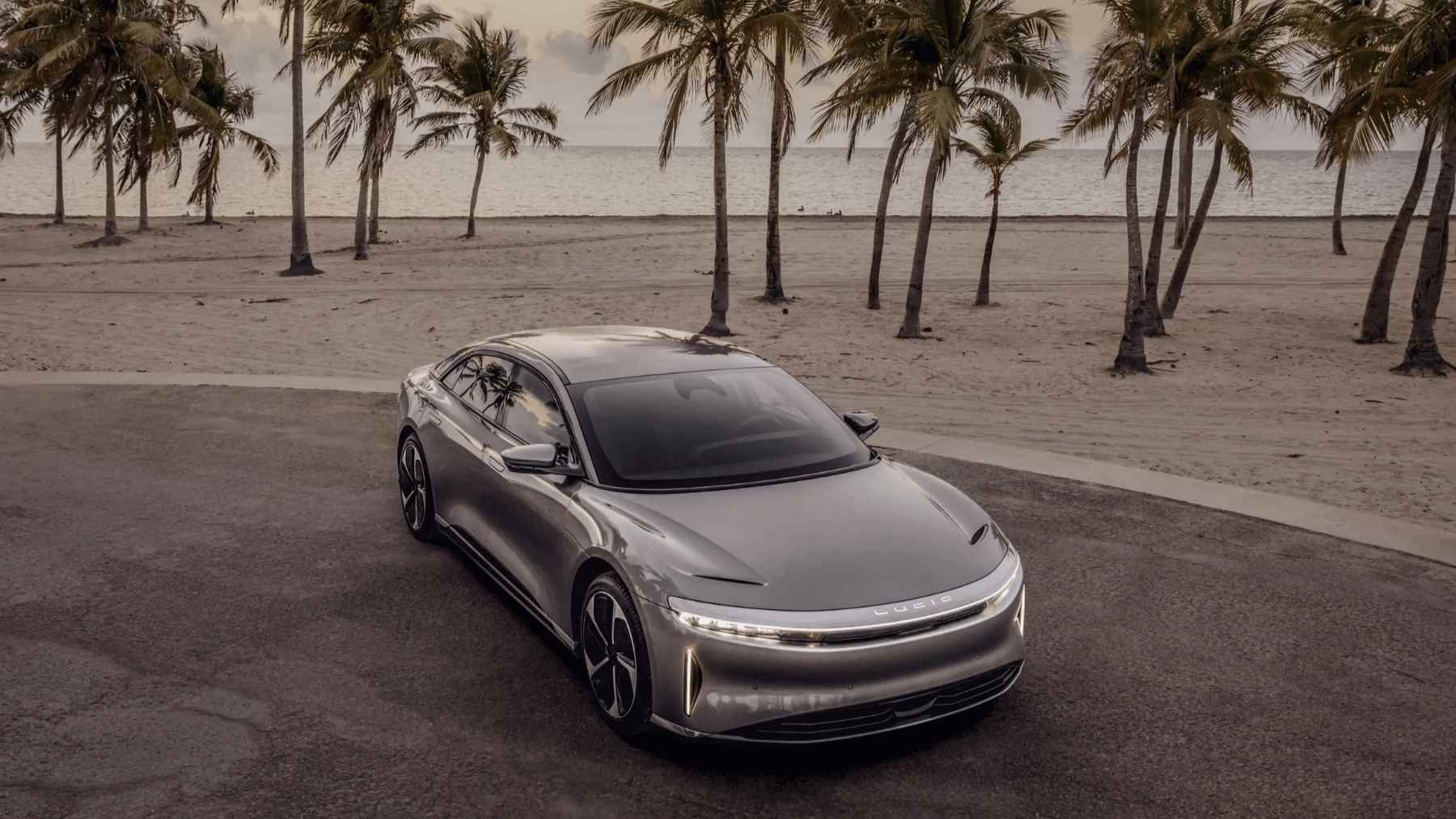

Lucid Air owners should treat this as a safety recall, but the supplied reports do not include enough vehicle-level information to confirm whether any particular car is affected. The 2026 action covers 27,185 Lucid Air sedans in the United States. The reported defect involves an exterior-lighting circuit that can overheat, increasing fire risk and potentially causing the vehicle’s exterior lights to fail. Until the remedy is verified, NHTSA instructed owners of affected vehicles to park outdoors and away from structures.
Lucid has released an over-the-air software update, and NHTSA said 20,719 of the affected vehicles had already received it. That does not establish that every recalled vehicle has been fixed, nor does it identify which individual cars are included. Owners should use the official vehicle-specific recall lookup or Lucid’s direct notification process before deciding that their vehicle is outside the action.
What the Lucid recall covers
The reported U.S. recall count is 27,185 Lucid Air sedans. The central problem is an exterior-lighting circuit that may overheat. According to the reports, overheating creates a fire risk, while a related loss of exterior lighting could increase the chance of a crash.
Those are separate consequences of the same reported circuit problem. The fire concern affects where an affected vehicle should be parked while waiting for a remedy. The lighting concern affects driving safety because other road users may not see the vehicle as intended. The available evidence does not say that every recalled vehicle has experienced either outcome.
The action is significant for Lucid because it is described as the company’s largest recall to date. Quartz also reported that the recall covers more vehicles than Lucid delivered during 2025, when the company handed over 15,841 cars. That comparison indicates the scale of the action, but it does not change the affected-vehicle test: a car should be treated as included only when the official notice or vehicle lookup confirms it.
What owners should do now
- Verify the vehicle through an official source. The evidence supplied for this article does not include VIN ranges, model years or other exact identifiers. Do not decide eligibility from the car’s appearance, trim, purchase location or the fact that it is a Lucid Air. Use the official NHTSA or Lucid recall information for the vehicle.
- Follow the parking instruction if the vehicle is confirmed as affected. NHTSA’s reported instruction is to park the vehicle outside and away from structures until the remedy is deployed. The supplied evidence does not provide a different exception or an alternative storage procedure.
- Check for the over-the-air update. Lucid has released a software remedy, but the reports do not explain the installation screen, required conditions or how an owner should respond if the update fails. Owners should follow Lucid’s official instructions and seek the company’s support if the vehicle does not show the remedy as installed.
- Keep the recall notice and completion confirmation. The reports do not identify a reimbursement policy, deadline or separate dealer repair. Owners should retain the official notice and any software-completion record so unresolved status can be checked later.
What is still unknown
The supplied reports do not identify the affected production dates, model years, VIN range, lot or software version. They also do not state a completion deadline, whether any physical inspection is required, or whether owners will receive a separate confirmation after the over-the-air update.
That missing information matters because the 27,185 figure is a population count, not proof that every Lucid Air is affected. It also means an owner cannot responsibly confirm eligibility by checking whether the car’s lights currently work or whether the vehicle has shown a warning. A functioning exterior-lighting system does not rule out a potential circuit defect.
The reports likewise do not establish how many fires, lighting failures or crashes, if any, have been linked to the issue. They describe the potential hazards cited in the recall but do not supply an incident total. Owners should not infer the severity of their individual risk from the overall recall count.
Why the stock move is a separate question
The opportunity behind this story refers to Lucid stock moving higher despite the recall. That market reaction does not reduce the safety obligation for an affected owner, and it does not show that investors have resolved the company’s product or financial risks.
The supplied reports provide business context, including earlier Lucid recalls and Quartz’s account of workforce and production changes, but they do not provide a verified explanation for the stock move. A share-price change can reflect factors unrelated to a particular recall. Readers making a vehicle decision should therefore separate the consumer question—whether a specific car is included and whether its remedy is complete—from the investment question of how the market values Lucid.
The practical decision
If an official lookup confirms that a Lucid Air is included, follow NHTSA’s reported outdoor-parking instruction and complete or verify Lucid’s over-the-air remedy before treating the recall as resolved. If the vehicle cannot be matched because the owner lacks the official identifiers or notification, the available evidence cannot confirm that it is safe to ignore the notice or that it is definitely affected.
No deadline, refund, payment or replacement entitlement appears in the supplied evidence. The next reliable milestone is a complete official recall notice or vehicle-specific communication that identifies the affected cars and explains how owners can verify completion. Until then, the safest reader decision is to rely on those official instructions rather than on model-wide assumptions.
The useful consumer question is not whether every Lucid Air is recalled, but whether a particular vehicle can be matched to the official action. Reports agree that 27,185 U.S. sedans are included, that an exterior-lighting circuit may overheat, and that an over-the-air remedy has been issued. They also report that 20,719 vehicles had received the update. However, the supplied evidence does not contain VINs, model years, a repair deadline or confirmation procedures. Owners should follow the official vehicle-specific notice and NHTSA's reported outdoor-parking instruction rather than infer eligibility from the model name or current vehicle condition.
Sources and methodology
- EV maker Lucid to recall more than 27000 luxury sedans ... - https://www.cnbc.com/2026/08/28/ev-maker-lucid-to-recall-more-than-27000-luxury-sedans-over-fire-risk-nhtsa-says.html
- Lucid is recalling every Air sedan it has ever sold over a fire risk - https://qz.com/lucid-air-recall-fire-risk-082826